

Food waste is a valuable resource for renewable energy production. Restaurants, supermarkets, food-processing plants, commercial kitchens, and households generate large quantities of biodegradable waste every day. When managed properly, this waste can be converted into biogas through anaerobic digestion, helping reduce waste-disposal requirements while recovering useful energy.
However, the efficiency of biogas production depends on several factors, including food waste composition, pretreatment methods, digester operating conditions, microbial activity, and gas utilization technology. By optimizing these factors, operators can improve methane production, maintain stable digestion, and increase overall energy recovery.
This article explores practical ways to improve biogas production from food waste and explains how gas analysis supports efficient plant operation.
1. Understand the Characteristics of Food Waste
The first step toward improving biogas production is understanding the composition of the incoming waste.
Food waste can include vegetable scraps, fruit residues, leftover meals, bakery products, dairy waste, and food-processing by-products. These materials differ in moisture content, organic matter, fat, protein, carbohydrate, and biodegradability.
For example, carbohydrate-rich food waste can often be broken down relatively quickly, while fats may offer high methane potential but can cause operational problems if introduced in excessive quantities. Protein-rich waste can contribute to ammonia accumulation under certain conditions.
To improve digestion performance, operators should:
Identify the main food waste sources.
Remove packaging, plastics, metals, and other contaminants.
Monitor changes in feedstock composition.
Assess organic loading and moisture content.
Blend different feedstocks when appropriate.
Consistent feedstock quality helps maintain stable digester conditions and makes biogas production easier to predict.
2. Improve Food Waste Pretreatment
Pretreatment helps prepare food waste for anaerobic digestion by improving its accessibility to microorganisms and removing unwanted materials.
Common pretreatment methods include screening, sorting, grinding, shredding, and mixing. These methods reduce particle size, create a more uniform feedstock, and help prevent blockages in pumps and feeding systems.
Some facilities may also consider thermal or other specialized pretreatment technologies. However, additional processing should be evaluated carefully because it can increase energy consumption, equipment costs, and maintenance requirements.
An effective pretreatment system should balance improved digestion performance with practical operating costs.
3. Maintain Stable Anaerobic Digestion Conditions
Anaerobic digestion relies on microorganisms that convert organic matter into methane-rich biogas. These microorganisms are sensitive to environmental changes, so stable operating conditions are essential.
Control Temperature
Temperature affects microbial activity and the rate of organic matter decomposition.
Many food waste digesters operate under mesophilic conditions, commonly around 35–40°C. Some facilities use thermophilic digestion at approximately 50–55°C.
The suitable temperature depends on the digester design, microbial community, retention time, and feedstock characteristics. Sudden temperature changes should be avoided because they can disrupt digestion.
Manage pH and Alkalinity
Microorganisms produce organic acids during digestion. If these acids accumulate faster than they can be consumed, the digester pH may decline and methane production may decrease.
Operators should monitor pH and alkalinity and investigate warning signs such as declining gas production, changes in gas composition, or increasing volatile fatty acids.
Optimize Organic Loading Rate
Introducing too much food waste too quickly can overload the digester. Rapid acid production may exceed the capacity of methane-producing microorganisms, leading to unstable operation.
A controlled feeding schedule helps balance organic input with the digester’s biological capacity.
Allow Sufficient Retention Time
Microorganisms need enough time to break down the feedstock. Hydraulic retention time and solids retention time should be appropriate for the reactor configuration and operating conditions.
Increasing feed rate without considering retention time can reduce treatment performance and increase the risk of process instability.
4. Optimize Feedstock Blending and Co-Digestion
Food waste can sometimes be digested more effectively when combined with other suitable organic materials, such as animal manure or certain agricultural residues.
This process, known as co-digestion, may improve nutrient balance, dilute inhibitory compounds, and increase the range of organic materials that can be treated.
However, feedstock blending requires careful management. Excessive fats, high ammonia concentrations, salts, cleaning chemicals, or other inhibitory substances can negatively affect microbial activity.
Before introducing a new feedstock, operators should assess its composition and, where appropriate, conduct laboratory or pilot testing.
5. Monitor Biogas Composition Regularly
Gas composition provides valuable information about digester performance and the quality of the gas being produced.
Methane is the primary energy-bearing component of biogas, while carbon dioxide contributes to the non-combustible portion of the gas. Hydrogen sulfide is important because it can be corrosive and toxic. Oxygen measurements can also help identify unexpected air intrusion or support process checks.
Regular gas analysis can help operators:
Track changes in methane concentration.
Evaluate biogas quality.
Identify potential changes in digestion performance.
Monitor hydrogen sulfide levels.
Assess gas-treatment requirements.
Support troubleshooting and maintenance decisions.
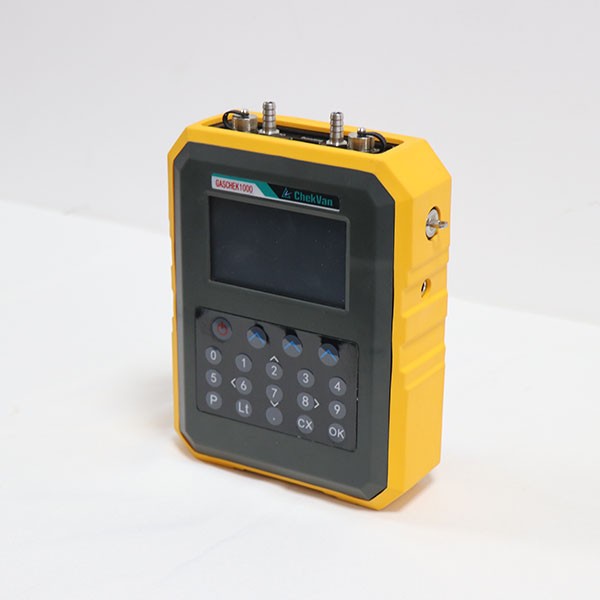
The GASCHEK1000 portable biogas analyzer
The GASCHEK1000 portable biogas analyzer uses advanced photoelectric sensing principles to detect and analyze methane (CH₄), oxygen (O₂), carbon dioxide (CO₂), hydrogen sulfide (H₂S), and other gases.
Its portable design supports on-site measurements at different sampling points around a food waste biogas facility. Operators can use the analyzer for routine gas-quality checks, process assessment, commissioning, and troubleshooting.
Gas composition should be considered together with gas flow, feedstock loading, temperature, pH, and other process data. A change in methane concentration alone does not necessarily indicate a change in total methane production.
6. Improve Hydrogen Sulfide and Moisture Removal
Raw biogas generally requires appropriate treatment before it is used in energy-generation equipment.
Hydrogen Sulfide Removal
Food waste composition can vary considerably, and some feedstocks contain sulfur compounds that contribute to H₂S formation.
Depending on the gas concentration and plant design, treatment methods may include activated carbon, iron-based media, biological desulfurization, or other suitable technologies.
Regular H₂S measurements help operators evaluate treatment performance and identify when media replacement or maintenance may be needed.
Moisture Control
Raw biogas usually contains water vapor. Condensation in pipelines can interfere with gas flow and contribute to corrosion.
Cooling, condensate traps, and gas-drying equipment can help control moisture before the gas enters sensitive downstream equipment.
Effective pretreatment can improve equipment reliability and reduce maintenance requirements.
7. Use Biogas Efficiently for Energy Recovery
Improving methane production is only part of the goal. The gas must also be used effectively.
Combined Heat and Power
Combined heat and power (CHP) systems generate electricity and recover useful heat from biogas. Recovered heat can potentially support digester temperature control or serve other facility heating requirements.
The actual efficiency depends on the equipment, operating load, maintenance, and whether the recovered heat can be used.
Boiler and Direct Heat Applications
Suitable biogas can be used in compatible boilers or thermal systems to provide process heat. Operators should ensure that gas quality meets the equipment manufacturer’s requirements.
Biogas Upgrading
For projects requiring a higher methane concentration, raw biogas can be upgraded by removing most of the CO₂ and controlling other impurities.
Technologies such as membrane separation, pressure swing adsorption, water scrubbing, and chemical absorption may be considered. The best option depends on gas flow, required biomethane quality, methane recovery, energy consumption, and project economics.
8. Reduce Methane Losses and Improve Plant Reliability
Methane losses reduce the amount of energy available for use and can undermine the environmental benefits of a biogas project.
Facilities should regularly inspect gas pipes, valves, seals, storage systems, pressure-relief equipment, and connections for leaks or damage. Gas-handling systems should be designed and operated according to applicable safety standards.
Preventive maintenance is also important for feeding systems, pumps, mixers, compressors, gas treatment equipment, and monitoring instruments.
A maintenance schedule based on equipment condition and operating history can help prevent unplanned downtime and maintain consistent energy production.
9. Manage Digestate and Close the Resource Loop
Anaerobic digestion produces digestate as well as biogas. Digestate contains residual organic matter and nutrients that may be recovered for agricultural use after appropriate assessment and treatment.
Depending on its characteristics, digestate may require solid-liquid separation, storage, further treatment, or nutrient management.
Its use must comply with relevant regulations and account for nutrient content, pathogens, and possible contaminants.
By managing digestate effectively, food waste treatment facilities can recover additional value from the process and support a more circular resource system.
10. Use Data to Improve Overall Performance
A successful food waste biogas plant relies on more than a single piece of equipment. Operators need to combine feedstock data, digestion parameters, gas flow measurements, gas composition, and energy output.
For example, if methane concentration declines, operators can examine changes in feedstock composition, organic loading, pH, temperature, and digester stability. If gas quality remains stable but total energy output decreases, gas flow, equipment availability, and utilization efficiency may need further investigation.
The GASCHEK1000 portable biogas analyzer provides a convenient way to measure key gas components at selected sampling points. These measurements can complement other plant instruments and help operators make better-informed decisions about process adjustments and maintenance.
Improving biogas production from food waste requires a coordinated approach to feedstock preparation, anaerobic digestion, process control, gas purification, and energy utilization.
Consistent feedstock quality, stable temperature and pH, appropriate organic loading, and regular gas analysis can help maintain digestion performance. Effective H₂S removal, moisture control, preventive maintenance, and methane leak prevention further support reliable operation.
The GASCHEK1000 portable biogas analyzer helps operators measure CH₄, CO₂, O₂, and H₂S during field inspections and routine process checks. Combined with gas-flow measurements and digester operating data, these results can support better process evaluation and energy recovery decisions.
With appropriate technology, careful operation, and reliable monitoring, food waste can become a valuable source of renewable energy while supporting more sustainable organic waste management.
About ChekVan Tech
Since the foundation of Chekvan Tech, it has endeavored to be an qualified manufacturer and supplier of portable biogas analyzers, online biogas monitoring system, fixed gas detectors for biogas plants around the world. We also develop and builds microflow biogas analyzer and gas blender for universities and researching facilities on biogas research.
To learn more, please don’t hesitate to contact us via email at sales@chekvan.com, or visit our website at www.chekvan.com.

