

Organic waste management has become an important challenge for municipalities, agricultural businesses, food-processing facilities, and industrial wastewater treatment plants. Traditional waste disposal methods can lead to environmental problems and fail to recover the energy and nutrients contained in biodegradable materials. With advances in renewable energy technology, organic waste can instead become a valuable resource for sustainable energy production.
Biogas from organic waste technology uses anaerobic digestion and related treatment processes to convert biodegradable materials into methane-rich gas. Recent developments in feedstock pretreatment, digester design, process automation, gas purification, and monitoring are helping facilities improve treatment efficiency and recover more usable energy.
What Is Biogas from Organic Waste Technology?
Biogas from organic waste technology refers to the processes and equipment used to convert biodegradable waste into biogas through anaerobic digestion.
The process takes place in an oxygen-free environment, where microorganisms break down organic matter and produce a gas mixture primarily containing methane (CH₄) and carbon dioxide (CO₂). Raw biogas may also contain hydrogen sulfide (H₂S), water vapor, oxygen, and other trace components.
Common feedstocks include:
Food waste from restaurants, supermarkets, and food-processing facilities
Animal manure and agricultural residues
Organic municipal waste
Sewage sludge
Biodegradable industrial wastewater
Crop residues and other suitable organic materials
Depending on its composition and the final application, raw biogas can be used in suitable heating or power-generation equipment or upgraded into biomethane for applications requiring a higher methane concentration.
1. Advances in Organic Waste Pretreatment
Effective waste pretreatment is an important factor in improving anaerobic digestion performance. Organic materials vary in size, moisture content, composition, and biodegradability, so they may require different preparation methods before entering a digester.
Modern pretreatment approaches include mechanical size reduction, screening, separation of contaminants, and controlled mixing. Some projects also use thermal, chemical, or biological pretreatment to improve the accessibility of organic material to microorganisms.
For example, food waste may contain packaging, bones, or other unsuitable materials that must be removed. Fibrous agricultural residues may require additional processing to improve their digestibility.
The appropriate pretreatment method depends on the feedstock, expected increase in gas production, energy consumption, equipment cost, and potential environmental impacts.
2. Improved Anaerobic Digester Design
Anaerobic digestion is the core process in biogas production. Advances in digester design and control can help facilities handle different feedstocks while maintaining stable operating conditions.
Common digester configurations include continuously stirred tank reactors, plug-flow digesters, covered anaerobic lagoons, and high-rate anaerobic reactors for suitable wastewater streams.
Modern systems may incorporate improved mixing, insulation, temperature control, automated feeding, and process sensors.
These features help operators manage important parameters such as:
Digester temperature
pH and alkalinity
Organic loading rate
Hydraulic retention time
Mixing conditions
Feedstock consistency
Maintaining stable conditions is essential because abrupt changes in temperature, loading, or feedstock composition can disrupt microbial activity and reduce methane production.
3. Co-Digestion of Different Organic Waste Streams
Co-digestion involves treating two or more suitable organic feedstocks in the same digester. For example, food waste may be combined with animal manure or other biodegradable materials.
This approach can improve feedstock utilization and help balance characteristics such as moisture content, nutrient availability, and organic matter composition.
However, mixing feedstocks does not automatically increase efficiency. Excessive organic loading, unsuitable carbon-to-nitrogen balance, ammonia accumulation, or inhibitory substances can negatively affect digestion.
Successful co-digestion requires feedstock characterization, controlled blending, and regular process monitoring. Pilot testing may be appropriate when introducing unfamiliar materials.
4. Advanced Biogas Purification Technology
Raw biogas often needs treatment to protect equipment and meet the requirements of its intended application.
Hydrogen Sulfide Removal
Hydrogen sulfide is a corrosive and toxic gas that can damage engines, compressors, pipelines, and other equipment. Depending on the concentration and system design, H₂S can be removed using activated carbon, iron-based media, biological desulfurization, or other suitable treatment methods.
Regular H₂S monitoring helps operators evaluate treatment performance and identify when maintenance may be necessary.
Moisture Removal
Water vapor in biogas can condense in pipelines and equipment, potentially causing corrosion and operational problems. Cooling, condensate traps, and gas-drying systems can help control moisture.
Carbon Dioxide Removal
When higher methane concentrations are required, CO₂ can be separated through membrane technology, pressure swing adsorption, water scrubbing, or chemical absorption.
The choice depends on gas flow, feed composition, methane recovery, energy use, required biomethane quality, and operating costs.
5. Biogas Upgrading and Biomethane Production
One important development in organic waste utilization is the ability to upgrade raw biogas into biomethane.
Upgrading removes most of the carbon dioxide and controls other contaminants to meet the specifications of the final application. Depending on local regulations and gas quality, biomethane can potentially be used as vehicle fuel, industrial fuel, or gas-grid injection.
Advanced upgrading systems focus on improving methane recovery, reducing energy consumption, and minimizing methane losses.
For project developers, it is important to evaluate the entire process, including pretreatment, upgrading, compression, gas storage, and final utilization. A high methane concentration alone does not guarantee the best overall performance if substantial methane is lost during purification.
6. Digital Monitoring and Process Automation
Digital monitoring is becoming increasingly important in modern biogas plants. Sensors, automated controls, data logging, and alarm systems can help operators identify process changes earlier and make more informed operating decisions.
Monitoring may cover digester temperature, pressure, pH, feed rates, gas flow, and gas composition.
Gas composition is particularly useful because changes in methane, carbon dioxide, oxygen, and hydrogen sulfide can provide information about gas quality and treatment performance.
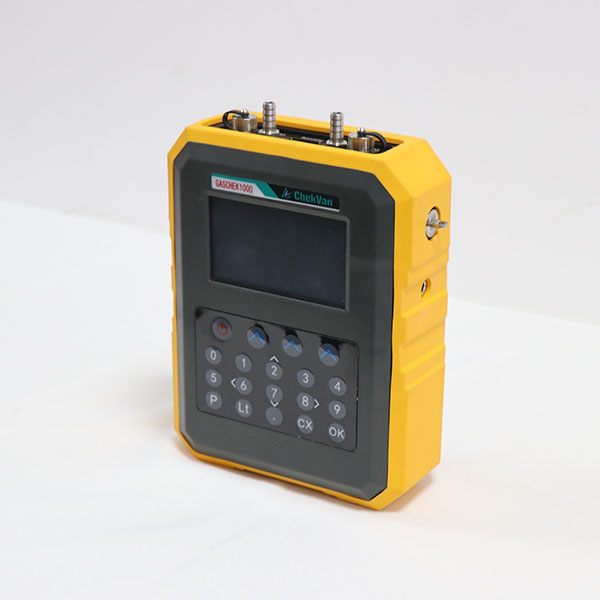
The GASCHEK1000 portable biogas analyzer
The GASCHEK1000 portable biogas analyzer uses advanced photoelectric sensing principles to detect and analyze methane (CH₄), oxygen (O₂), carbon dioxide (CO₂), hydrogen sulfide (H₂S), and other gases. Its portable design supports on-site measurements at different points in a biogas facility.
Operators can use the GASCHEK1000 for raw biogas checks, digester performance assessment, purification inspections, commissioning, and routine troubleshooting. These measurements complement fixed instrumentation by allowing technicians to check gas composition at selected sampling points.
7. Improving Energy Recovery Efficiency
Producing biogas is only one part of an efficient waste-to-energy system. The energy must also be used effectively.
Biogas can be used in suitable boilers for heat production or in engines and combined heat and power systems to generate electricity and recover useful heat.
Where upgrading is economically and technically suitable, biomethane can provide additional options for energy use and distribution.
Facilities can improve overall energy performance by:
Recovering heat from combined heat and power systems
Using recovered heat to maintain digester temperature
Matching gas production with energy demand
Reducing unnecessary gas flaring
Minimizing methane leakage
Optimizing pumps, mixers, and compressors
Monitoring gas quality and equipment performance
The best approach depends on the plant’s energy requirements, available infrastructure, and operating conditions.
8. Digestate Management and Nutrient Recovery
Anaerobic digestion produces digestate in addition to biogas. This material contains residual organic matter and nutrients that may be recovered for agricultural use after appropriate assessment and treatment.
Modern digestate management can include solid-liquid separation, nutrient recovery, storage, and further treatment. These processes may improve handling and create opportunities to recover useful nutrients.
However, digestate is not automatically suitable for unrestricted land application. Its use depends on nutrient content, pathogen levels, contaminants, local regulations, and soil requirements.
Integrating digestate management into the initial project design helps ensure that waste treatment and resource recovery are addressed together.
9. Environmental and Economic Benefits
When properly designed and operated, biogas from organic waste technology can provide several benefits.
Renewable energy production: Biogas offers a source of energy from biodegradable materials and can reduce reliance on conventional fuels where it replaces them.
Improved waste management: Anaerobic digestion can reduce the amount of biodegradable waste requiring disposal and support controlled treatment of organic materials.
Potential greenhouse gas reductions: Capturing methane from suitable waste streams can reduce emissions that might otherwise occur during uncontrolled decomposition. The overall benefit depends on methane leakage, energy use, feedstock sourcing, and digestate management.
Resource recovery: The process can recover both energy and nutrients, supporting a circular approach to waste management.
Potential operating savings: Facilities may reduce energy purchases or waste-disposal expenses, although the financial results depend on project scale, feedstock supply, equipment costs, maintenance, and local energy prices.
10. Challenges When Implementing Advanced Biogas Technology
Despite continued technological development, biogas projects still face several challenges.
Feedstock supply must be consistent and suitable for digestion. Equipment must be matched to the expected waste volume and gas production. Operators also need to control odors, manage digestate, maintain gas-treatment equipment, and comply with environmental and safety requirements.
Gas monitoring is important throughout the process. The GASCHEK1000 portable biogas analyzer can help operators assess key gas components and investigate changes in gas quality, supporting maintenance and process evaluation.
Nevertheless, portable gas analysis should be used alongside appropriate process controls, leak detection, fixed safety instruments, and operating procedures. It does not replace equipment specifically designed for continuous safety monitoring.
Advances in biogas from organic waste technology are helping facilities improve waste treatment, recover renewable energy, and make better use of organic resources. Developments in pretreatment, digester design, co-digestion, gas purification, biomethane upgrading, automation, and digestate management provide opportunities to improve system performance.
The results depend on selecting suitable feedstocks, maintaining stable digestion conditions, controlling contaminants, and using the produced gas efficiently. Reliable gas composition analysis also supports better operational decisions.
The GASCHEK1000 portable biogas analyzer provides on-site measurement of CH₄, CO₂, O₂, and H₂S, helping operators assess raw biogas quality, inspect purification performance, and support routine maintenance.
By integrating appropriate treatment technologies with effective gas monitoring and energy recovery, organizations can develop more efficient and sustainable organic waste management systems.
About ChekVan Tech
Since the foundation of Chekvan Tech, it has endeavored to be an qualified manufacturer and supplier of portable biogas analyzers, online biogas monitoring system, fixed gas detectors for biogas plants around the world. We also develop and builds microflow biogas analyzer and gas blender for universities and researching facilities on biogas research.
To learn more, please don’t hesitate to contact us via email at sales@chekvan.com, or visit our website at www.chekvan.com.

