
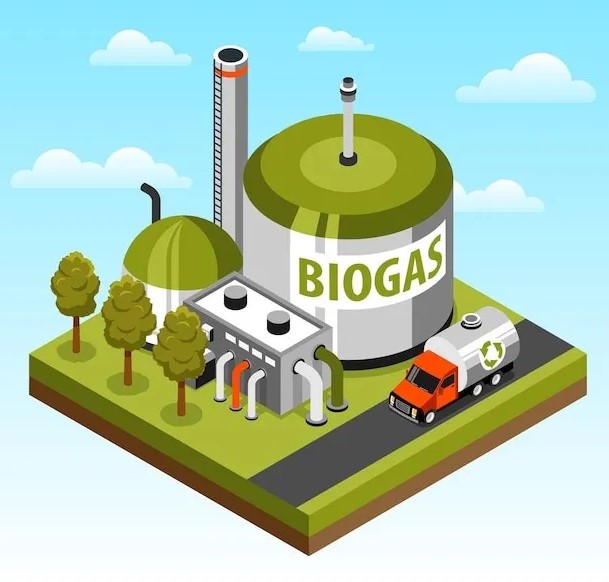
The food processing industry combines the dual characteristics of high-strength organic waste discharge and continuous energy demand, making it one of the most economically rational industrial scenarios for biogas utilization. Taking potato processing and the brewing and beverage industry as the main entry points, this paper examines how biogas is transformed from a by-product of waste treatment into a productive resource for steam generation, combined heat and power, and biomethane supply. The case of Aviko’s German plant shows that biogas from potato peels and process wastewater can replace approximately 3 million cubic meters of natural gas; HoSt’s project experience indicates that brewery biogas can follow three pathways: combined heat and power, biomethane upgrading, and food-grade CO2 recovery. On this basis, the technical characteristics of the GASCHEK1000 portable biogas analyzer are introduced, and its practical value in ensuring gas quality and protecting equipment in industrial-scale biogas utilization is explained.
Introduction
The food processing industry’s demand for energy is continuous and concentrated. Unlike the intermittent gas use of household cooking, once a processing line starts, the supply of steam, hot water, and electricity cannot be interrupted. This characteristic happens to match a core attribute of biogas: it is a dispatchable energy carrier that can be produced on site, unrestricted by weather or time of day.
At the same time, the food processing industry is itself a concentrated generator of organic waste. Potato peels, distillers’ grains, spent yeast, and sugar- or starch-containing process wastewater—these materials bring both disposal costs and considerable biodegradable organic content. By connecting the two, biogas shifts from an environmental facility to part of the production system. Understanding how biogas is actually used in food processing requires examining both the process requirements on the application side and the gas treatment and monitoring on the supply side.
Potato Processing: From Waste Treatment to Steam Generation
- Operating Data of a Closed-Loop System
Operating data from the German Rain am Lech plant of Aviko, Europe’s largest potato product manufacturer, provides a complete sample of industrial biogas utilization. The plant processes approximately 250,000 tonnes of raw potatoes annually, generating large quantities of potato peels and starch-containing process wastewater. These organic residues are fed directly into the plant’s anaerobic digestion unit, producing approximately 3 million cubic meters of biogas per year.
The destination of the biogas is clear: it is used to produce the process steam required for potato processing. The steam is used for cooking and peeling, heating fryers, drum dryers, and pre-cooking equipment. According to the company’s sustainability manager, biogas from its own residues replaces approximately 3 million cubic meters of natural gas per year, reducing CO₂ emissions by about 400 tonnes, with carbon emission reductions of up to 70% under full gas production conditions.
The design details of this system are noteworthy. Aviko’s original thermal system included a 19 t/h biomass boiler (bearing the base load) and a 25 t/h natural gas boiler (peak shaving and redundancy). The newly added biogas steam boiler has a capacity of 10 t/h; although the smallest, it has the most flexible regulation performance—when steam demand drops during cleaning cycles, the biogas boiler can precisely match the low load, reducing the steam waste previously “vented” due to the minimum output limit of the large boilers. Biogas not consumed by the steam boiler is sent to the combined heat and power unit to supply heat to buildings around the plant.
- The Cascading Utilization Principle and Feed Fluctuations
The IEA Bioenergy 2025 report lists potato processing as a typical scenario for biogas integration in the food and beverage industry and emphasizes the “cascading utilization” principle: by-products should first be considered for feed utilization, and only materials unsuitable for feed should enter anaerobic digestion. This principle determines the feedstock boundaries of industrial biogas projects and also means that feed properties will fluctuate with production cycles and by-product market conditions—posing a continuous challenge to digestion process stability.
Brewing and Beverage Industry: Multiple Output Pathways
- Three Utilization Pathways
Brewery waste—spent yeast, brewer’s grains, and lautering water—is likewise an excellent feedstock for anaerobic digestion. HoSt Bioenergy’s project experience in the food and beverage industry shows that biogas at a brewery can follow three pathways: direct on-site combined heat and power, upgrading to biomethane to replace natural gas, or purifying the CO2 separated during upgrading into a food-grade product for reuse in carbonation.
The third pathway is particularly attractive to beverage companies. Breweries themselves require large amounts of CO2 in fermentation and filling, traditionally purchased externally. Purifying the biogenic CO2 separated after upgrading biogas produced from their own waste enables closed-loop carbon utilization within the same facility. HoSt notes that the sale of food-grade CO2 requires certified gas analyzers to verify quality, which hints at the position of analytical instruments in the industrial biogas value chain—they are not only process control tools but also support for product quality compliance.
- Load Matching of Steam and Electricity
The heat demand of beer production has clear batch characteristics: saccharification, boiling, fermentation temperature control, and CIP cleaning each have different temperature and load curves. The advantage of biogas combined heat and power units is that they can be adjusted on demand, but the prerequisite is a stable gas supply. Similar to potato processing, the design of brewery biogas systems also needs to balance the digester’s gas production rate against fluctuations in production energy use; the capacity of the gas storage holder and the unit’s regulation capability together determine the degree to which this balance is achieved.
Application Logic of GASCHEK1000 in Food Processing Biogas Scenarios
- Special Requirements for Gas Monitoring in Industrial Scenarios
The fundamental difference between industrial biogas utilization and household scenarios lies in: high equipment value, high downtime costs, and clear quality compliance requirements. The investment payback of a steam boiler or combined heat and power unit adapted for biogas depends on continuous operation. The hidden deterioration of gas quality—a slow decline in methane concentration, a gradual rise in H2S—is often not noticed before visible equipment failure occurs.

The GASCHEK1000 portable biogas analyzer
The GASCHEK1000 portable biogas analyzer can simultaneously detect CH4, O2, CO2, and H2S, with a laser sensor in the CH4 channel. For food processing enterprises, the following functions have practical significance:
Regular H2S inspection.
In the Aviko case, biogas is used directly in steam boilers, and the corrosion risk of H₂S to combustion equipment and pipelines always exists. Portable analyzers enable plant technicians to conduct rapid testing at multiple points—digester outlet, gas holder inlet, and boiler inlet—to locate the source of corrosive gas.
CH4 concentration and energy efficiency accounting.
Industrial users need to know how much heat each cubic meter of biogas actually contributes. CH4 readings are directly linked to heating value calculations, providing a basis for energy cost allocation and carbon reduction accounting. The GASCHEK1000’s CH4 laser sensor requires no calibration during the warranty period, reducing the plant’s maintenance burden.
Data recording and audit traceability.
Storage for 360,000 data sets and QR code scanning for identification enable structured preservation of multi-point, high-frequency inspection records. For food enterprises needing to pass ISO 50001 energy management system certification or customer carbon audits, such records are supporting materials proving the actual use effect of clean energy.
- Division of Labor with Fixed Online Monitoring
Industrial-scale biogas projects typically install fixed online analyzers at key nodes for continuous control and alarm. The role of portable analyzers is not to replace them but to cover the intermediate links not covered by online instruments—each digester outlet, the gas-liquid separator outlet after pretreatment, and sampling points at different heights of the gas holder. These spatial-dimension data help diagnose local problems: whether a particular digester is acidifying, whether a section of pipeline has leaks or corrosion product blockage.
For food processing enterprises, production facilities are often compactly laid out, with distance and process barriers between digestion units and production workshops. Portable analyzers make cross-area inspection possible without connecting every sampling point’s data to a centralized control system.
Biogas utilization in the food processing industry is essentially a calculation about “whether waste is worth redefining as a resource.” Aviko replaced 3 million cubic meters of natural gas with potato peels, and breweries use spent yeast and brewer’s grains to simultaneously produce steam, electricity, and food-grade CO₂—the driving forces behind these decisions are not only carbon reduction targets but also the realistic considerations of energy cost structure and waste disposal fees.
But the margin for error in industrial scenarios is far smaller than in household scenarios. The repair costs and production losses of a boiler or generator corroded by H₂S can offset years of fuel savings. The position of the GASCHEK1000 in this value chain is clear: it does not produce energy or treat waste, but it enables operators to know whether the gas entering the equipment is within acceptable limits. As biogas in food processing evolves from an “environmental project” to “production infrastructure,” this visibility is a basic condition for keeping the system running.
About ChekVan Tech
Since the foundation of Chekvan Tech, it has endeavored to be an qualified manufacturer and supplier of portable biogas analyzers, online biogas monitoring system, fixed gas detectors for biogas plants around the world. We also develop and builds microflow biogas analyzer and gas blender for universities and researching facilities on biogas research.
To learn more, please don’t hesitate to contact us via email at sales@chekvan.com, or visit our website at www.chekvan.com.

