
Biogas, produced through anaerobic digestion of organic waste, has moved far beyond its traditional role as a simple cooking fuel. This article traces the spectrum of biogas applications in daily household life—from cooking and lighting to small-scale power generation and combined heat-and-power systems—drawing on documented cases from China, India, and international development projects. It then introduces the GASCHEK1000 portable biogas analyzer, a field-ready instrument designed to monitor methane, carbon dioxide, hydrogen sulfide, and oxygen in digestion systems, and explains how such monitoring supports the safe and efficient use of biogas at the household and community level.
Introduction
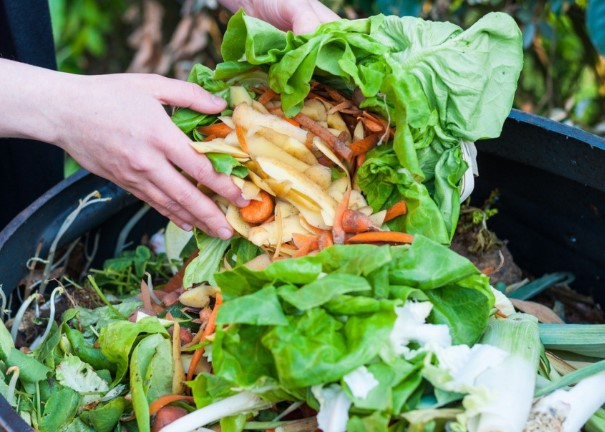
For millions of rural households, particularly in Asia, biogas has already transformed daily life in ways that extend well beyond the kitchen stove. The technology is straightforward: organic waste—animal manure, crop residues, kitchen scraps—is sealed in an anaerobic digester where microorganisms break it down, releasing a combustible gas composed primarily of methane. What emerges is not only fuel, but also a nutrient-rich slurry that returns to the fields as fertilizer.
The question worth asking is no longer whether biogas can serve household needs, but how far its usefulness extends. The answer, based on decades of practice and continuing technical refinement, spans a remarkably wide range: from the most basic daily necessity of cooked food to the generation of electricity that lights a home or runs a pump.
From Cooking Fuel: The Foundational Application
Meeting the Daily Cooking Demand
Cooking remains the most universal and immediately life-changing use of household biogas. A typical family-scale digester of 6 to 10 cubic meters capacity can reliably meet the cooking, water-heating, and basic lighting needs of a three-to-five-person household. In practical terms, the gas replaces firewood, charcoal, or liquefied petroleum gas—fuels that are either costly, environmentally damaging, or both.
The health implications are substantial. In households that previously cooked over open wood fires, indoor smoke caused eye irritation and respiratory illness, particularly among women and children who spent the most time near the hearth. One farmer in China’s Guangxi province described the change plainly: “We used to cook with wood. The smoke made my eyes tear and burn and I always coughed. The children too were often sick… Now that we’re cooking with biogas, things are much better”.
Beyond the Stove: Lighting and Water Heating
Biogas lighting, though less common than cooking, remains relevant in off-grid areas. A modest digester can support gas lamps for evening illumination, extending productive hours and improving safety. Water heating for bathing and household cleaning represents another direct use, particularly where the gas supply exceeds immediate cooking needs. In some designs, the waste heat from biogas appliances is captured to warm water, improving overall energy efficiency.
The scale of adoption matters here. China’s biogas programs, supported by organizations including IFAD, provided nearly 23,000 digesters to poor rural households in western Guangxi alone, with measurable reductions in firewood consumption—56,600 tons saved annually across the project area, equivalent to recovering roughly 7,500 hectares of forest.
To Household Power: Electricity and Mechanical Energy
Small-Scale Electricity Generation
The step from thermal use to electrical generation represents a qualitative shift in what biogas can do for a household or a community. Biogas can fuel modified engines connected to generators, producing electricity for lighting, appliances, and small machinery. The energy arithmetic is favorable: one cubic meter of biogas contains roughly 6 kwh of thermal energy; when converted to electricity, about 2 kwh is generated, with the remainder available as heat. Two kilowatt-hours is enough to power a 100-watt lamp for twenty hours—a meaningful quantity in a home unconnected to the grid.
For larger farming operations, the economics tilt further. A biogas-powered generator can run pumps, feed mixers, and workshop tools, with surplus electricity potentially fed into the grid where regulations permit. The dual-fuel engines and generating sets developed for this purpose have become commercially established, and the engineering industries supplying them have expanded accordingly.
Combined Heat and Power at the Household Scale
Recent research has explored integrated systems that pair biogas with solar energy to meet multiple household demands simultaneously. In a demonstration project in Gansu Province, China, a household-scale combined heat and power system based on biogas and solar inputs met 69% of a 117-square-meter building’s heating demand across the full heating season, while also supplying cooking gas and electricity. During the test period, the system produced 110.7 cubic meters of biogas with an average methane content of 55%, and over a year saved 3,556 kilograms of standard coal while reducing CO2 emissions by 9,317 kilograms.
This kind of integration—biogas providing dispatchable energy when sunlight is unavailable, solar carrying load when gas production is lower—points toward a more resilient household energy model than either technology alone.
The Monitoring Imperative: Introducing the GASCHEK1000
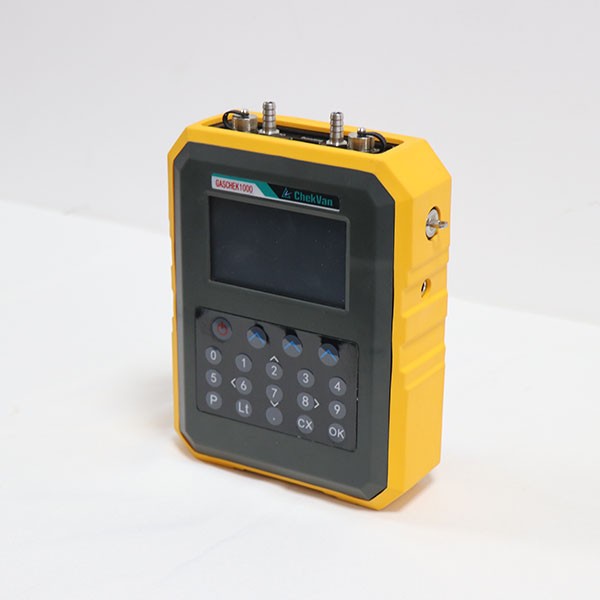
the GASCHEK1000 portable biogas analyzer
Why Gas Quality Matters at the Household Level
Whether biogas is burned for cooking or fed to an engine, its usefulness depends on what it contains. Methane is the energy carrier; carbon dioxide dilutes it; hydrogen sulfide corrodes burners, pipes, and engine components; and oxygen intrusion signals leaks or process imbalance. A digester performing poorly may still produce gas, but that gas may burn inefficiently, foul equipment, or pose safety risks.
Household and small-community digesters are rarely equipped with sophisticated instrumentation. Operators rely on flame appearance, gas pressure, and experience. This is where portable analyzers become valuable: they bring laboratory-grade measurement into the shed or the digester yard.
GASCHEK1000: Technical Profile and Field Utility
The GASCHEK1000 portable biogas analyzer uses photoelectric sensing, with a laser sensor dedicated to methane detection, to simultaneously measure CH4, O2, CO2, and H2S. Its specifications are tailored to the realities of biogas facilities that cannot support full-time monitoring staff: more than 19 hours of battery operation on a single charge, a resistive touchscreen that works with gloves, and storage for 360,000 data sets with QR-code-based point identification.
For household-scale or community biogas systems, several features stand out. The methane channel requires no calibration during the warranty period, reducing the technical burden on users. The instrument’s pump and pressure measurement capability (down to −70 kPa) allow checking of gas line integrity—useful for detecting the small leaks that waste gas and create safety hazards in domestic settings. And the data storage, combined with supporting analysis software, allows operators to track gas quality over time, correlating it with feedstock changes, seasonal temperature shifts, or maintenance events.
The manufacturer lists agricultural and farm waste digestion among the instrument’s primary applications, alongside food waste digestion and biogas upgrading research. User feedback cited on the manufacturer’s site includes a comment from a biogas research institute noting “very durable battery and even better accuracy” compared with a previously used European instrument.
From Measurement to Better Practice
The value of a portable analyzer is not the data itself but what the data enables. A household that discovers its biogas methane content has dropped from the typical 55–65% range to below 50% can investigate feedstock imbalances, temperature fluctuations, or overloading before the digester fails. A community facility that detects elevated hydrogen sulfide can adjust feedstock or add a gas-scrubbing step before the corrosion damages an engine. And an operator preparing to connect a biogas lamp or stove can verify that the gas supply is within safe combustion limits.
In this sense, instruments like the GASCHEK1000 do not merely measure biogas—they make visible the invisible factors that determine whether biogas serves a household well or poorly.
Biogas in daily life begins with cooking, but it does not end there. The same gas that replaces firewood under a pot can, with appropriate conversion equipment, light a room, heat water, charge a battery, or run a pump. The progression from thermal use to electrical generation is not merely technical—it represents a household’s move from energy scarcity toward energy autonomy.
What connects these applications is the need for consistent gas quality and safe operation. Portable analyzers such as the GASCHEK1000 offer a practical means for households and small facilities to know what their digesters are producing and to respond before small problems become failures. When a farmer can check methane content as routinely as checking the gas pressure gauge, biogas becomes not just a fuel but a managed resource—one that works reliably, day after day, from the first pot of rice to the last light switched off at night.
About ChekVan Tech
Since the foundation of Chekvan Tech, it has endeavored to be an qualified manufacturer and supplier of portable biogas analyzers, online biogas monitoring system, fixed gas detectors for biogas plants around the world. We also develop and builds microflow biogas analyzer and gas blender for universities and researching facilities on biogas research.
To learn more, please don’t hesitate to contact us via email at sales@chekvan.com, or visit our website at www.chekvan.com.

