
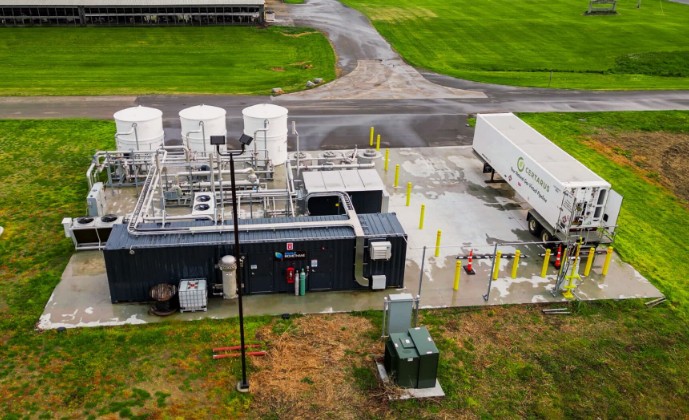
The development of biogas facilities is becoming increasingly important as countries seek sustainable solutions for waste management and renewable energy production. However, one of the biggest challenges faced by project developers is the significant upfront investment required for plant construction, equipment installation, and operational setup. This is where a bio gas project government scheme can play a vital role.
Government-supported programs are designed to encourage the adoption of renewable energy technologies by reducing financial barriers and improving project feasibility. Through grants, subsidies, tax incentives, and financing support, these schemes help investors, farmers, municipalities, and industrial operators establish successful biogas projects with lower financial risk.
Why Governments Support Biogas Projects
Biogas projects provide multiple benefits that align with national sustainability goals. By converting organic waste into renewable energy, biogas facilities help:
Reduce greenhouse gas emissions
Divert organic waste from landfills
Generate renewable electricity and heat
Improve waste management practices
Produce nutrient-rich organic fertilizer
Strengthen energy security
Because of these environmental and economic advantages, many governments actively support biogas development through dedicated funding programs.
Major Costs in a Biogas Project
Before understanding how government schemes reduce costs, it is important to identify the primary expenses involved in a typical biogas facility.
Capital Investment
Initial project costs often include:
Anaerobic digesters
Gas storage systems
Feedstock handling equipment
Gas purification units
Combined heat and power (CHP) systems
Monitoring and control equipment
Infrastructure Development
Additional expenses may include:
Site preparation
Utility connections
Roads and access infrastructure
Buildings and storage facilities
Operational Costs
Ongoing expenditures include:
Labor
Maintenance
Feedstock transportation
Energy consumption
Equipment servicing
These costs can create significant financial challenges, especially for first-time project developers.
Types of Government Support Available
A bio gas project government scheme may provide assistance through several mechanisms.
Direct Capital Grants
Many programs offer grants that cover a portion of construction and equipment costs.
Benefits include:
Reduced upfront investment
Lower financing requirements
Improved project cash flow
Tax Incentives
Governments may provide:
Investment tax credits
Accelerated depreciation
Tax exemptions on renewable energy equipment
These incentives reduce the overall cost of project ownership.
Low-Interest Loans
Special financing programs often provide:
Lower borrowing costs
Longer repayment periods
Government-backed loan guarantees
This helps developers manage capital expenditures more effectively.
Renewable Energy Incentives
Some schemes support revenue generation through:
Feed-in tariffs
Renewable energy certificates
Biomethane production incentives
Grid connection support
These programs improve long-term project profitability.
Improving Project Feasibility Through Technical Planning
Government funding applications often require detailed technical and economic evaluations. Accurate performance projections are essential for demonstrating project viability.
A comprehensive feasibility assessment should include:
Feedstock availability analysis
Expected biogas production
Methane yield estimates
Energy generation forecasts
Environmental impact assessments
Reliable data strengthens funding applications and increases approval chances.
The Role of the GASCHEK1000 Portable Biogas Analyzer
Accurate gas analysis can be a valuable part of project planning and funding preparation. The GASCHEK1000 portable biogas analyzer helps developers evaluate biogas quality during pilot projects, feasibility studies, and commissioning activities.

The GASCHEK1000 portable biogas analyzer
Using advanced photoelectric sensing technology, the GASCHEK1000 measures:
Methane (CH₄)
Carbon dioxide (CO₂)
Oxygen (O₂)
Hydrogen sulfide (H₂S)
The analyzer provides real-time gas composition data that can help project teams:
Verify expected methane production
Evaluate feedstock performance
Assess gas purification requirements
Support technical reports for funding applications
Optimize system design before full-scale implementation
By providing reliable and accurate measurements, the GASCHEK1000 supports informed decision-making and improves project planning accuracy.
Long-Term Financial Benefits
Government schemes not only reduce initial investment costs but also contribute to long-term economic performance.
Potential benefits include:
Faster return on investment
Lower financing costs
Increased project profitability
Reduced operational risk
Improved competitiveness in renewable energy markets
Combined with effective project management, government support can significantly improve the financial sustainability of biogas facilities.
Common Requirements for Government Funding
Although programs vary by region, applicants are often required to provide:
Detailed project plans
Financial projections
Environmental assessments
Technical feasibility studies
Regulatory compliance documentation
Preparing these materials thoroughly can improve the likelihood of funding approval.
A bio gas project government scheme can substantially reduce investment costs by providing grants, tax incentives, low-interest financing, and renewable energy support mechanisms. These programs help overcome financial barriers and encourage the development of sustainable waste-to-energy projects.
In addition, accurate technical evaluation is essential when applying for government support. The GASCHEK1000 portable biogas analyzer offers reliable measurement of methane, carbon dioxide, oxygen, and hydrogen sulfide, helping developers validate project assumptions and strengthen funding applications. By combining government support with sound technical planning, biogas developers can build economically viable facilities that contribute to a cleaner and more sustainable energy future.
About ChekVan Tech
Since the foundation of Chekvan Tech, it has endeavored to be an qualified manufacturer and supplier of portable biogas analyzers, online biogas monitoring system, fixed gas detectors for biogas plants around the world. We also develop and builds microflow biogas analyzer and gas blender for universities and researching facilities on biogas research.
To learn more, please don’t hesitate to contact us via email at sales@chekvan.com, or visit our website at www.chekvan.com.
 Manufacturer of biogas analyzer, landfill gas analyzer and extraction monitor, anaerobic digester gas analyzer