
In the quest for sustainable energy sources, cow dung might not be the first thing that comes to mind. However, this seemingly humble waste product has been harnessed as a valuable resource in the form of biogas. The process involves converting cow dung, along with other organic materials, into biogas through anaerobic digestion. This not only provides a clean and renewable energy source but also addresses waste management and environmental concerns.
The Power of Cow Dung to Biogas Conversion
1. Anaerobic Digestion: The process begins with the collection of cow dung, which is rich in organic matter. This dung, along with other organic waste materials like crop residues, food scraps, and sewage, is placed in an anaerobic digester. This digester is a sealed environment that allows microorganisms to break down the organic matter in the absence of oxygen.
2. Biogas Production: As the microorganisms work their magic, they produce biogas, which is primarily composed of methane (CH4) and carbon dioxide (CO2). This biogas can be captured and stored for various applications.
3. Gas Storage: The biogas produced is stored in a gas holder, typically a floating drum or a fixed-dome structure. This storage ensures a constant pressure and supply of biogas.
4. Utilization: The captured biogas can be utilized in several ways:
– Cooking: Biogas can replace traditional cooking fuels like firewood or LPG, reducing indoor air pollution and deforestation.
– Heating: It can be used for space heating or water heating.
– Electricity Generation: In larger biogas plants, biogas can be used to generate electricity, contributing to the power grid.
– Vehicle Fuel: After proper purification and compression, biogas can be used as a clean fuel for vehicles.
5. Nutrient-Rich Byproduct: An often-overlooked benefit of the process is the nutrient-rich slurry, or digestate, that remains after digestion. This byproduct can serve as an excellent organic fertilizer, improving soil quality and crop yields in agriculture.
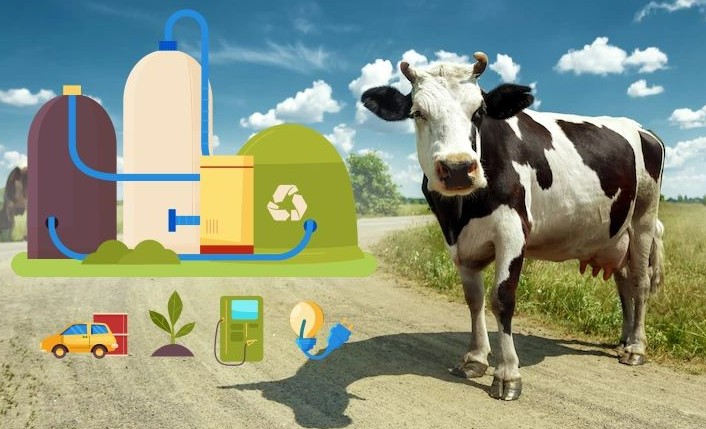
Benefits of Cow Dung to Biogas Solutions
1. Renewable Energy: Cow dung to biogas conversion provides a renewable energy source, reducing dependence on fossil fuels and supporting a sustainable energy landscape.
2. Waste Management: It efficiently manages organic waste, diverting it from landfills and reducing the environmental impact of waste disposal.
3. Carbon Footprint Reduction: The use of biogas significantly reduces the carbon footprint associated with traditional energy sources, contributing to climate change mitigation.
4. Energy Independence: Cow dung to biogas solutions offer a locally sourced and produced energy solution, reducing reliance on centralized energy grids and imported fuels.
5. Circular Economy: These solutions contribute to a circular economy by repurposing waste into valuable energy and organic fertilizer, closing the nutrient loop in agriculture.
Cow dung to biogas solutions exemplify the potential of sustainable energy generation and waste management. By harnessing the power of anaerobic digestion, these systems not only provide clean and renewable energy but also contribute to responsible waste disposal and environmental preservation. From barnyard waste to clean energy, the journey is a testament to innovation, sustainability, and our ability to turn what was once considered waste into a valuable resource. As the world increasingly seeks sustainable energy solutions, cow dung to biogas conversion shines as a beacon of hope for a cleaner and more eco-friendly future.
 Manufacturer of biogas analyzer, landfill gas analyzer and extraction monitor, anaerobic digester gas analyzer