
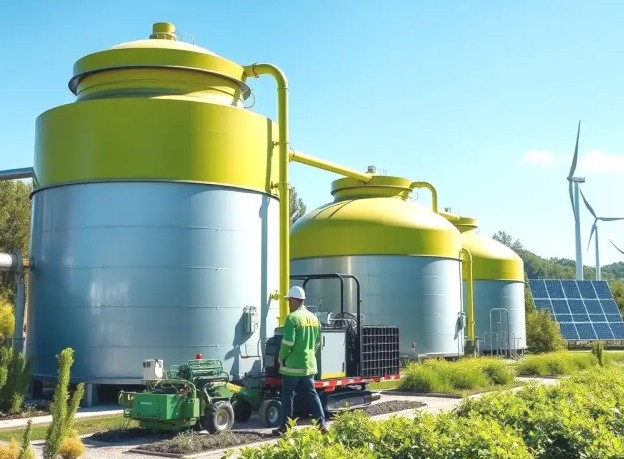
Access to clean, affordable energy remains a challenge in many regions, especially in rural and peri-urban communities. Simba Biogas systems are addressing this challenge by turning everyday organic waste into a reliable source of renewable power. By combining practical digester designs with modern monitoring technologies, these systems demonstrate how small- and medium-scale biogas solutions can deliver both environmental and social benefits.
Turning Organic Waste into Energy
Simba Biogas systems are designed to process organic waste such as kitchen scraps, animal manure, and agricultural residues. Through anaerobic digestion, microorganisms break down this waste in an oxygen-free environment, producing biogas primarily composed of methane (CH₄) and carbon dioxide (CO₂).
Instead of allowing organic waste to decompose openly—releasing greenhouse gases and creating sanitation problems—Simba Biogas captures the energy value of the waste. The resulting biogas can be used for cooking, heating, lighting, or even small-scale electricity generation, significantly reducing dependence on firewood, charcoal, or fossil fuels.
Benefits for Households and Communities
Simba Biogas systems offer multiple advantages:
Clean cooking energy: Biogas burns more cleanly than traditional biomass fuels, reducing indoor air pollution and improving health.
Waste management: Organic waste is safely treated, minimizing odors, pests, and water contamination.
Cost savings: Once installed, biogas systems lower household spending on fuel.
Nutrient recycling: The digested slurry can be used as an organic fertilizer, supporting sustainable agriculture.
These benefits make Simba Biogas particularly suitable for households, farms, schools, and community institutions.
The Importance of Gas Quality Monitoring
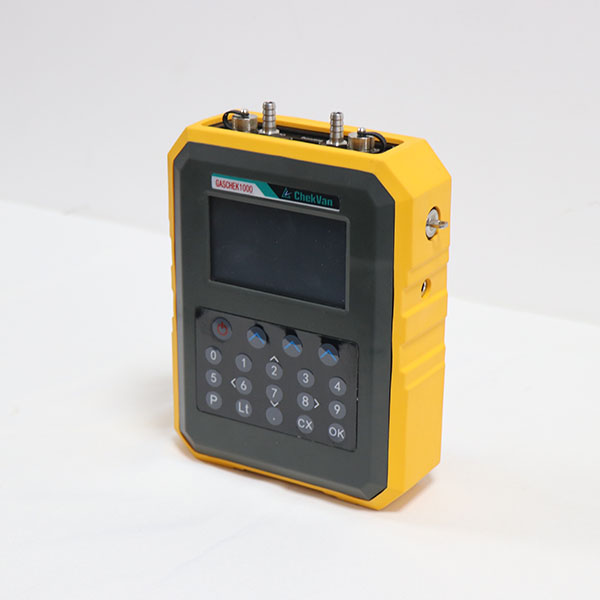
the GASCHEK1000 portable biogas analyzer
To ensure stable performance and safety, monitoring the composition of biogas is essential. Gas quality directly affects combustion efficiency, appliance lifespan, and overall system reliability.
Biogas analyzers, such as the GASCHEK1000 portable biogas analyzer, apply advanced photoelectric sensing technology to measure key gas components including methane (CH₄), oxygen (O₂), carbon dioxide (CO₂), hydrogen sulfide (H₂S), and other trace gases. By providing accurate, real-time data, these analyzers help operators assess gas quality and effectively monitor the anaerobic digestion process.
With reliable monitoring, issues such as low methane content, air leakage, or excessive hydrogen sulfide can be identified early, allowing timely adjustments to feedstock or operating conditions.
Supporting a Renewable Energy Future
By combining simple, user-friendly digester systems with modern gas analysis tools, Simba Biogas is helping communities convert waste into a dependable energy resource. This approach not only supports energy access but also contributes to climate change mitigation, circular economy practices, and sustainable development goals.
As renewable energy solutions continue to evolve, systems like Simba Biogas demonstrate that transforming organic waste into renewable power is not just technically feasible—it is practical, scalable, and impactful for communities around the world.
About ChekVan Tech
Since the foundation of Chekvan Tech, it has endeavored to be an qualified manufacturer and supplier of portable biogas analyzers, online biogas monitoring system, fixed gas detectors for biogas plants around the world. We also develop and builds microflow biogas analyzer and gas blender for universities and researching facilities on biogas research.
To learn more, please don’t hesitate to contact us via email at sales@chekvan.com, or visit our website at www.chekvan.com.
 Manufacturer of biogas analyzer, landfill gas analyzer and extraction monitor, anaerobic digester gas analyzer