
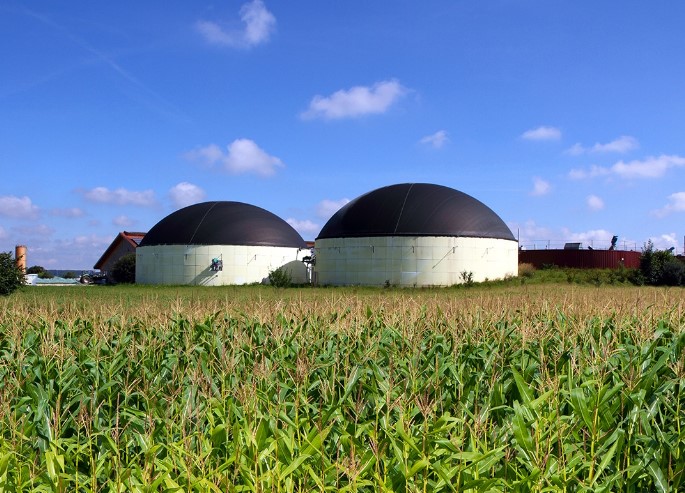
As global waste volumes continue to rise and environmental regulations become more stringent, sustainable waste management has become a priority for municipalities, industries, and agricultural operations. Anaerobic biogas production offers an effective solution by converting organic waste into renewable energy while reducing environmental impact. This proven technology not only addresses waste disposal challenges but also supports the transition toward a circular economy.
Turning Waste into Valuable Resources
Anaerobic biogas production is a biological process in which microorganisms break down organic materials—such as food waste, agricultural residues, animal manure, and sewage sludge—in the absence of oxygen. Instead of sending these wastes to landfills or incineration, anaerobic digestion transforms them into:
Biogas, mainly composed of methane (CH₄) and carbon dioxide (CO₂), which can be used for electricity generation, heating, or upgraded to biomethane
Digestate, a nutrient-rich byproduct that can be used as an organic fertilizer
This dual output turns waste streams into valuable resources, significantly improving overall waste management efficiency.
Environmental Benefits of Anaerobic Biogas Systems
Anaerobic biogas production contributes to environmental sustainability in several key ways:
Reduction of greenhouse gas emissions by capturing methane that would otherwise escape from landfills
Lower reliance on fossil fuels through renewable energy generation
Decreased landfill usage, extending landfill life and reducing soil and groundwater contamination
Improved sanitation, especially in wastewater treatment and agricultural waste handling
By integrating waste treatment with energy recovery, anaerobic biogas systems create measurable environmental and economic benefits.
The Importance of Monitoring in Biogas Production
Efficient anaerobic digestion requires precise control of operating conditions and continuous monitoring of gas composition. Variations in methane concentration, oxygen ingress, or hydrogen sulfide levels can affect energy output, equipment lifespan, and overall system safety.
This is where advanced monitoring solutions play a critical role.
Introducing the OLGA2000 Biogas Online Monitoring System
The OLGA2000 biogas online monitoring system is designed to support stable and efficient anaerobic biogas production through continuous, real-time gas analysis. Using advanced photoelectric sensing principles, it can detect key gas components such as methane (CH₄), oxygen (O₂), carbon dioxide (CO₂), and hydrogen sulfide (H₂S).
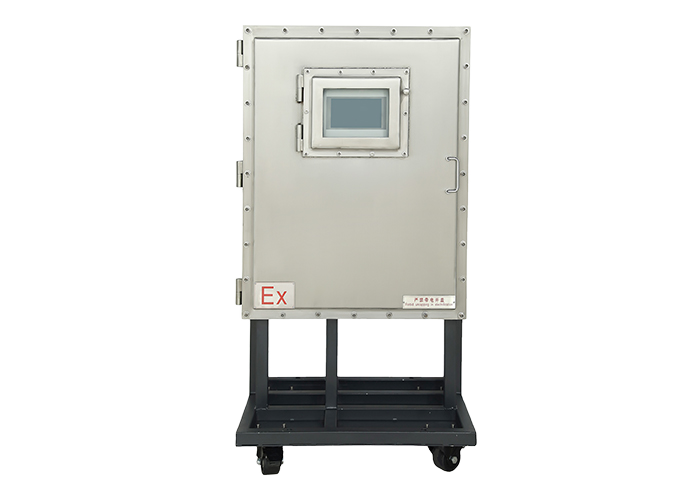
The OLGA2000 biogas online monitoring system
Key advantages of the OLGA2000 system include:
Real-time online monitoring for uninterrupted insight into biogas quality
Remote data transmission, enabling operators to manage facilities efficiently from centralized control rooms
Wide application range, including landfill biogas power plants, wastewater treatment facilities, petrochemical sites, and other industrial scenarios
Enhanced safety and process optimization, helping operators identify issues early and maintain stable digestion performance
By integrating systems like OLGA2000, biogas plants can improve operational reliability while maximizing energy recovery from waste.
Supporting a Circular Economy
Anaerobic biogas production exemplifies circular economy principles by closing the loop between waste generation, energy production, and resource reuse. Organic waste becomes feedstock, energy is recovered as biogas, and nutrients are returned to the soil through digestate application.
With the support of reliable online monitoring technologies such as the OLGA2000 biogas online monitoring system, anaerobic biogas plants can operate more efficiently, safely, and sustainably—making them a cornerstone of modern waste management strategies.
Anaerobic biogas production is more than a renewable energy solution; it is a comprehensive approach to sustainable waste management. By reducing emissions, generating clean energy, and recovering valuable nutrients, it addresses multiple environmental challenges simultaneously. When combined with advanced monitoring systems like OLGA2000, anaerobic biogas facilities can achieve higher performance, greater reliability, and long-term sustainability in a waste-constrained world.
About ChekVan Tech
Since the foundation of Chekvan Tech, it has endeavored to be an qualified manufacturer and supplier of portable biogas analyzers, online biogas monitoring system, fixed gas detectors for biogas plants around the world. We also develop and builds microflow biogas analyzer and gas blender for universities and researching facilities on biogas research.
To learn more, please don’t hesitate to contact us via email at sales@chekvan.com, or visit our website at www.chekvan.com.
 Manufacturer of biogas analyzer, landfill gas analyzer and extraction monitor, anaerobic digester gas analyzer