
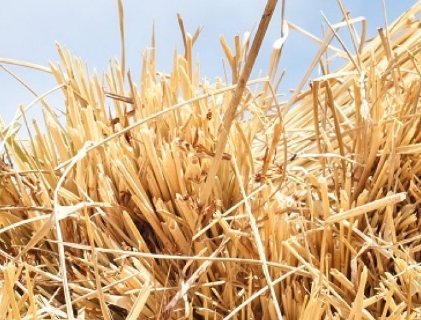
Rice is one of the world’s most widely cultivated crops, but along with its importance comes an equally large agricultural by-product: rice straw. Millions of tons of straw are discarded or openly burned every year, especially in major rice-producing regions across Asia. This traditional disposal method contributes to severe air pollution, greenhouse gas emissions, and health risks to surrounding communities. However, instead of being treated as waste, rice straw can be transformed into a valuable renewable energy source—biogas. Turning rice straw into biogas not only reduces environmental harm but also supports the global push toward cleaner, scalable energy systems.
Why Rice Straw for Biogas Production?
Rice straw contains significant amounts of cellulose, hemicellulose, and lignin—organic materials suitable for anaerobic digestion. When processed in controlled digesters, these components are broken down by microorganisms to generate methane-rich biogas. This presents a sustainable alternative to fossil fuels while simultaneously addressing agricultural waste management.
Key advantages include:
Large availability in rice-producing regions
Low or no feedstock cost, as the straw is typically treated as waste
Direct reduction of open-field burning, improving local air quality
Production of digestate fertilizer, promoting circular agricultural practices
These benefits make rice straw one of the most promising biomass resources for scaling biogas projects, especially in rural areas where power needs are growing and waste streams are abundant.
Technology and Process Enhancements for Higher Yield
Although rice straw is abundant, its high lignin content makes it difficult to break down naturally. Various pretreatment methods—such as steam explosion, alkaline soaking, biological enzymes, and mechanical shredding—are used to improve digestibility and methane production rates. Modern digester systems can be adapted for solid biomass feedstock, enabling more efficient gas generation and continuous operation.
To ensure that fermentation conditions are optimal, real-time monitoring is becoming an essential component of biogas plant operation. Biogas analyzers—such as the GASCHEK1000 portable biogas analyzer—apply advanced photoelectric sensing technology to measure methane (CH₄), oxygen (O₂), carbon dioxide (CO₂), hydrogen sulfide (H₂S) and other key gases. By accurately tracking gas composition and digestion status, operators can maintain stable biological activity, prevent process failure, and maximize energy yield. This type of monitoring improves both productivity and economic reliability, which is critical for large-scale commercialization of rice-straw biogas systems.

the GASCHEK1000 portable biogas analyzer
Environmental and Economic Impacts
Traditional rice-straw burning emits carbon dioxide, particulate matter, and black smoke that contributes to climate change and severe seasonal smog. Switching from burning to anaerobic digestion directly cuts CO₂ emissions and helps countries meet sustainability targets. For farmers and communities, biogas production offers tangible income opportunities—either by selling electricity to the grid, supplying gas to nearby industries, or using the energy for farm mechanization and household fuel.
The co-product digestate becomes an organic fertilizer rich in nutrients, reducing the need for chemical fertilizers and helping restore soil health. This supports regenerative agriculture while improving crop yields over time.
A Sustainable Path Forward
Biogas from rice straw presents a scalable and impactful solution to agricultural emissions, energy shortages, and rural waste challenges. With modern digestion technologies, reliable gas-quality monitoring tools, and expanding demand for clean energy, rice-straw biogas could become a cornerstone of green energy transition across rice-producing nations.
As governments and industries continue seeking pathways to carbon reduction, harnessing rice straw for biogas stands as one of the most practical and environmentally meaningful strategies—a shift that turns a pollution source into a sustainable power resource for generations to come.
About ChekVan Tech
Since the foundation of Chekvan Tech, it has endeavored to be an qualified manufacturer and supplier of portable biogas analyzers, online biogas monitoring system, fixed gas detectors for biogas plants around the world. We also develop and builds microflow biogas analyzer and gas blender for universities and researching facilities on biogas research.
To learn more, please don’t hesitate to contact us via email at sales@chekvan.com, or visit our website at www.chekvan.com.
 Manufacturer of biogas analyzer, landfill gas analyzer and extraction monitor, anaerobic digester gas analyzer