
Biogas has become one of the most accessible and sustainable renewable energy sources for farms, food-processing industries, municipalities, and waste management facilities. Derived from organic materials such as livestock manure, food waste, crop residues, and sewage sludge, biogas provides a clean, low-cost fuel option while simultaneously helping solve waste management challenges. To fully leverage its benefits, it is important to understand how biogas is produced, what stages are involved, and which factors most influence efficiency and gas quality.
1. Feedstock Collection and Preparation
The biogas production process begins with the collection of organic feedstock. Common materials include:
- Animal manure
- Food and kitchen waste
- Agricultural residues such as rice straw, corn stalks, or Miscanthus grass
- Sludge from wastewater treatment plants
To maximize methane yield, materials may require size reduction, dilution, or mixing to achieve an optimal carbon-to-nitrogen (C/N) ratio. Proper pretreatment increases microbial accessibility and boosts gas output.
2. Anaerobic Digestion: The Core of Biogas Production
The prepared feedstock is fed into an anaerobic digester, where microorganisms break down the organic material in the absence of oxygen. This biochemical process consists of four main stages:
(1) Hydrolysis
Complex organic compounds such as carbohydrates, proteins, and fats are broken down into simpler molecules like sugars, amino acids, and fatty acids.
(2) Acidogenesis
Microbes convert these molecules into volatile fatty acids (VFAs), alcohols, hydrogen, and carbon dioxide.
(3) Acetogenesis
VFAs are further converted into acetic acid, hydrogen, and CO₂—key precursors for methane formation.
(4) Methanogenesis
Methanogenic bacteria produce methane (CH₄) and carbon dioxide (CO₂), creating the biogas used for cooking, heating, or electricity generation.
Maintaining stable temperature, pH, and mixing is critical at this stage to ensure continuous and efficient gas production.
3. Monitoring Gas Composition for Process Stability
Monitoring the digestion process is essential for maintaining efficiency, preventing system failures, and ensuring high-quality biogas output. Modern biogas analyzers play a vital role in real-time process control.
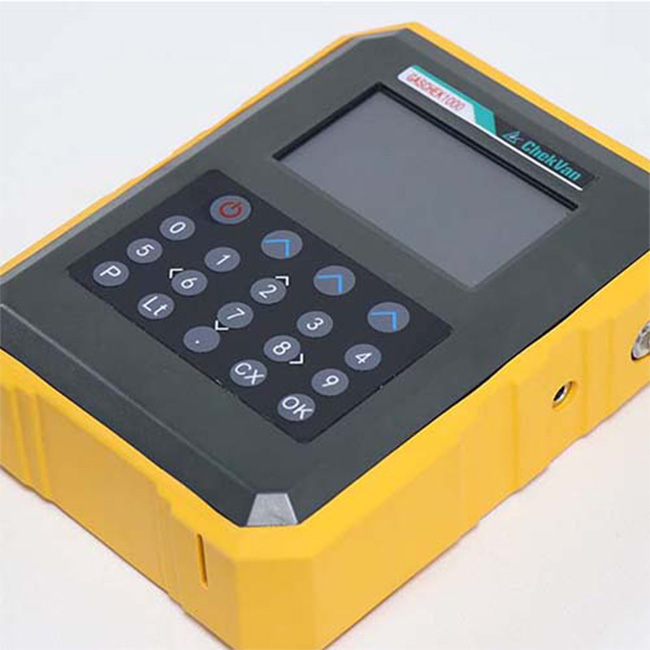
the GASCHEK1000 portable biogas analyzer
Biogas analyzers, such as the GASCHEK1000 portable biogas analyzer, use advanced photoelectric sensing principles to detect and analyze methane (CH₄), oxygen (O₂), carbon dioxide (CO₂), hydrogen sulfide (H₂S), and other gases. They provide accurate readings while effectively evaluating the digestion process, helping operators identify issues such as oxygen leaks, excess acid buildup, or high H₂S levels.
With continuous or periodic monitoring, operators can quickly adjust feedstock loading, mixing rates, or temperature to maintain optimum conditions.
4. Biogas Purification and Storage
Raw biogas typically contains:
55–70% methane
30–45% carbon dioxide
Trace gases such as H₂S, moisture, and ammonia
Depending on the application, purification steps may include:
- H₂S removal using iron oxide filters or activated carbon
- CO₂ reduction through scrubbing, membrane separation, or pressure swing adsorption (PSA)
- Moisture removal via condensers or drying units
- Purified biogas—or biomethane—can then be stored, compressed, or injected into natural gas pipelines.
5. Efficiency Factors That Influence Biogas Yield
Several variables determine how much methane a digester can produce and how stable its operation remains:
Feedstock type and composition
High-energy materials like food waste and fats produce more methane than crop residues or manure.
Temperature level
Mesophilic (35–40°C) or thermophilic (50–55°C) ranges must be maintained for optimal microbial activity.
pH and alkalinity
Methanogens thrive best in a near-neutral pH range (6.8–7.2).
Organic loading rate (OLR)
Excessive loading can cause acid accumulation, reducing methane yield.
Retention time
Microbes require sufficient time—typically 20–40 days—to fully break down the feedstock.
Continuous monitoring
Regular gas analysis ensures quick detection of abnormalities that could reduce performance.
The production process of biogas is a highly efficient, environmentally friendly method of converting organic waste into valuable renewable energy. By understanding the key stages—feedstock preparation, anaerobic digestion, gas monitoring, purification, and efficiency optimization—operators can significantly improve methane output and system reliability.
With modern tools such as the GASCHEK1000 portable biogas analyzer, biogas plants can maintain stable operation, ensure high-quality gas production, and maximize overall energy yields. As technology continues to advance, the biogas industry will play an increasingly important role in supporting global low-carbon development.
About ChekVan Tech
Since the foundation of Chekvan Tech, it has endeavored to be an qualified manufacturer and supplier of portable biogas analyzers, online biogas monitoring system, fixed gas detectors for biogas plants around the world. We also develop and builds microflow biogas analyzer and gas blender for universities and researching facilities on biogas research.
To learn more, please don’t hesitate to contact us via email at sales@chekvan.com, or visit our website at www.chekvan.com.
 Manufacturer of biogas analyzer, landfill gas analyzer and extraction monitor, anaerobic digester gas analyzer