

As demand for renewable energy continues to grow, farm operators are increasingly turning to biogas systems to convert agricultural waste into clean, usable energy. Among the various digester designs available today, the concrete biogas digester stands out as one of the most durable, reliable, and cost-effective long-term solutions for farm-scale biogas production. Its robust structure, long service life, and ability to handle large volumes of organic waste make it especially suitable for agricultural operations that require consistent, year-round performance.
1. Strength and Longevity: Built to Withstand Decades of Operation
Concrete digesters are known for their exceptional structural strength, often operating for 20–30 years or more. The inherent durability of reinforced concrete enables the digester to withstand:
- High internal pressure during fermentation
- Soil movement and environmental stress
- Temperature fluctuations
- Continuous exposure to corrosive biogas components
This ensures a stable, long-term environment for anaerobic digestion.
2. Ideal Capacity for Large Farm Operations
Farm-scale biogas production typically involves large quantities of manure and organic residues. Concrete digesters can be custom-built to accommodate significant feedstock volumes from:
Cattle farms
Poultry operations
Pig farms
Crop residue processing
Food production facilities
Their scalability makes them ideal for farms needing reliable daily gas output.
3. Superior Thermal Stability for Higher Methane Yield
Concrete walls offer high thermal mass, helping maintain stable digester temperatures. This leads to:
- Reduced heating energy consumption
- Consistent microbial activity
- Higher and more stable methane generation
- Improved performance during cold seasons
Such temperature stability is especially beneficial in regions with variable climates.
4. Long-Term Cost Savings with Reduced Maintenance
Although construction costs may be higher initially, concrete digesters offer lower operating and maintenance costs over their lifetime. Their robust structure minimizes:
Repair frequency
Replacement of components
Downtime due to structural issues
In long-term farm planning, this makes concrete digesters a financially sound investment.
5. Enhanced Safety and Reduced Leakage Risks
Concrete digesters exhibit excellent resistance to:
- Gas leakage
- Structural deformation
- Corrosion from hydrogen sulfide
- Cracks caused by pressure or soil movement
This improves operational safety and ensures reliable gas collection.
6. Technology Integration: The Role of Biogas Monitoring Systems
Modern biogas plants rely heavily on continuous monitoring to ensure stable, efficient energy production. A key piece of equipment is the biogas analyzer, which uses advanced photoelectric sensing technology to accurately measure critical gas components such as:
Methane (CH₄)
Oxygen (O₂)
Carbon dioxide (CO₂)
Hydrogen sulfide (H₂S)
Among these solutions, the OLGA2000 biogas online monitoring system stands out for its wide applicability. It can be used for real-time gas monitoring in:
Landfill biogas power plants
Petrochemical industries
Coal mining environments
Farm-scale biogas digesters
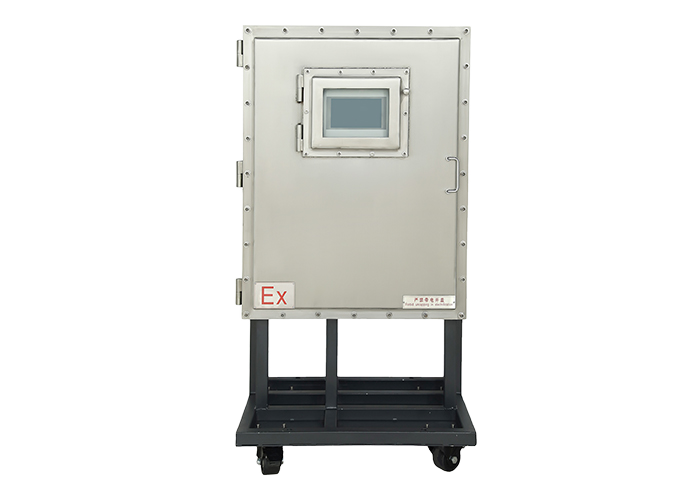
The OLGA2000 biogas online monitoring system
With support for remote data transmission, systems like OLGA2000 enable operators to oversee digester performance, detect anomalies early, and optimize methane output—significantly enhancing the efficiency and safety of concrete biogas digester installations.
7. Customizable Designs for Integrated Farm Energy Systems
Concrete digesters can be built to match specific farm workflows, including:
Multi-stage digestion chambers
Integrated slurry management
Heating and circulation systems
Automated feeding and mixing
On-site gas storage and upgrading
This allows farms to tailor their systems for maximum operational efficiency.
A Future-Proof Investment in Renewable Energy
A concrete biogas digester offers unmatched durability, stability, and cost efficiency for farm-scale renewable energy production. When combined with modern monitoring equipment such as the OLGA2000 biogas analyzer, farms can unlock even higher performance, safer operation, and better long-term energy reliability.
Investing in a concrete digester not only reduces waste and greenhouse emissions but also provides a sustainable energy source that can power agricultural operations for decades.
About ChekVan Tech
Since the foundation of Chekvan Tech, it has endeavored to be an qualified manufacturer and supplier of portable biogas analyzers, online biogas monitoring system, fixed gas detectors for biogas plants around the world. We also develop and builds microflow biogas analyzer and gas blender for universities and researching facilities on biogas research.
To learn more, please don’t hesitate to contact us via email at sales@chekvan.com, or visit our website at www.chekvan.com.
 Manufacturer of biogas analyzer, landfill gas analyzer and extraction monitor, anaerobic digester gas analyzer