
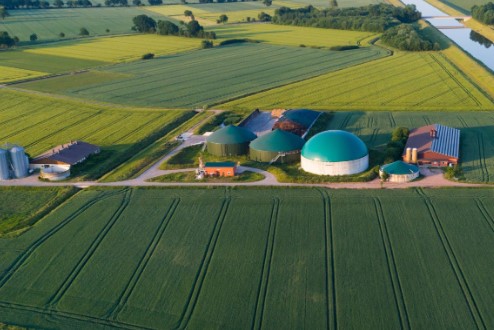
As the world transitions toward renewable energy, biogas has emerged as one of the most promising sustainable solutions for energy generation. However, one of the primary challenges limiting its large-scale adoption has been the cost of biogas production. Fortunately, recent technological advancements are helping lower production costs, making biogas more competitive with fossil fuels and other renewable sources.
1. Automation and Smart Control Systems
Modern biogas plants are increasingly integrating automation and digital control systems to optimize every stage of production. Automated feedstock management, real-time monitoring, and predictive maintenance not only improve plant efficiency but also reduce manual labor and operational costs. Smart sensors track parameters like temperature, pH, and gas composition, allowing operators to fine-tune digestion conditions for maximum methane yield.
2. Advanced Feedstock Pre-Treatment Technologies
Feedstock pre-treatment is essential for breaking down organic matter before anaerobic digestion. Innovations such as ultrasonic disintegration, thermal hydrolysis, and enzymatic treatment help increase biogas yield by accelerating the breakdown of complex organic materials. By improving conversion efficiency, these technologies reduce the volume of feedstock required and lower the overall cost per unit of biogas produced.
3. Enhanced Anaerobic Digestion Efficiency
New reactor designs—such as upflow anaerobic sludge blanket (UASB) reactors and continuous stirred tank reactors (CSTRs)—have improved digestion stability and methane productivity. These systems allow higher organic loading rates, shorter retention times, and more consistent gas output, which directly translates to cost savings and higher profitability.
4. Gas Monitoring and Quality Control
To ensure consistent and efficient biogas production, precise gas monitoring is essential.

the GASCHEK1000 portable biogas analyzer
Biogas analyzers, such as the GASCHEK1000 portable biogas analyzer, use advanced photoelectric sensing principles to detect and analyze methane (CH₄), oxygen (O₂), carbon dioxide (CO₂), hydrogen sulfide (H₂S), and other gases. These analyzers accurately report gas composition while effectively monitoring the digestion process. With this data, operators can identify inefficiencies early and optimize the system to minimize production losses—helping to reduce operational costs and improve energy output quality.
5. Integration with Other Renewable Energy Systems
Combining biogas systems with solar and wind energy creates hybrid renewable plants that can stabilize energy supply and reduce dependence on external power sources. This integration leads to energy self-sufficiency, lowering external electricity costs and improving the return on investment for biogas facilities.
6. Waste Heat Recovery and Co-Generation Systems
Biogas plants that use combined heat and power (CHP) technology can generate both electricity and heat from the same biogas stream. Waste heat recovery systems further improve efficiency by using excess heat for feedstock pre-treatment or maintaining digester temperature—thereby reducing the need for additional energy input and cutting operational expenses.
The future of biogas lies in technological innovation and efficiency-driven design. From advanced feedstock treatment to smart monitoring and hybrid energy systems, these developments are significantly driving down biogas production costs worldwide. As technology continues to evolve, biogas will not only become a cleaner alternative but also an economically sustainable energy solution for industries, municipalities, and rural communities alike.
About ChekVan Tech
Since the foundation of Chekvan Tech, it has endeavored to be an qualified manufacturer and supplier of portable biogas analyzers, online biogas monitoring system, fixed gas detectors for biogas plants around the world. We also develop and builds microflow biogas analyzer and gas blender for universities and researching facilities on biogas research.
To learn more, please don’t hesitate to contact us via email at sales@chekvan.com, or visit our website at www.chekvan.com.
 Manufacturer of biogas analyzer, landfill gas analyzer and extraction monitor, anaerobic digester gas analyzer