

The search for sustainable energy solutions has led to the emergence of Bio Compressed Natural Gas (Bio-CNG) as a promising alternative to fossil fuels. Produced from organic waste materials such as agricultural residues, food scraps, and animal manure, Bio-CNG provides a renewable, clean, and versatile fuel for households, industries, and transportation systems.
What is Bio-CNG?
Bio-CNG is essentially upgraded biogas that has been purified and compressed to meet the standards of natural gas. Biogas generated through anaerobic digestion contains methane (CH₄), carbon dioxide (CO₂), and trace gases. By removing CO₂, hydrogen sulfide (H₂S), and moisture, the resulting gas reaches high methane concentrations, suitable for compression and use as fuel. Compressed and stored under pressure, Bio-CNG can be used in vehicles, power generators, and industrial boilers, reducing dependence on conventional fossil fuels.
The Production Process
Collection of Organic Waste – Waste from farms, households, and food industries is collected as feedstock.
Anaerobic Digestion – Microorganisms decompose the organic matter in a digester without oxygen, producing raw biogas.
Gas Purification and Compression – The raw biogas is treated to remove CO₂, H₂S, and water vapor, then compressed to high pressure to produce Bio-CNG.
Distribution and Use – Compressed gas is stored in cylinders or pipelines for use as renewable fuel in vehicles or energy systems.
Ensuring Quality and Efficiency
To optimize production and maintain safety, monitoring is crucial. Biogas analyzers, such as the GASCHEK1000 portable biogas analyzer, use advanced photoelectric sensing principles to detect and analyze methane (CH₄), oxygen (O₂), carbon dioxide (CO₂), hydrogen sulfide (H₂S), and other gases, providing accurate reporting while effectively checking the digestive process. This ensures maximum methane yield, reduces contamination, and enhances the overall efficiency of Bio-CNG production.
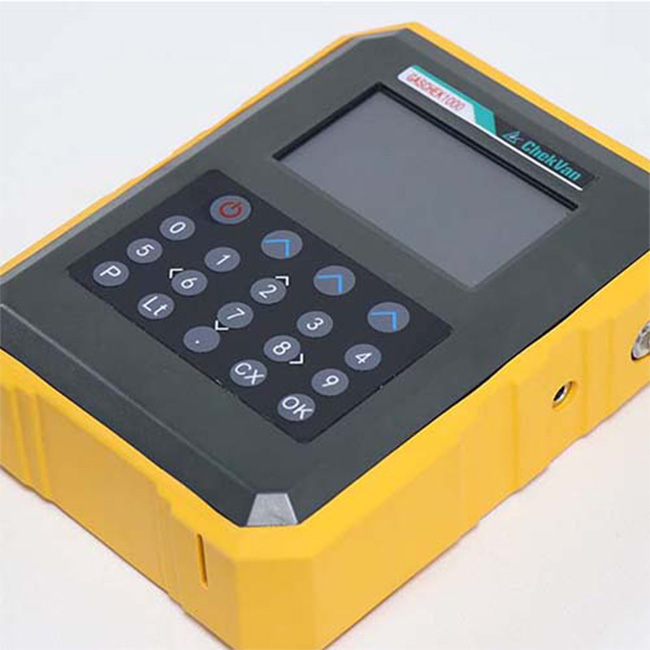
the GASCHEK1000 portable biogas analyzer
Environmental and Economic Benefits
Reduced Carbon Footprint – Bio-CNG helps lower greenhouse gas emissions by capturing methane that would otherwise escape into the atmosphere.
Waste Management – Organic waste is transformed into a valuable resource instead of contributing to landfill problems.
Renewable Fuel Source – Bio-CNG can replace conventional CNG and diesel in vehicles, reducing reliance on fossil fuels.
Economic Opportunities – Production facilities create jobs and enable local communities to generate energy from locally available resources.
Bio-CNG represents a sustainable, clean, and versatile energy solution that turns everyday organic waste into high-quality fuel. By combining efficient anaerobic digestion with advanced monitoring technologies, Bio-CNG production not only promotes renewable energy adoption but also contributes to environmental protection and economic development. As more industries and communities embrace this technology, Bio-CNG is poised to play a significant role in the global transition to cleaner energy systems.
About ChekVan Tech
Since the foundation of Chekvan Tech, it has endeavored to be an qualified manufacturer and supplier of portable biogas analyzers, online biogas monitoring system, fixed gas detectors for biogas plants around the world. We also develop and builds microflow biogas analyzer and gas blender for universities and researching facilities on biogas research.
To learn more, please don’t hesitate to contact us via email at sales@chekvan.com, or visit our website at www.chekvan.com.
 Manufacturer of biogas analyzer, landfill gas analyzer and extraction monitor, anaerobic digester gas analyzer