
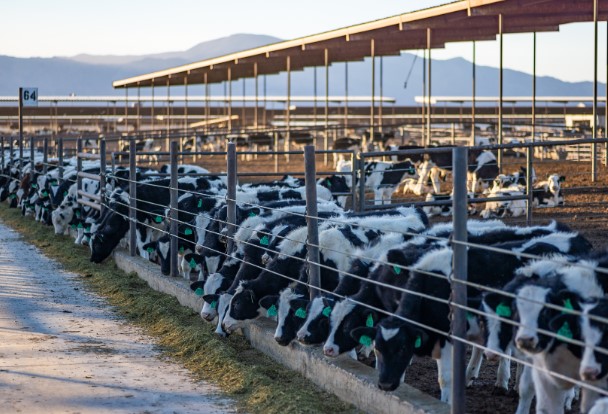
The dairy industry generates significant amounts of organic waste, primarily in the form of manure and other by-products. Traditionally, managing this waste has been a challenge for farmers, often resulting in environmental concerns such as methane emissions, groundwater pollution, and foul odors. However, with the rise of renewable energy technologies, dairy biogas systems are transforming these challenges into opportunities by turning farm waste into a valuable energy source.
How Dairy Biogas Works
Dairy biogas production is centered around anaerobic digestion, a natural process in which microorganisms break down organic material in the absence of oxygen. Manure and other organic residues from dairy farms are fed into biodigesters, where they decompose to produce biogas—a mixture primarily composed of methane (CH₄) and carbon dioxide (CO₂). This biogas can then be used for electricity generation, heating, or further processed into renewable natural gas (RNG).
Environmental and Economic Benefits
The use of dairy biogas has several environmental advantages:
Greenhouse gas reduction: Methane emissions from manure storage are captured and used as fuel instead of being released into the atmosphere.
Nutrient management: The digested material, known as digestate, can be applied as a nutrient-rich fertilizer, reducing the need for synthetic alternatives.
Renewable energy supply: Biogas provides a steady energy source that can help power farms, sell electricity to the grid, or produce compressed biogas for vehicle fuel.
Economically, dairy farmers can cut energy costs, generate revenue by selling surplus electricity or gas, and improve overall farm sustainability.
The Role of Technology in Dairy Biogas Systems
For dairy biogas projects to operate efficiently, monitoring and control are crucial. Biogas analyzers, such as the GASCHEK1000 portable biogas analyzer, use advanced photoelectric sensing principles to detect and analyze methane (CH₄), oxygen (O₂), carbon dioxide (CO₂), hydrogen sulfide (H₂S), and other gases. They provide accurate reporting while effectively monitoring the digestion process, ensuring stable operation and maximizing energy yields.

GASCHEK1000 portable biogas analyzer
These monitoring systems help operators adjust conditions within the digester, such as feedstock ratios or retention time, to optimize performance and prevent equipment damage caused by harmful gases like hydrogen sulfide.
Dairy biogas demonstrates how renewable energy and agriculture can work hand in hand. By transforming farm waste into a reliable energy source, it not only reduces environmental impacts but also supports energy independence and rural economic development. With technological advancements in monitoring and upgrading systems, dairy biogas is becoming a cornerstone of sustainable farming practices and a vital part of the renewable energy transition.
About ChekVan Tech
Since the foundation of Chekvan Tech, it has endeavored to be an qualified manufacturer and supplier of portable biogas analyzers, online biogas monitoring system, fixed gas detectors for biogas plants around the world. We also develop and builds microflow biogas analyzer and gas blender for universities and researching facilities on biogas research.
To learn more, please don’t hesitate to contact us via email at sales@chekvan.com, or visit our website at Chekvan.
 Manufacturer of biogas analyzer, landfill gas analyzer and extraction monitor, anaerobic digester gas analyzer