
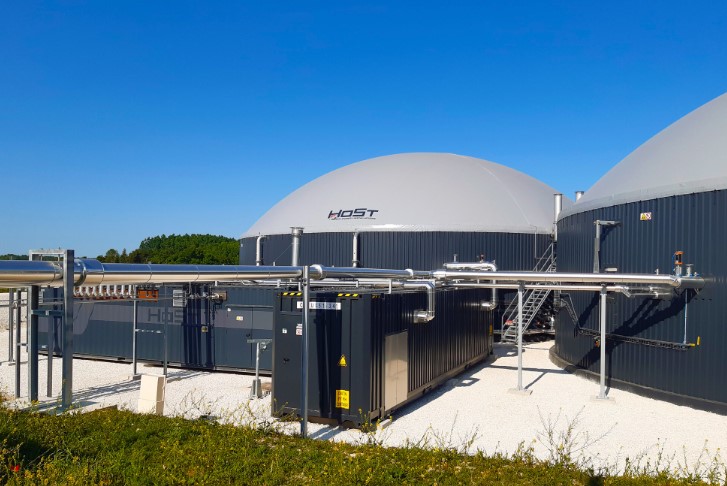
As global interest in renewable energy continues to rise, biogas has emerged as a powerful solution for sustainable energy generation. Derived from organic waste materials, biogas not only reduces environmental pollution but also provides a renewable source of energy for heating, electricity, and transportation. At the core of this process lies anaerobic digestion (AD)—a biological method that plays a crucial role in maximizing the efficiency of biogas production.
What is Anaerobic Digestion?
Anaerobic digestion is a natural, multi-stage biological process that breaks down organic matter in the absence of oxygen. This process occurs in specially designed digesters where microorganisms decompose materials such as agricultural residues, food scraps, animal manure, and sewage sludge. The byproducts are:
Biogas — a combustible mixture primarily of methane (CH₄) and carbon dioxide (CO₂)
Digestate — a nutrient-rich slurry that can be used as organic fertilizer
Stages of Anaerobic Digestion
The digestion process involves four sequential biological stages:
Hydrolysis: Complex organic materials like carbohydrates, proteins, and fats are broken into simpler compounds.
Acidogenesis: These compounds are converted into fatty acids, alcohols, CO₂, and hydrogen.
Acetogenesis: Fatty acids are further converted into acetic acid, hydrogen, and CO₂.
Methanogenesis: Specialized microbes convert acetic acid and hydrogen into methane and CO₂.
The overall success of biogas production depends on maintaining a stable environment for these microbial communities.
Enhancing Biogas Efficiency with Anaerobic Digestion
Efficient anaerobic digestion directly translates to higher biogas yields and improved methane content, which are crucial for energy production. Here’s how AD enhances efficiency:
Maximizes Methane Production: Optimized digestion conditions allow more complete conversion of organic material into usable methane.
Handles Diverse Feedstocks: AD systems can process a wide range of organic waste types, increasing the flexibility and scalability of biogas plants.
Reduces Process Time: Improved microbial activity speeds up digestion and gas release.
Minimizes Operational Issues: Stable digestion helps prevent foaming, acidification, or gas imbalances.
The Role of Gas Monitoring in Anaerobic Digestion
Maintaining the right conditions within the digester is essential. This includes temperature, pH, organic loading rate, and—critically—gas composition monitoring.
Biogas analyzers, such as the GASCHEK1000 portable biogas analyzer, use advanced photoelectric sensing principles to detect and analyze methane (CH₄), oxygen (O₂), carbon dioxide (CO₂), hydrogen sulfide (H₂S) and other gases, and accurately report, while effectively checking the digestive process.

GASCHEK1000 portable biogas analyzer
These analyzers provide real-time feedback on:
Methane concentration for energy output estimation
Oxygen levels that could disrupt anaerobic conditions
Hydrogen sulfide levels, which affect equipment lifespan
Carbon dioxide trends indicating microbial activity levels
With accurate monitoring, operators can adjust feedstock input, mixing, and environmental conditions to maintain optimal digestion performance.
Additional Strategies to Boost AD Efficiency
Co-Digestion: Using multiple waste sources (e.g., food waste and manure) can balance nutrients and improve microbial performance.
Thermal Pre-Treatment: Heating feedstock before digestion increases biodegradability and speeds up the process.
Stirring and Mixing: Ensures uniform distribution of microbes and nutrients.
PH and Temperature Control: Mesophilic (35–40°C) and thermophilic (50–55°C) ranges are commonly used for maximum microbial activity.
Inhibitor Management: Monitoring ammonia or toxic compounds is essential to prevent microbial inhibition.
Anaerobic digestion is the heart of efficient biogas production. By breaking down organic materials in oxygen-free environments, it unlocks the potential of waste to become a powerful, renewable energy source. The key to optimizing this process lies in real-time monitoring, microbial balance, and proper system management. Tools like the GASCHEK1000 biogas analyzer enable operators to fine-tune the digestion process and maximize biogas yields, making anaerobic digestion not only a clean solution—but a smart and scalable one for the future of energy.
 Manufacturer of biogas analyzer, landfill gas analyzer and extraction monitor, anaerobic digester gas analyzer