
As the world intensifies its pursuit of sustainable and low-carbon energy solutions, Bio-Compressed Natural Gas (Bio-CNG) is emerging as a key player in the future of renewable fuel. Derived from organic waste, Bio-CNG offers a clean, efficient, and eco-friendly alternative to fossil fuels—especially in the transportation and industrial sectors. Its production, rooted in biogas technology, not only supports waste management but also aligns with the global push for carbon neutrality.
What is Bio-CNG?
Bio-CNG is a purified form of biogas, primarily consisting of methane (CH₄), with the removal of impurities such as carbon dioxide (CO₂), hydrogen sulfide (H₂S), and moisture. The result is a high-energy gas comparable in quality and performance to conventional compressed natural gas (CNG). Bio-CNG can be used as a fuel for vehicles, cooking, and industrial heating, making it a versatile energy source.
The Production Process: From Waste to Fuel
The journey of Bio-CNG begins with organic waste—such as agricultural residues, food waste, cattle dung, or municipal sludge. This waste undergoes anaerobic digestion, a biological process where microorganisms break down the organic material in an oxygen-free environment to produce raw biogas.
The key stages are:
Anaerobic Digestion: Organic matter is digested in sealed tanks, producing biogas rich in methane.
Gas Purification: The raw biogas is cleaned to remove carbon dioxide, hydrogen sulfide, and water vapor.
Compression: The purified gas (now Bio-CNG) is compressed to high pressures for storage and transportation.
The Role of Biogas Monitoring
Maintaining the quality and safety of biogas during production and purification is essential. This is where gas analysis and monitoring come into play.
Biogas analyzers, such as the GASCHEK1000 portable biogas analyzer, use advanced photoelectric sensing principles to detect and analyze methane (CH₄), oxygen (O₂), carbon dioxide (CO₂), hydrogen sulfide (H₂S), and other gases, and accurately report, while effectively checking the digestive process.
This monitoring ensures:
Optimal methane yield
Safety by identifying toxic or flammable gases
Protection of purification equipment
Compliance with environmental and quality standards
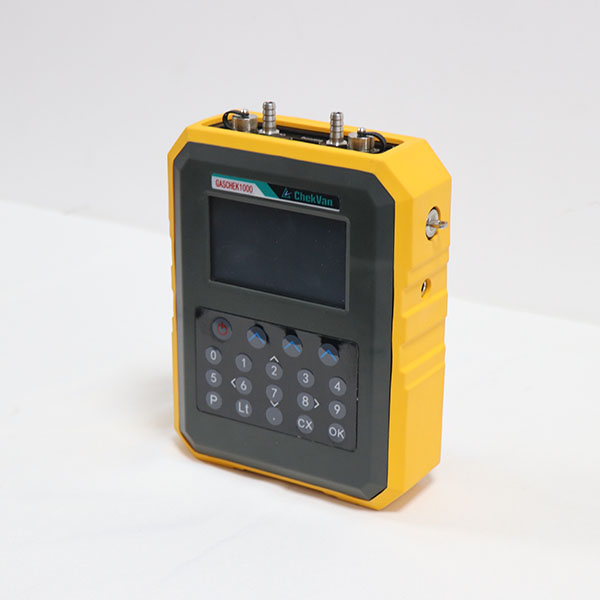
GASCHEK1000 portable biogas analyzer
Benefits of Bio-CNG
Environmentally Friendly: Reduces greenhouse gas emissions compared to diesel or gasoline.
Waste Management: Converts organic waste into energy, lowering landfill burden.
Economic Value: Offers energy independence and reduces fuel costs for users.
Carbon Neutral: The carbon emitted during combustion is offset by the carbon absorbed by the organic materials during growth.
Real-World Applications
Bio-CNG is increasingly being adopted in:
Public Transport: As a clean fuel for buses, reducing urban air pollution.
Farming Communities: Where cattle dung is used to produce fuel for tractors and generators.
Food Processing Industries: That recycle organic by-products into fuel.
Municipal Waste Projects: Turning city waste into a source of power for vehicles and heating.
Challenges and the Road Ahead
While Bio-CNG holds great promise, there are hurdles:
High Initial Investment: Setting up digesters and purification units requires capital.
Infrastructure Gaps: Storage, distribution, and refueling stations are still limited.
Technical Expertise: Operators need training for efficient and safe production.
Policy Support: Incentives and regulatory frameworks are crucial for large-scale adoption.
Despite these challenges, technological innovation and policy shifts are making Bio-CNG increasingly viable.
From organic waste to clean, high-quality fuel, Bio-CNG stands as a symbol of innovation in the circular economy. It not only addresses critical environmental concerns—like waste management and fossil fuel dependence—but also offers tangible economic and energy benefits. With accurate monitoring technologies like the GASCHEK1000 biogas analyzer ensuring efficiency and safety, Bio-CNG is poised to become a cornerstone of the renewable energy landscape. The future of fuel is not just clean—it’s circular, local, and sustainable.
 Manufacturer of biogas analyzer, landfill gas analyzer and extraction monitor, anaerobic digester gas analyzer