
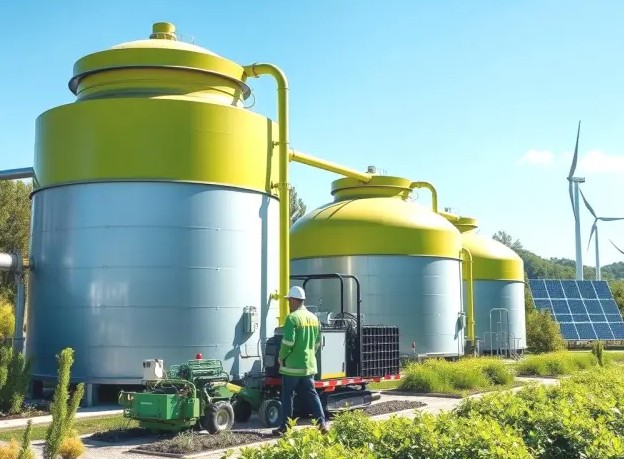
As the global community intensifies efforts to combat climate change, the need for reliable, renewable, and decentralized energy solutions is greater than ever. While solar, wind, and hydro power dominate headlines, biogas is gaining renewed attention for its unique ability to convert organic waste into continuous, on-demand electricity. With technological advancements and increasing policy support, biogas plant electricity production is positioned to play a key role in the future of clean energy.
This article explores the evolving role of biogas in electricity generation and why it holds growing potential within the global renewable energy landscape.
What Is Biogas and How Is It Used for Electricity?
Biogas is produced through the anaerobic digestion of organic materials such as agricultural residues, livestock manure, food waste, and sewage sludge. The resulting gas—rich in methane (CH₄)—is combustible and can be used to fuel gas engines, turbines, or fuel cells to generate electricity.
A biogas power plant typically includes:
Feedstock handling systems
Anaerobic digesters
Gas cleaning and upgrading units
Electricity generators (e.g., CHP units)
Digestate management systems
This setup provides not only electricity, but also heat and organic fertilizer, making it a versatile and sustainable energy solution.
Key Advantages of Biogas for Electricity Generation
1. Continuous and Dispatchable Power
Unlike solar and wind energy, which depend on weather conditions, biogas can produce electricity 24/7, making it a baseload renewable energy source. It can also be stored and dispatched as needed, supporting grid stability and complementing intermittent renewables.
2. Circular Economy Integration
Biogas plants close the loop by turning waste into energy and useful byproducts. This aligns with circular economy principles, improving waste management while reducing dependence on fossil fuels and chemical fertilizers.
3. Rural and Decentralized Energy Access
Biogas plants are scalable and can be deployed in rural or off-grid areas, where they support agricultural communities by transforming manure and crop residues into power and income.
Current Trends Shaping the Future of Biogas Electricity
1. Technological Innovation
Modern biogas plants now incorporate:
High-efficiency CHP (Combined Heat and Power) systems
Advanced biogas purification and upgrading technologies
Automated monitoring and smart grid integration
These innovations increase plant efficiency, reduce emissions, and make it easier to integrate biogas into larger energy systems.
2. Biogas Hybrid Systems
To maximize reliability and efficiency, biogas plants are increasingly combined with solar or wind power in hybrid systems. In such setups, biogas fills in during cloudy days or periods of low wind, ensuring uninterrupted electricity supply.
3. Policy Support and Carbon Markets
Governments around the world are recognizing biogas in their Nationally Determined Contributions (NDCs) under the Paris Agreement. Incentives such as feed-in tariffs, renewable energy certificates, and carbon credits are encouraging investment in biogas power projects.
4. Grid Injection and Virtual Power Plants
Excess biogas can be upgraded to biomethane and injected into the gas grid, or used in virtual power plants (VPPs)—digitally connected, distributed energy sources that can be controlled and dispatched remotely.
The future of biogas plant electricity production is bright and increasingly essential. With its ability to convert waste into reliable power, support local economies, and reduce greenhouse gas emissions, biogas stands out as a multifaceted solution in the renewable energy mix.
 Manufacturer of biogas analyzer, landfill gas analyzer and extraction monitor, anaerobic digester gas analyzer