
Biogas is a promising renewable energy source derived from organic materials. At the core of its production lies a natural process called anaerobic digestion (AD)—a biological mechanism where microorganisms break down organic matter in the absence of oxygen. This process not only produces biogas (a mix of methane and carbon dioxide) but also generates a nutrient-rich by-product called digestate, which can be used as fertilizer.
This article explains how anaerobic digestion works, its stages, components, and its importance in modern renewable energy systems.
What Is Anaerobic Digestion?
Anaerobic digestion is a microbiological process that decomposes organic materials such as:
- Food waste
- Agricultural residues
- Animal manure
- Sewage sludge
- Industrial organic waste
The process occurs in a sealed, oxygen-free environment known as an anaerobic digester, producing:
- Biogas (mainly methane and carbon dioxide)
- Digestate (a slurry of nutrients and partially digested solids)
The Four Stages of Anaerobic Digestion
Anaerobic digestion involves four main biological stages, each facilitated by different groups of microorganisms:
1. Hydrolysis
Large organic molecules (carbohydrates, fats, and proteins) are broken down into smaller, soluble compounds:
- Carbohydrates → sugars
- Proteins → amino acids
- Fats → fatty acids and glycerol
This step is essential because microbes can only absorb small molecules.
2. Acidogenesis
The soluble compounds from hydrolysis are converted into short-chain fatty acids, alcohols, hydrogen, and carbon dioxide by acid-forming bacteria.
Byproducts at this stage include:
- Acetic acid
- Butyric acid
- Propionic acid
- CO₂ and H₂
3. Acetogenesis
The organic acids and alcohols from acidogenesis are further broken down into acetic acid, hydrogen, and carbon dioxide. These are the key substrates needed for the final stage.
4. Methanogenesis
In the final step, methanogenic archaea convert:
- Acetic acid → methane and carbon dioxide
- Hydrogen + carbon dioxide → methane
This stage produces the bulk of the biogas, typically containing:
- Methane (CH₄): 50–70%
- Carbon dioxide (CO₂): 30–50%
- Trace gases: hydrogen sulfide (H₂S), nitrogen, and water vapor
It is necessary to monitor the composition of biogas. For example, the OLGA2000 biogas online monitoring system uses advanced photoelectric sensing principles to detect methane (CH4), oxygen (O2), carbon dioxide (CO2), hydrogen sulfide (H2S), etc. It can be widely used in gas monitoring in landfill biogas power plants, petrochemical industry, coal mines and other scenarios, and can realize remote data transmission.
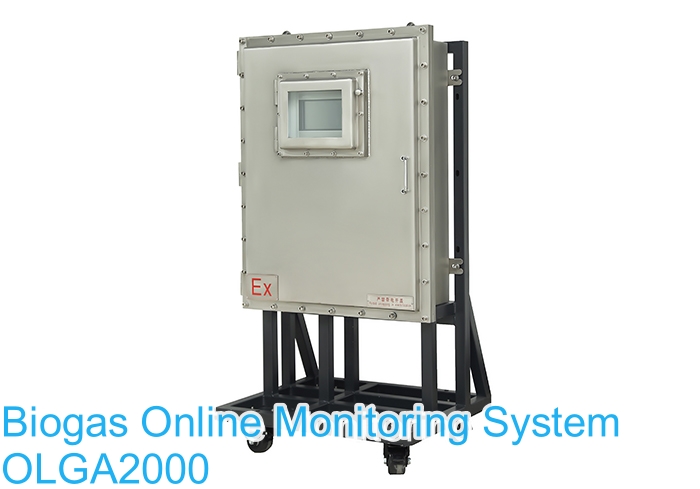
biogas online monitoring system OLGA2000
Anaerobic Digester Types
- Batch Digesters: Loaded once and sealed for the digestion period.
- Continuous Digesters: Feedstock is added continuously or periodically, and digestate is removed accordingly.
- Covered Lagoons: Large ponds with a sealed cover, often used in agriculture.
- Plug Flow and Complete Mix Digesters: Designed for high solids content, often used on farms or in municipal settings.
Benefits of Anaerobic Digestion
Renewable Energy Production
Biogas can be used for:
- Electricity and heat (CHP units)
- Upgrading to biomethane for grid injection or vehicle fuel
Waste Reduction
AD diverts organic waste from landfills, reducing methane emissions from uncontrolled decomposition.
Fertilizer Production
The digestate is rich in nutrients like nitrogen and phosphorus, making it an excellent organic fertilizer.
Greenhouse Gas Mitigation
By capturing methane that would otherwise be emitted from waste, AD systems help reduce overall greenhouse gas emissions.

Applications of Anaerobic Digestion
- Agriculture: Processing livestock manure and crop residues
- Municipalities: Treating sewage sludge and organic household waste
- Food Industry: Handling organic processing waste
- Energy Sector: Providing renewable gas for electricity and transport
Anaerobic digestion in biogas production, offering a dual solution for organic waste management and renewable energy generation. By understanding how this natural process works and integrating it into local and industrial systems, communities and industries can move toward a cleaner, more circular economy.
 Manufacturer of biogas analyzer, landfill gas analyzer and extraction monitor, anaerobic digester gas analyzer