
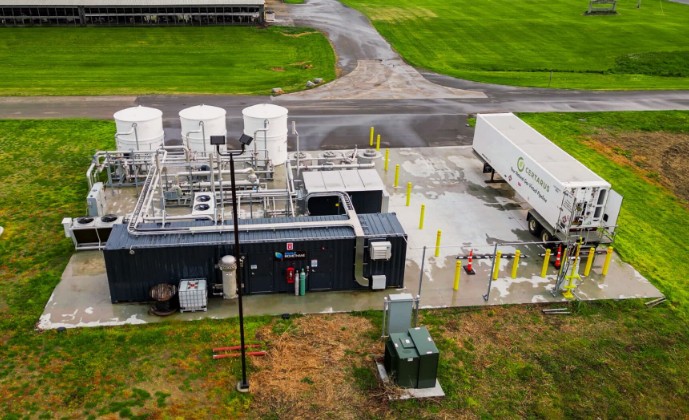
As global attention turns toward reducing greenhouse gas emissions and building a cleaner energy economy, Bio Compressed Natural Gas (Bio-CNG) has emerged as a promising alternative to traditional Fossil-based Compressed Natural Gas (CNG). While both fuels are composed primarily of methane and can be used interchangeably in CNG vehicles, their sources, environmental impacts, and long-term sustainability differ significantly.
This article explores the key advantages of Bio-CNG over fossil CNG, highlighting why this renewable fuel is gaining traction across industries, public transport systems, and rural energy initiatives.
What Is Bio-CNG?
Bio-CNG is produced by upgrading biogas, which is generated from the anaerobic digestion of organic waste—such as agricultural residues, food scraps, animal manure, and sewage. The raw biogas, which contains methane (CH₄) and carbon dioxide (CO₂), is purified to remove CO₂ and trace gases, leaving behind high-purity methane that is compressed for use in natural gas vehicles or for injection into the gas grid.
Key Benefits of Bio-CNG Over Fossil CNG
1. Renewable and Sustainable Source
- Fossil CNG is extracted from underground natural gas reserves, which are finite and depleting.
- Bio-CNG is produced from organic waste, making it a renewable energy source that can be generated continuously as long as feedstock is available.
By using waste that would otherwise contribute to environmental degradation, Bio-CNG offers a circular solution for energy and waste management.
2. Lower Carbon Footprint
While both fuels emit CO₂ when burned, the origin of that carbon makes a difference:
- Fossil CNG adds new carbon to the atmosphere from ancient sources.
- Bio-CNG emits biogenic CO₂, which is part of the natural carbon cycle. The plants that form the biomass originally absorbed this CO₂ during photosynthesis.
Thus, Bio-CNG is considered carbon-neutral and helps significantly in reducing net greenhouse gas emissions.
3. Improved Waste Management
Producing Bio-CNG diverts organic waste from landfills and open dumping sites, preventing:
- Uncontrolled methane emissions
- Soil and water contamination
- Spread of disease
This not only addresses the waste crisis but also generates clean fuel, making Bio-CNG a key component in integrated waste-to-energy systems.
4. Air Quality Improvement
Vehicles running on Bio-CNG emit fewer:
- Nitrogen oxides (NOₓ)
- Particulate matter (PM)
- Carbon monoxide (CO)
Compared to diesel or petrol, Bio-CNG contributes to cleaner urban air and a reduction in respiratory illnesses linked to vehicular pollution. In many cities, buses and auto-rickshaws powered by Bio-CNG are being adopted as part of clean transport initiatives.
5. Rural Development and Energy Security
Bio-CNG plants can be set up locally, especially in agricultural regions where feedstock is abundant. This:
- Provides energy independence in rural areas
- Creates local jobs in plant operation, waste collection, and distribution
- Reduces dependency on imported fossil fuels
Governments and organizations are increasingly recognizing the role of Bio-CNG in decentralized energy systems.
6. High Calorific Value and Engine Compatibility
Bio-CNG has a methane content of over 90%, making its energy value comparable to that of fossil CNG. It can be used directly in existing CNG-powered vehicles without any engine modifications, providing an immediate transition path to renewable fuel.
7. Financial and Policy Support
Many governments offer subsidies, tax incentives, and feed-in tariffs to encourage the development of Bio-CNG infrastructure. In some countries, Bio-CNG is also eligible for carbon credits, offering additional economic value to producers.
Bio Compressed Natural Gas represents a clean, renewable, and scalable solution to many of today’s pressing energy and environmental challenges. Compared to fossil CNG, it not only offers similar performance but also delivers profound benefits in terms of carbon reduction, waste management, and rural empowerment.
 Manufacturer of biogas analyzer, landfill gas analyzer and extraction monitor, anaerobic digester gas analyzer