
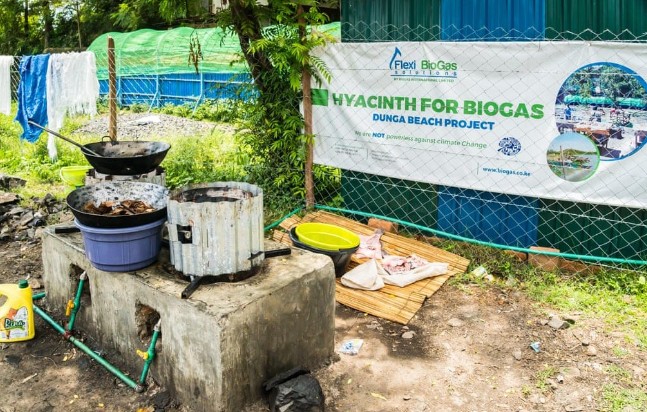
Water hyacinth (Eichhornia crassipes) is one of the world’s most invasive aquatic plants. Known for its rapid growth and ability to choke waterways, it poses serious ecological, agricultural, and economic challenges in many tropical and subtropical regions. However, this problematic plant may also hold the key to a renewable energy solution: biogas production.
By using water hyacinth as feedstock in anaerobic digestion, communities can turn a troublesome weed into a sustainable source of energy. This article explores how water hyacinth can be used to produce biogas, its benefits, and the challenges involved in implementing this green technology.
The Problem with Water Hyacinth
Water hyacinth grows rapidly on the surface of water bodies, forming dense mats that:
- Block sunlight, depleting oxygen levels and killing aquatic life
- Obstruct fishing, irrigation, and transport
- Increase mosquito breeding and the risk of waterborne diseases
- Reduce biodiversity and alter ecosystems
Traditional methods of control—such as chemical treatment and manual removal—are often costly and only offer temporary relief. Turning the plant into a resource rather than a waste offers a far more sustainable solution.
Why Use Water Hyacinth for Biogas?
Water hyacinth has several characteristics that make it a viable feedstock for biogas production:
- High Biomass Yield: It grows rapidly and abundantly in warm climates, providing a steady supply of organic material.
- Moisture Content: Its high water content suits anaerobic digestion systems.
- Organic Matter: Contains cellulose and hemicellulose, which break down into methane-producing compounds.
Although it has a low carbon-to-nitrogen (C:N) ratio, this can be balanced by co-digesting it with other organic wastes like manure or food scraps.
The Biogas Production Process
The process of converting water hyacinth into biogas involves several steps:
- Harvesting
The plant is collected from lakes, rivers, or ponds using mechanical or manual methods. - Pre-Treatment
To improve biogas yield, water hyacinth may be:
- Chopped or shredded to increase surface area
- Sun-dried or composted to reduce excess moisture and soften fibers
- Co-digested with other materials to improve microbial digestion
- Anaerobic Digestion
In an oxygen-free environment (a digester), bacteria break down the organic matter over several days or weeks. This process generates:
- Biogas (primarily methane and carbon dioxide)
- Digestate, a nutrient-rich residue that can be used as fertilizer
During the biogas production process, the required equipment is a biogas analyzer, which uses advanced photoelectric sensing principles to detect methane (CH4), oxygen (O2), carbon dioxide (CO2), hydrogen sulfide (H2S), etc. For example, the OLGA2000 biogas online monitoring system can be widely used in gas monitoring in landfill biogas power plants, petrochemicals, coal mines and other scenarios, and can achieve remote data transmission.
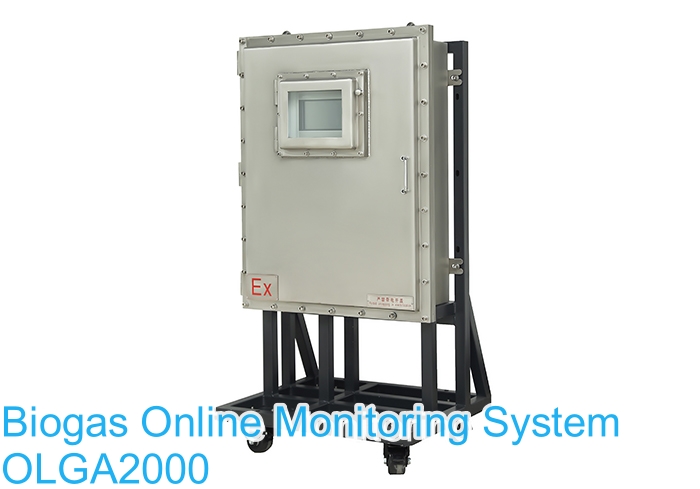
biogas online monitoring system OLGA2000
- Gas Collection and Use
The methane-rich biogas can be:
- Burned for cooking or heating
- Used to generate electricity
- Upgraded to biomethane for use in vehicles or the gas grid Advantages of Biogas from Water Hyacinth
- Waste Management: Turns a harmful aquatic weed into a valuable resource
- Renewable Energy: Provides clean, local energy for households and industries
- Environmental Restoration: Helps restore aquatic ecosystems by controlling invasive plant populations
- Fertilizer Production: Digestate by-product can improve soil health and reduce reliance on chemical fertilizers
- Rural Empowerment: Offers income and energy solutions to farming and fishing communities Challenges and Considerations
- Low Methane Yield: Water hyacinth has a relatively low biogas yield compared to manure or food waste; blending with other materials can improve performance
- Transport Costs: Bulk and water weight make transportation costly unless digesters are located near harvesting sites
- System Maintenance: Requires proper management to avoid clogging and maintain optimal microbial activity
Transforming water hyacinth from a noxious weed into a renewable energy source is a win-win for both the environment and local communities. Though not without challenges, the biogas-from-water-hyacinth model offers a scalable and eco-friendly approach to waste management, energy production, and ecological restoration.
 Manufacturer of biogas analyzer, landfill gas analyzer and extraction monitor, anaerobic digester gas analyzer