
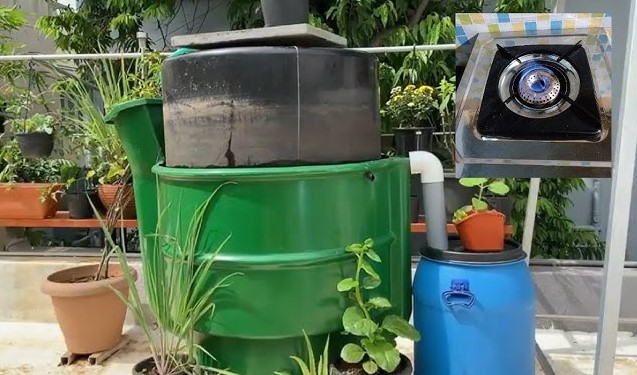
In many remote and off-grid areas around the world, access to clean energy remains a persistent challenge. Traditional fuels like firewood, charcoal, and kerosene are still widely used, leading to environmental degradation, indoor air pollution, and high health risks. Small biogas units offer a sustainable and practical solution to these problems by converting organic waste into clean, renewable energy. Compact, cost-effective, and relatively easy to maintain, these systems are especially well-suited for rural households and small communities.
1. Clean and Reliable Energy Source
One of the most significant benefits of small biogas units is the production of clean-burning fuel. Biogas, primarily composed of methane, can be used for cooking, lighting, and heating. Unlike firewood or coal, it burns cleanly, emitting far fewer pollutants and significantly reducing indoor air pollution—a leading cause of respiratory illnesses in rural areas.
Additionally, because biogas is generated from locally available organic waste, it provides a reliable and renewable energy source, unaffected by fuel supply chains or electricity outages.
2. Low-Cost and Locally Maintainable Technology
Small-scale biogas systems can often be constructed using locally available materials such as plastic tanks, bricks, or concrete. The technology is simple enough for local technicians to build and maintain, reducing the need for expensive imports or complex machinery.
Once installed, the operating cost is minimal, as the primary input—organic waste—is readily available from households, farms, or community waste. This makes it an economically sustainable option for low-income households.
3. Improved Sanitation and Waste Management
In remote areas where waste disposal is often a challenge, small biogas units offer an effective solution by processing organic waste directly at the source. Whether it’s kitchen waste, animal dung, or agricultural residues, these materials can be fed into the digester instead of being dumped or left to decompose.
This not only reduces environmental pollution but also helps control disease vectors such as flies and rodents, leading to improved hygiene and public health.
4. Production of Organic Fertilizer
The byproduct of biogas production is digestate—a nutrient-rich slurry that can be used as a natural fertilizer. This organic output improves soil fertility and structure, supporting sustainable agriculture and reducing dependence on chemical fertilizers, which are often expensive or unavailable in remote areas.
This dual function—providing both energy and fertilizer—makes small biogas units a highly efficient and valuable tool for self-sufficient farming communities.
5. Environmental Protection
By utilizing waste that would otherwise emit methane into the atmosphere, small biogas units help reduce greenhouse gas emissions. Furthermore, by offering an alternative to firewood, they reduce deforestation, which is a critical issue in many remote regions where wood is the primary cooking fuel.
Over time, this contributes to improved biodiversity, watershed protection, and climate resilience in vulnerable ecosystems.
6. Empowering Women and Saving Time
In many rural communities, women and children are responsible for collecting firewood and managing household cooking. Small biogas units significantly reduce the time and labor needed for fuel collection, freeing up time for education, income-generating activities, or rest.
Cooking with biogas is also faster and cleaner, improving kitchen conditions and reducing the burden of smoke exposure.
7. Scalability and Adaptability
Small biogas systems can be scaled to match local needs—from single-household units to community digesters shared by several families. They can be adapted to various climates and feedstocks, including cow dung, pig manure, food scraps, or even human waste, depending on the community’s resources and preferences.
This flexibility makes them a versatile solution for a wide range of remote settings—from mountain villages to desert settlements and island communities.
Conclusion
Small biogas units offer a compelling combination of benefits for remote and underserved areas. By converting waste into a clean, renewable energy source and valuable organic fertilizer, they support environmental sustainability, improve public health, reduce energy poverty, and empower local communities.
 Manufacturer of biogas analyzer, landfill gas analyzer and extraction monitor, anaerobic digester gas analyzer