
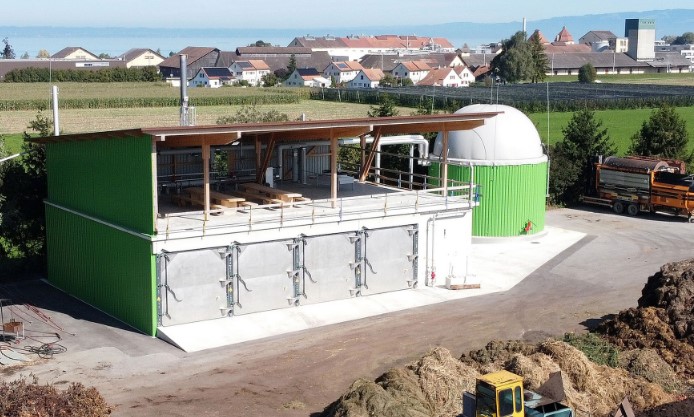
As the global population continues to grow and urbanization accelerates, the demand for sustainable and decentralized energy solutions becomes more urgent. Compact biogas plants—small-scale systems designed to convert organic waste into usable energy—are emerging as a practical answer to this need. Whether in urban backyards or rural homesteads, these compact systems offer a clean, renewable energy source while helping manage organic waste efficiently.
What Is a Compact Biogas Plant?
A compact biogas plant is a scaled-down version of a traditional biogas digester, designed to fit in limited spaces and serve small-scale energy needs. These systems operate on the same principles as larger biogas plants: through anaerobic digestion, microorganisms break down organic matter—like food scraps, kitchen waste, or animal manure—in the absence of oxygen, producing biogas and a nutrient-rich slurry known as digestate.
The biogas, composed mostly of methane, can be used for cooking, heating, or generating electricity, while the digestate can be used as organic fertilizer.
How Compact Biogas Plants Work
1. Feedstock Input
Organic waste—such as fruit peels, leftover food, or animal manure—is added to the plant’s inlet.
2. Anaerobic Digestion
Inside an airtight digester tank, bacteria break down the waste over several days, releasing methane-rich gas.
3. Biogas Collection
The gas is stored in an integrated dome or flexible bag, from where it can be piped to appliances or generators.
4. Slurry Output
The leftover slurry exits the system and can be used as a liquid organic fertilizer for gardens and crops.
5. Gas monitoring
Biogas analyzers, such as the GASCHEK1000 portable biogas analyzer, use advanced photoelectric sensing principles to detect and analyze methane (CH4), oxygen (O2), carbon dioxide (CO2), hydrogen sulfide (H2S) and other gases, and accurately report , while effectively checking the digestive process.

Applications in Urban Areas
- Waste Management: They reduce the amount of organic waste sent to landfills, lowering greenhouse gas emissions and sanitation issues.
- Energy Savings: Households and small businesses can reduce reliance on LPG or electricity by using biogas for cooking or heating water.
- Sustainability Education: Urban schools and institutions use compact plants as educational tools to teach about renewable energy and sustainability.
Applications in Rural Areas
- Household Cooking: Families can use animal manure or crop residues to produce biogas for clean cooking.
- Electricity Generation: The gas can power small generators, providing electricity in off-grid areas.
- Agricultural Use: The digestate can fertilize crops, improving soil health and reducing the need for chemical inputs.
- Livestock Integration: Farms with dairy or poultry operations can integrate waste output into energy generation, creating a closed-loop system.
Advantages of Compact Biogas Plants
- Space-Efficient: Designed to operate in limited spaces, even urban balconies or rooftops.
- Low Maintenance: Modern units are user-friendly and require minimal technical knowledge to operate.
- Cost-Effective: They offer long-term savings by replacing expensive fuels and fertilizers.
- Environmentally Friendly: Reduce methane emissions from waste and reliance on fossil fuels.
- Scalable: Can be expanded or linked with other systems as needs grow.
Challenges and Considerations
- Initial Cost: While cheaper than large plants, the upfront cost may still be a barrier for some households.
- Feedstock Availability: A consistent supply of organic waste is necessary for steady gas production.
- Temperature Sensitivity: In colder climates, maintaining digestion temperatures may require additional heating.
Ongoing innovation and support from governments, NGOs, and clean energy companies are addressing these issues through subsidies, training programs, and improved system designs.
Compact biogas plants are proving to be a practical and sustainable solution for both urban and rural communities. By turning everyday organic waste into usable energy, they reduce environmental impact, promote self-sufficiency, and contribute to a circular economy.
 Manufacturer of biogas analyzer, landfill gas analyzer and extraction monitor, anaerobic digester gas analyzer