

Gobar gas, commonly produced from cow dung and other organic agricultural waste, is emerging as a renewable and sustainable energy alternative to conventional fuels such as LPG and fossil fuels. As the global demand for cleaner energy sources grows, gobar gas offers a cost-effective solution that not only addresses energy needs but also mitigates environmental pollution.
What is Gobar Gas?
Gobar gas is essentially biogas generated through the anaerobic digestion of cow dung and other organic wastes. In this process, naturally occurring bacteria break down the organic matter in an oxygen-free environment, producing a mixture of gases predominantly composed of methane (CH₄) and carbon dioxide (CO₂). The methane content, which is responsible for the fuel’s high energy value, makes gobar gas suitable for a variety of applications including cooking, heating, and even electricity generation.
Production Process
The production of gobar gas follows a straightforward biological process:
• Organic materials such as cow dung, kitchen waste, and crop residues are collected and mixed with water to form a slurry.
• This slurry is introduced into a sealed digester, where anaerobic bacteria begin the breakdown of the organic matter.
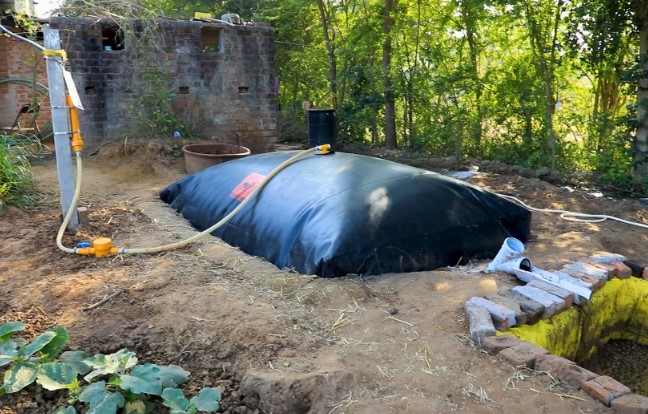
• Over a period of several weeks, the bacteria convert the waste into biogas, which accumulates in a gas storage chamber attached to the digester.
• The residual material, known as digestate, serves as a nutrient-rich organic fertilizer for agricultural use.
Advantages Over LPG and Fossil Fuels
Environmental Benefits: Gobar gas is a renewable source that helps reduce the reliance on finite fossil fuels. By capturing methane—a potent greenhouse gas—from organic waste, gobar gas systems prevent its direct release into the atmosphere, thus reducing the overall carbon footprint.
Cost-Effectiveness: In many rural and agricultural communities, cow dung is an abundant resource. Converting this waste into energy can significantly lower fuel costs, particularly when compared to the rising prices of LPG and other fossil fuels.
Waste Management: Gobar gas not only provides energy but also offers an effective solution to manage agricultural and kitchen waste. The process reduces the volume of waste that would otherwise be disposed of in landfills, where it can contribute to environmental degradation.
Energy Independence: Local production of gobar gas enhances energy security by reducing dependence on imported fuels. Farmers and households can generate their own energy, leading to increased self-sufficiency and resilience against market fluctuations.
Applications
• Cooking and Heating: Many rural households have adopted gobar gas stoves as a clean alternative to traditional biomass fuels, reducing indoor air pollution.
• Electricity Generation: Biogas generators can convert methane from gobar gas into electricity, providing a reliable power source for off-grid communities.
• Industrial Use: Small industries and agricultural operations can use gobar gas for process heating, thereby lowering operational costs and minimizing environmental impact.
Conclusion
Gobar gas represents a promising renewable alternative to LPG and fossil fuels, offering a dual benefit of waste management and energy production. By harnessing the power of natural biological processes, gobar gas not only contributes to a cleaner environment but also supports energy independence in rural and agricultural settings.
 Manufacturer of biogas analyzer, landfill gas analyzer and extraction monitor, anaerobic digester gas analyzer