

Biogas is a renewable energy source that provides a sustainable way to manage organic waste while generating methane-rich fuel for electricity, heat, and transportation. The key to biogas production is methane (CH₄), a high-energy gas produced by anaerobic microorganisms in the absence of oxygen.
Understanding the science behind methane production is crucial for optimizing biogas systems, improving efficiency, and increasing energy output. This article explores the biological, chemical, and environmental factors that drive methane formation in anaerobic digesters.
The Process of Methane Production in Biogas Systems
1. Hydrolysis (Breaking Down Complex Compounds)
- Organic waste, such as plant residues, manure, and food waste, contains complex carbohydrates, proteins, and lipids.
- Hydrolytic bacteria release enzymes that break down these complex compounds into simpler molecules such as sugars, amino acids, and fatty acids.
- This step is crucial because only small organic molecules can be further processed by other microorganisms.
2. Acidogenesis (Formation of Acids and Alcohols)
- Acidogenic bacteria consume the small molecules from hydrolysis and convert them into volatile fatty acids (VFAs), alcohols, hydrogen (H₂), carbon dioxide (CO₂), and ammonia (NH₃).
- Some of the key by-products in this phase include acetic acid, propionic acid, and butyric acid.
- Acidogenesis occurs rapidly, but an imbalance can lead to acid accumulation, which inhibits further digestion.
3. Acetogenesis (Formation of Acetate and Hydrogen)
- Acetogenic bacteria break down VFAs and alcohols into acetate (CH₃COO⁻), hydrogen (H₂), and carbon dioxide (CO₂).
- This step is critical because methanogenic bacteria rely on acetate and hydrogen to produce methane.
- If hydrogen accumulates, it inhibits acetogenesis, reducing methane yield.
4. Methanogenesis (Formation of Methane)
Methanogenic archaea (methanogens) convert acetate, hydrogen, and carbon dioxide into methane (CH₄) and water (H₂O).
There are two primary pathways for methane production:
Acetoclastic methanogenesis: Acetate is directly converted into methane.
CH₃COO⁻ → CH₄ + CO₂
Hydrogenotrophic methanogenesis: Hydrogen and carbon dioxide react to form methane.
CO₂ + 4H₂ → CH₄ + 2H₂O
Methanogenesis is the slowest and most sensitive stage of anaerobic digestion, as methanogens grow slowly and are highly susceptible to environmental changes.
During the biogas production process, a biogas analyzer is needed to monitor the composition of the biogas. OLGA1500 Online Biogas Monitoring System adopts laser sensing principle. It can realize the online monitoring of methane gas, which is fast, accurate and stable. OLGA1500 can be widely used in gas monitoring in landfill gas power plants, petrochemicals, coal mines and other scenarios, and can realize remote data transmission.
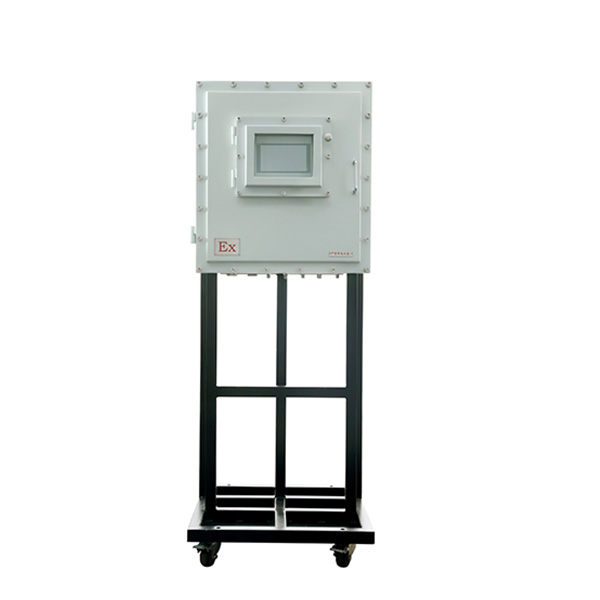
OLGA1500 Online Biogas Monitoring System
Key Factors Influencing Methane Production
1. Substrate Composition
- Different types of organic waste produce varying methane yields.
- High-energy feedstocks like fats and oils produce more methane than carbohydrate-based materials.
- C/N Ratio (Carbon-to-Nitrogen Ratio):
Optimal range: 20:1 to 30:1
Too much nitrogen: Leads to ammonia accumulation, which inhibits microbial activity.
Too much carbon: Slows microbial growth due to nitrogen deficiency.
2. Temperature
- Psychrophilic (10-20°C): Slow digestion, used in cold climates.
- Mesophilic (35-40°C): Optimal for most biogas plants, balances efficiency and stability.
- Thermophilic (50-60°C): Faster digestion but requires more energy and has a higher risk of process failure.
3. pH Levels
- Optimal pH range: 6.57.5
- Low pH (<6.5): Acid accumulation inhibits methanogens.
- High pH (>8.0): Excess ammonia becomes toxic to bacteria.
4. Retention Time
- The time organic matter spends in the digester is called hydraulic retention time (HRT).
- Short retention time (<10 days): Incomplete digestion, lower methane yield.
- Long retention time (>30 days): Higher efficiency but requires larger digesters.
5. Toxicity and Inhibitors
- Ammonia (NH₃): Produced from protein-rich waste; high concentrations (>3,000 mg/L) can be toxic.
- Sulfur Compounds (H₂S): Leads to corrosive biogas and damages engines.
- Heavy Metals: Inhibit microbial activity in digesters.
Enhancing Methane Production Efficiency
1. Co-Digestion
Mixing different types of organic waste (e.g., manure + food waste) improves nutrient balance and biogas yield.
2. Pre-Treatment of Feedstock
Mechanical pre-treatment: Grinding and shredding increase surface area for faster digestion.
Chemical pre-treatment: Alkaline or acid treatments break down lignocellulosic materials (e.g., crop residues).
Thermal pre-treatment: Heating organic matter improves biodegradability.
3. Biogas Upgrading
Raw biogas contains CO₂, H₂S, and water vapor, which lower its energy value.
Upgrading technologies remove impurities to produce high-purity biomethane for grid injection or vehicle fuel.
4. Process Monitoring and Optimization
Real-time sensors for pH, temperature, gas composition, and pressure improve stability.
Microbial community engineering (using specialized methanogens) enhances methane yields.
Conclusion
The science behind methane production in biogas systems is a complex interaction of microbiology, chemistry, and environmental factors. By understanding and optimizing anaerobic digestion, biogas technology can become a key contributor to renewable energy, reducing waste pollution, greenhouse gas emissions, and dependence on fossil fuels.
 Manufacturer of biogas analyzer, landfill gas analyzer and extraction monitor, anaerobic digester gas analyzer