
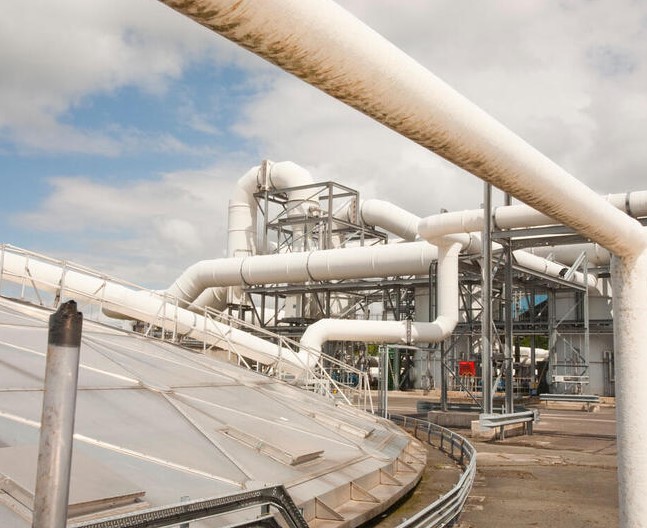
The global demand for clean and renewable energy sources is increasing as nations strive to reduce their dependence on fossil fuels and lower greenhouse gas emissions. One promising solution is biogas plants for electricity generation, which converts organic waste into a reliable and eco-friendly power source.
Biogas plants play a crucial role in sustainable energy production by capturing methane from organic waste, agricultural residues, and wastewater and converting it into electricity and heat. This article explores the working mechanism of biogas power plants, their benefits, challenges, and future prospects.
Understanding Biogas and Its Potential for Electricity Generation
Biogas is a mixture of methane (CH₄), carbon dioxide (CO₂), and trace gases produced through the anaerobic digestion of organic matter by bacteria in the absence of oxygen. The primary component, methane, is a high-energy gas that can be used to generate electricity and heat, making biogas an effective alternative to fossil fuels.
Key Sources of Biogas
- Agricultural waste (crop residues, manure, and food waste)
- Municipal solid waste (organic portion of landfill waste)
- Industrial waste (food processing and brewery waste)
- Sewage and wastewater sludge
Biogas plants convert this waste into energy while reducing environmental pollution and providing a decentralized power supply for rural and urban areas.
How Biogas Plants Generate Electricity
1. Collection and Anaerobic Digestion
Organic waste is collected and processed into a slurry before being fed into an anaerobic digester.
Inside the digester, microorganisms break down the organic material, producing biogas over 15-40 days.
2. Biogas Purification and Storage
The raw biogas contains impurities such as CO₂, hydrogen sulfide (H₂S), and moisture, which are removed to improve efficiency.
The purified biogas (rich in methane) is stored in a gas holder or pressurized tank.
3. Electricity Generation
The purified biogas is fed into a biogas-powered generator or gas turbine.
The combustion of methane in these engines produces mechanical energy, which is converted into electricity.
Many biogas power plants utilize Combined Heat and Power (CHP) systems, where excess heat from the generator is recovered for heating or industrial processes, improving overall efficiency.
4. Utilization of By-Products
The remaining digestate (solid and liquid residue) from biogas production is used as a nutrient-rich organic fertilizer for agriculture, closing the waste-to-energy cycle.
Benefits of Biogas Plants for Electricity Generation
1. Renewable and Sustainable Energy Source
Biogas is a continuously renewable energy source since it is derived from organic waste.
Unlike fossil fuels, biogas does not deplete finite natural resources.
2. Reducing Greenhouse Gas Emissions
Methane (CH₄) is a potent greenhouse gas, and biogas plants capture and utilize it, preventing its release into the atmosphere.
Biogas power plants significantly reduce CO₂ emissions, especially when replacing coal or diesel-based power generation.
3. Efficient Waste Management
Converting agricultural, food, and sewage waste into biogas helps prevent landfill overflow, reducing pollution and health hazards.
Proper waste utilization also lowers soil and water contamination.
4. Energy Security and Rural Electrification
Biogas power plants provide a decentralized energy solution, reducing dependence on centralized electricity grids.
Many rural communities and farms can achieve energy independence by generating their own electricity from local biogas plants.
5. Cost-Effective and Job Creation
Once installed, biogas plants have low operational costs, reducing the long-term expense of electricity.
The biogas industry creates jobs in plant construction, maintenance, and biogas distribution, boosting local economies.
Conclusion
Biogas plants for electricity generation offer a sustainable, renewable, and eco-friendly energy solution that supports waste management, rural electrification, and greenhouse gas reduction. Despite challenges such as high initial costs and technical barriers, advancements in biogas purification, efficient power generation, and hybrid energy systems are making biogas a key player in the global renewable energy transition.
 Manufacturer of biogas analyzer, landfill gas analyzer and extraction monitor, anaerobic digester gas analyzer