
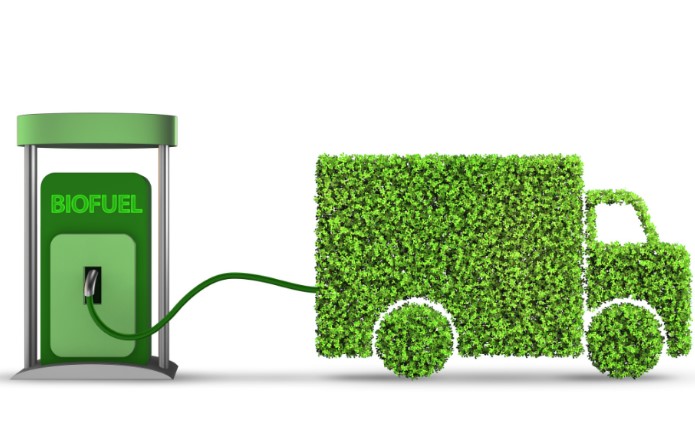
As the global demand for renewable energy grows, biogas has emerged as a promising solution for sustainable energy production. Derived from organic waste, biogas offers a reliable alternative to fossil fuels while addressing waste management and environmental concerns. Biogas energy conversion refers to the process of transforming raw biogas into useful forms of energy such as heat, electricity, and vehicle fuel. This article explores the process of biogas energy conversion, its benefits, challenges, and future potential.
Understanding Biogas and Its Composition
Biogas is produced through anaerobic digestion, a process in which microorganisms break down organic matter in the absence of oxygen. The result is a mixture of gases, primarily composed of:
- Methane (CH₄) – 50-75% (the main combustible component)
- Carbon dioxide (CO₂) – 25-45%
- Small amounts of hydrogen sulfide (H₂S), nitrogen (N₂), and water vapor
The high methane content makes biogas a valuable energy source that can be converted into heat, electricity, and fuel for transportation.
The Biogas Energy Conversion Process
1. Biogas Collection and Storage
Raw biogas is generated in a biogas digester, an airtight chamber where organic waste such as agricultural residues, manure, and food waste decomposes under anaerobic conditions. The gas is then stored in a gas holder or tank before being processed for energy use. During the biogas production process, a biogas analyzer is needed to monitor the composition of the biogas. For example, the OLGA2000 biogas online monitoring system uses advanced photoelectric sensing principles to detect and analyze methane (CH4), oxygen (O2), carbon dioxide (CO2), hydrogen sulfide (H2S) and other gases.
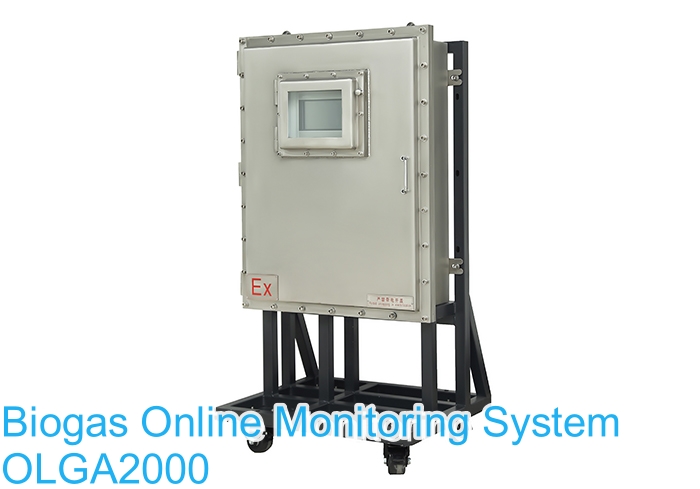
OLGA2000 biogas online monitoring system
2. Biogas Purification and Upgrading
Raw biogas contains impurities such as CO₂, H₂S, and moisture, which must be removed for efficient energy conversion. The purification process involves:
- CO₂ Removal – Membrane separation, chemical absorption, or water scrubbing to increase methane concentration.
- H₂S Removal – Activated carbon or iron-based filters to prevent corrosion in engines and pipelines.
- Moisture Removal – Cooling and condensation to remove water vapor.
Once purified, biogas is called biomethane, which has a methane content of over 90% and can be used in applications similar to natural gas.
3. Biogas-to-Heat Conversion
One of the simplest applications of biogas is direct combustion for heat production. This process is widely used in:
- Household cooking and heating – Biogas stoves replace traditional fuels like wood and coal.
- Industrial heat generation – Biogas is used in boilers and furnaces in industries such as food processing and manufacturing.
4. Biogas-to-Electricity Conversion
Biogas can be used to generate electricity through internal combustion engines, gas turbines, or fuel cells. The process involves:
Combustion in a gas engine or turbine – The heat produced drives a generator to produce electricity.
Combined Heat and Power (CHP) systems – Also known as cogeneration, this system simultaneously produces electricity and heat, improving energy efficiency.
Biogas power plants are commonly installed in waste treatment facilities, farms, and industrial sites, where they generate electricity for on-site use or supply it to the power grid.
5. Biogas as Vehicle Fuel
Upgraded biogas, also known as Compressed Biogas (CBG) or Liquefied Biogas (LBG), can be used as a transportation fuel. The process involves:
Compression – Biomethane is compressed and stored in cylinders for use in vehicles.
Liquefaction – Cooling biomethane to extremely low temperatures (-162°C) to convert it into liquid biogas, suitable for heavy-duty transport.
Many countries are adopting biogas-powered buses, trucks, and cars as part of their efforts to reduce dependence on fossil fuels.
Benefits of Biogas Energy Conversion
1. Renewable and Sustainable Energy Source
Biogas is derived from organic waste, making it an inexhaustible energy source compared to finite fossil fuels.
2. Waste Management and Pollution Reduction
By utilizing agricultural waste, food scraps, and sewage sludge, biogas systems reduce landfill waste and minimize methane emissions, which contribute to global warming.
3. Energy Independence and Security
Local biogas production reduces reliance on imported fossil fuels, enhancing energy security for rural communities and developing nations.
4. Reduction of Greenhouse Gas Emissions
Using biogas for energy prevents methane release from organic waste decomposition and reduces carbon dioxide emissions by replacing fossil fuels.
5. Cost Savings and Economic Benefits
Biogas energy reduces fuel costs for households, farms, and industries while creating job opportunities in biogas plant construction, maintenance, and operation.
Conclusion
Biogas energy conversion is a powerful and sustainable method of transforming organic waste into clean energy. By harnessing methane-rich biogas for heat, electricity, and transportation fuel, this technology contributes to environmental conservation, waste management, and energy security.
 Manufacturer of biogas analyzer, landfill gas analyzer and extraction monitor, anaerobic digester gas analyzer