
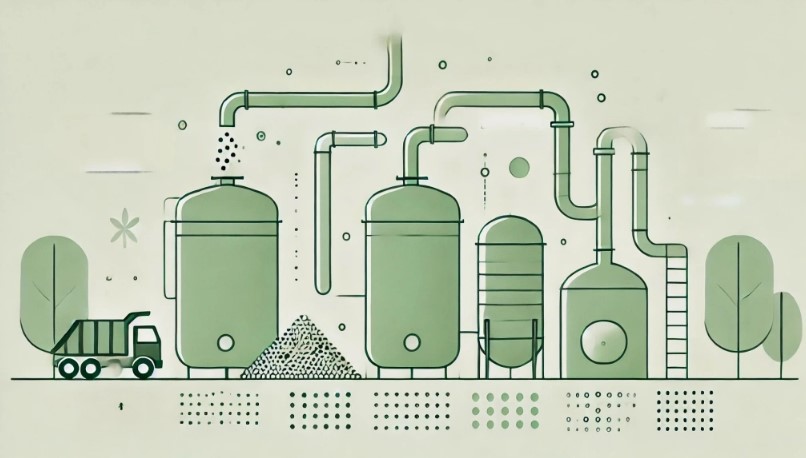
As the world faces the growing challenges of climate change, energy security, and environmental pollution, there is an urgent need for sustainable and renewable energy sources. Biogas has emerged as a green energy solution that not only provides a renewable alternative to fossil fuels but also reduces waste, lowers carbon emissions, and promotes energy independence.
What is Biogas?
Biogas is a renewable energy source produced from organic waste through a natural process called anaerobic digestion. This process involves microorganisms breaking down biodegradable materials in the absence of oxygen, generating a mixture of gases that can be used as fuel.
Composition of Biogas
Biogas is primarily made up of:
Methane (CH₄) – 50-75% (the main fuel component)
Carbon dioxide (CO₂) – 25-45%
Small amounts of hydrogen sulfide (H₂S), ammonia (NH₃), and water vapor
Due to its high methane content, biogas is highly combustible and can be used for cooking, heating, electricity generation, and even as a vehicle fuel when purified.
How is Biogas Produced?
Biogas is generated through anaerobic digestion, a biological process in which microorganisms break down organic matter in an oxygen-free environment. The main sources of biogas production include:
1. Agricultural Waste – Crop residues, manure, and food processing waste.
2. Animal Manure – Cow dung, poultry waste, and pig manure.
3. Municipal Solid Waste (MSW) – Organic waste from households and food industries.
4. Sewage and Wastewater Sludge – Organic matter from treatment plants.
5. Food Waste – Restaurant and household leftovers, fruit and vegetable waste.
The Biogas Production Process
1. Collection of Organic Waste
Organic materials are gathered and mixed with water to form a slurry.
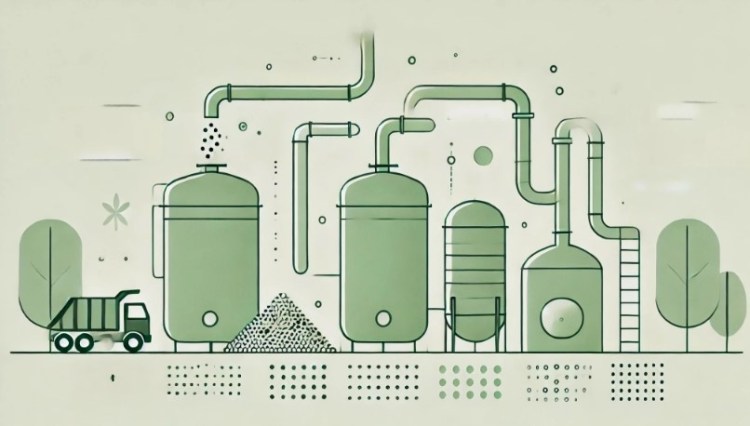
2. Anaerobic Digestion in a Biogas Digester
The slurry is fed into a biogas digester, where bacteria break down the organic matter in four stages:
Hydrolysis – Complex organic molecules are broken down into simpler compounds.
Acidogenesis – Acid-forming bacteria convert these compounds into volatile fatty acids, alcohols, and gases.
Acetogenesis – Further breakdown of fatty acids into acetic acid and hydrogen.
Methanogenesis – Methanogenic bacteria convert acetic acid and hydrogen into methane (CH₄) and CO₂, creating biogas.
3. Biogas Collection and Storage
The biogas rises to the top of the digester and is stored in a gas holder before being used as fuel.
4. Utilization of Biogas and By-Products
The biogas is piped to stoves, generators, or gas purification systems.
The remaining digestate (solid residue) is used as organic fertilizer for crops.
Benefits of Biogas as Green Energy
1. Renewable and Sustainable
Unlike fossil fuels, biogas is continuously produced from organic waste, making it a sustainable energy source.
It relies on natural biological processes, ensuring long-term availability.
2. Reduces Greenhouse Gas Emissions
Methane is a potent greenhouse gas, and biogas production captures and utilizes it instead of allowing it to escape into the atmosphere.
Using biogas as fuel reduces CO₂ emissions, contributing to climate change mitigation.
3. Efficient Waste Management
Converts agricultural, food, and sewage waste into useful energy, reducing landfill waste.
Helps in sanitation improvements by managing animal manure and sewage effectively.
4. Energy Independence and Security
Reduces reliance on imported fossil fuels by utilizing local waste resources for energy production.
Can be produced on small and large scales, from household digesters to industrial biogas plants.
5. Cost-Effective and Affordable
Once installed, biogas systems require minimal operational costs.
Provides low-cost cooking and heating fuel in rural households.
6. Supports Agriculture and Rural Development
Farmers can use digestate as an organic fertilizer, improving soil health and crop yield.
Encourages local job creation in biogas plant installation, maintenance, and farming.
7. Versatile Applications
Cooking and Heating – Used as a direct fuel for households and industries.
Electricity Generation – Can be burned in biogas generators to produce power.
Transportation Fuel – Purified into biomethane (CBG/LBG) for vehicles.
Industrial Use – Used in boilers, furnaces, and CHP (Combined Heat and Power) systems.
Conclusion
Biogas green energy solution provides a sustainable, cost-effective, and environmentally friendly alternative to fossil fuels. By utilizing organic waste, biogas contributes to clean energy production, waste reduction, and greenhouse gas mitigation.
 Manufacturer of biogas analyzer, landfill gas analyzer and extraction monitor, anaerobic digester gas analyzer