

Biogas is a renewable energy source produced through the breakdown of organic matter in the absence of oxygen, a process known as anaerobic digestion. This natural process converts waste materials such as agricultural residues, food scraps, and sewage sludge into methane-rich biogas, which can be used for electricity, heating, and as a transportation fuel. Understanding the science behind biogas formation is essential for optimizing production and efficiency.
The Biogas Formation Process: Step by Step
The biogas formation process consists of four main stages, each driven by specific microbial communities that break down complex organic compounds into methane and carbon dioxide. These stages are hydrolysis, acidogenesis, acetogenesis, and methanogenesis.
1. Hydrolysis: Breaking Down Complex Molecules
Objective: Convert large organic molecules into smaller, soluble compounds.
Organic waste materials contain complex molecules such as carbohydrates, proteins, and fats.
In hydrolysis, bacteria release enzymes that break these molecules into simpler compounds:
Carbohydrates → Sugars
Proteins → Amino acids
Fats → Fatty acids and glycerol
Hydrolysis is the rate-limiting step in anaerobic digestion, meaning it often determines the overall efficiency of the biogas process.
2. Acidogenesis: Formation of Organic Acids
Objective: Convert simple compounds into volatile fatty acids and gases.
Acidogenic bacteria metabolize the sugars, amino acids, and fatty acids produced in hydrolysis.
These bacteria generate:
Volatile fatty acids (such as acetic acid, butyric acid, and propionic acid)
Ethanol and lactic acid
Hydrogen (H₂) and carbon dioxide (CO₂)
Acidogenesis produces intermediate products that serve as substrates for the next stage.
3. Acetogenesis: Formation of Acetic Acid
Objective: Convert volatile fatty acids into acetic acid, hydrogen, and carbon dioxide.
Acetogenic bacteria further break down the volatile fatty acids and alcohols into:
Acetic acid (CH₃COOH)
Hydrogen gas (H₂)
Carbon dioxide (CO₂)
This stage is critical because acetic acid and hydrogen are the main precursors for methane formation in the next step.
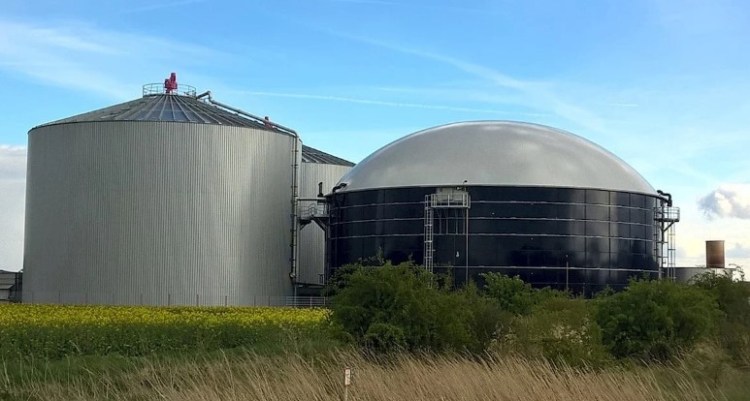
4. Methanogenesis: Production of Methane
Objective: Convert acetic acid and hydrogen into methane and carbon dioxide.
Methanogenic archaea (a group of microorganisms) perform this step.
There are two main pathways for methane production:
1. Acetoclastic methanogenesis: Acetic acid is converted into methane and carbon dioxide:
CH₃COOH → CH₄ + CO₂
2. Hydrogenotrophic methanogenesis: Hydrogen and carbon dioxide react to form methane:
CO₂ + 4H₂ → CH₄ + 2H₂O
The result is biogas, which typically consists of:
Methane (CH₄) – 50 to 70% (primary energy component)
Carbon dioxide (CO₂) – 30 to 50%
Hydrogen sulfide (H₂S), nitrogen (N₂), and other trace gases
Factors Influencing Biogas Formation
1. Feedstock Composition
High-energy materials like food waste and animal manure produce more biogas.
Lignin-rich materials (e.g., wood) are harder to digest.
2. Temperature
Mesophilic range (35–40°C): Most common and stable.
Thermophilic range (50–55°C): Faster digestion but requires more energy.
3. pH Balance
Optimal pH range: 6.5 to 7.5.
Too much acid accumulation can inhibit methanogenesis.
4. Retention Time
The longer organic material stays in the digester, the more methane is produced.
Typical retention time: 20–40 days.
5. Carbon-to-Nitrogen (C/N) Ratio
Ideal ratio: 20:1 to 30:1.
Too much nitrogen leads to ammonia toxicity.
Applications of Biogas
Electricity and Heat: Powering homes, industries, and agricultural facilities.
Transportation Fuel: Upgraded biomethane (RNG) can replace natural gas in vehicles.
Grid Injection: Biogas can be purified and supplied to natural gas pipelines.
Waste Treatment: Reduces landfill waste, pollution, and greenhouse gas emissions.
Conclusion
The biogas formation process is a natural and sustainable way to convert organic waste into renewable energy. By understanding the science behind each step—hydrolysis, acidogenesis, acetogenesis, and methanogenesis—biogas production can be optimized for higher efficiency and sustainability. As global demand for clean energy grows, biogas technology will play an increasingly important role in the transition to a low-carbon economy.
 Manufacturer of biogas analyzer, landfill gas analyzer and extraction monitor, anaerobic digester gas analyzer