

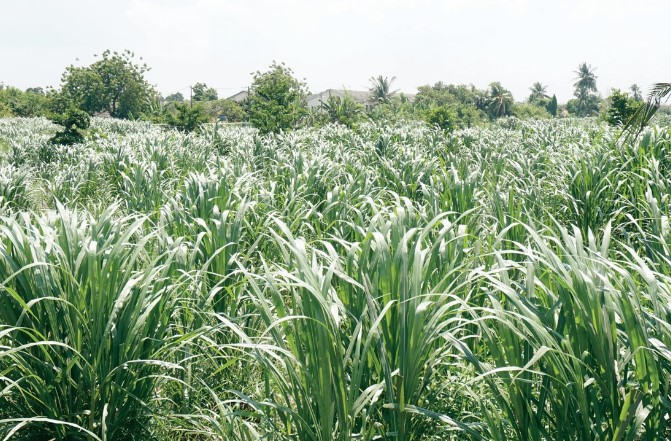
In the race to find sustainable and renewable energy sources, Napier grass, also known as elephant grass, is gaining recognition as a promising feedstock for biogas production. Native to tropical regions, this fast-growing grass offers a renewable way to address energy needs, mitigate waste, and reduce greenhouse gas emissions.
Why Napier Grass for Biogas?
Napier grass is particularly suited for biogas production due to its:
- High Biomass Yield: It can produce up to 40–50 tons of biomass per hectare annually, making it one of the most productive crops.
- Adaptability: It thrives in various climates, including arid and semi-arid regions.
- Rich Organic Content: Its high cellulose and hemicellulose content make it an excellent substrate for anaerobic digestion.
- Renewability: As a perennial crop, it regenerates after harvesting, reducing the need for replanting.
The Process of Biogas Production from Napier Grass
1. Cultivation and Harvesting:
Napier grass is cultivated on agricultural land with minimal input requirements. It is harvested multiple times a year, depending on growth rates.
2. Pre-Treatment:
The grass is chopped or shredded into smaller pieces to enhance surface area, facilitating microbial digestion.
Sometimes, chemical or biological pre-treatments are applied to break down lignin and improve digestibility.
3. Anaerobic Digestion:
The prepared Napier grass is fed into a biogas digester, an airtight system where anaerobic bacteria break down the organic material.
The process produces biogas—a mixture of methane (CH₄) and carbon dioxide (CO₂)—and digestate, a nutrient-rich by-product.
4. Biogas Collection and Utilization:
The biogas is collected, purified, and used for cooking, heating, electricity generation, or as a vehicle fuel (after upgrading to biomethane).
5. Digestate Use:
The leftover material, rich in nitrogen, phosphorus, and potassium, is used as an organic fertilizer, closing the loop in sustainable farming practices.
6. Monitoring equipment:
Biogas analyzer, which uses advanced photoelectric sensing principles to detect methane (CH4), oxygen (O2), carbon dioxide (CO2), hydrogen sulfide (H2S), etc. For example, the OLGA2000 biogas online monitoring system can be widely used in gas monitoring in landfill biogas power plants, petrochemical industries, coal mines and other scenarios, and can achieve remote data transmission.
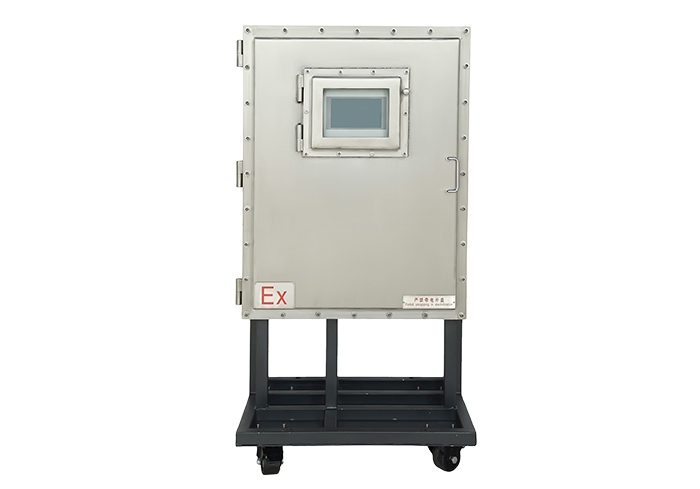
OLGA2000 biogas online monitoring system
Applications of Biogas from Napier Grass
1. Household Energy: Provides clean fuel for cooking and lighting, reducing reliance on firewood and kerosene.
2. Electricity Generation: Biogas can be used in generators to power homes, farms, and rural communities.
3. Industrial Use: Factories can use biogas for heating and running machinery.
4. Transportation Fuel: Upgraded biogas (biomethane) is a sustainable alternative to fossil fuels.
Environmental and Economic Benefits
1. Reduction in Greenhouse Gas Emissions:
Utilizing Napier grass for biogas production captures methane that would otherwise be emitted from decaying organic matter.
2. Efficient Land Use:
Napier grass grows on marginal lands unsuitable for food crops, avoiding competition with food production.
3. Cost-Effective Energy Source:
Biogas from Napier grass reduces energy costs for households and businesses, especially in rural areas.
4. Enhanced Soil Health:
The digestate returned to the soil improves fertility, promoting sustainable agriculture.
5. Waste Management:
Cultivation and biogas production utilize organic agricultural waste, reducing environmental pollution.
Challenges and Solutions
1. High Lignin Content:
Napier grass contains lignin, which resists microbial digestion.
Solution: Pre-treatment methods such as chemical or enzymatic treatment can enhance digestibility.
2. Water Requirements:
Biogas production requires water for creating a slurry.
Solution: Employ water-efficient designs and recycle water within the system.
3. Initial Investment Costs:
Setting up biogas digesters can be expensive.
Solution: Governments and NGOs can offer subsidies, grants, or low-interest loans to promote adoption.
Case Studies and Success Stories
1. India: Small-scale farmers in India use Napier grass-based biogas systems for cooking and irrigation.
2. Kenya: Napier grass is a primary feedstock in community biogas plants, reducing deforestation and providing clean energy.
3. Thailand: Large-scale biogas plants process Napier grass to produce electricity for local grids.
Biogas production from Napier grass is a sustainable and scalable solution to the global energy crisis. By turning an abundant and renewable crop into a clean energy source, we can address energy needs, reduce environmental impacts, and foster economic growth. Harnessing this potential requires collaboration between governments, private sectors, and communities, paving the way for a greener and more sustainable future.
 Manufacturer of biogas analyzer, landfill gas analyzer and extraction monitor, anaerobic digester gas analyzer