

In the pursuit of sustainable energy, biogas has emerged as a promising solution, converting organic waste into a renewable and eco-friendly fuel. At the heart of this process lies the biogas converter—a technology that transforms waste into energy, providing a cleaner alternative to fossil fuels. Biogas converters are not just machines; they are catalysts for a greener future, revolutionizing renewable energy systems worldwide.
What is a Biogas Converter?
A biogas converter, often referred to as a biogas digester, is a device that facilitates the anaerobic digestion of organic materials, such as agricultural residues, animal manure, and food waste. Through microbial activity in an oxygen-free environment, the organic matter is broken down to produce biogas—a mixture primarily composed of methane (CH₄) and carbon dioxide (CO₂).
How Do Biogas Converters Work?
1. Feeding the Converter: Organic waste is collected and mixed with water to form a slurry. This mixture is then fed into the biogas converter.
2. Anaerobic Digestion: Inside the airtight chamber, anaerobic microorganisms digest the organic matter, releasing biogas as a by-product.
3. Biogas Collection: The biogas rises to the top of the converter and is captured in a storage tank.
4. Utilizing Digestate: The residual slurry, known as digestate, is rich in nutrients and can be used as an organic fertilizer.
Applications of Biogas Converters
- Households: In rural areas, small-scale converters provide biogas for cooking and lighting, reducing reliance on firewood and kerosene.
- Agriculture: Farmers use biogas converters to manage animal manure, generating energy for irrigation pumps and farm machinery.
- Industries: Larger systems power factories, food processing plants, and other industrial operations.
- Municipalities: Urban biogas converters manage organic waste from markets and households, supplying energy to local grids.
Benefits of Biogas Converters
1. Waste Management: By transforming organic waste into energy, biogas converters reduce pollution and landfill dependency.
2. Renewable Energy Source: Biogas is a clean, sustainable fuel that reduces reliance on non-renewable resources like coal and oil.
3. Reduction in Greenhouse Gas Emissions: Capturing methane from organic waste prevents its release into the atmosphere, lowering the carbon footprint.
4. Cost Savings: Biogas offers a cost-effective alternative to expensive conventional fuels, especially in rural and off-grid areas.
5. Soil Enrichment: The digestate produced as a by-product enriches soil fertility, promoting sustainable agriculture.
Innovations in Biogas Converters
Portable Biogas Converters: Compact and mobile units cater to households and small businesses, making the technology more accessible.
Advanced Monitoring Systems: Real-time data on gas production and quality ensures optimal operation and efficiency. Usually used with a portable biogas analyzer, such as the GASCHEK1000 portable biogas analyzer, use advanced photoelectric sensing principles to detect and analyze methane (CH4), oxygen (O2), carbon dioxide (CO2), hydrogen sulfide (H2S) and other gases, and accurately report , while effectively checking the digestive process.
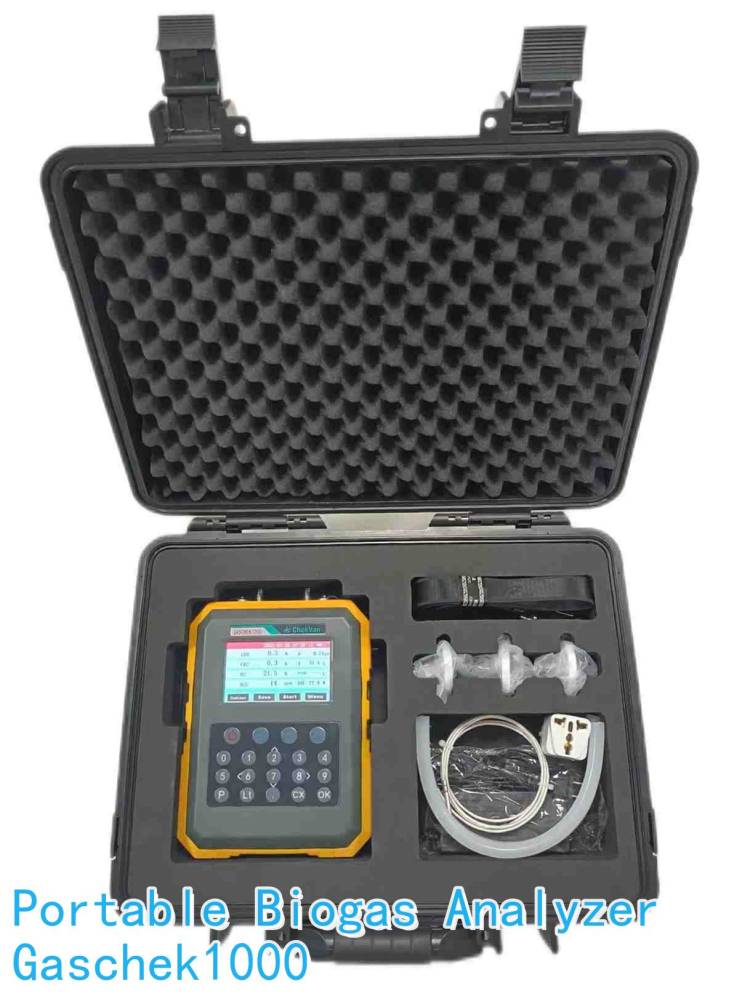
portable biogas analyzer GASCHEK1000
Hybrid Systems: Integrating biogas converters with solar or wind energy systems provides a more stable and reliable energy supply.
Scalable Designs: Modular converters allow users to scale their systems according to their energy needs.
Impact on Renewable Energy Systems
1. Decentralized Energy Production: Biogas converters enable communities to produce their own energy, reducing dependency on centralized grids.
2. Support for the Circular Economy: By turning waste into energy and fertilizer, biogas converters embody circular economy principles.
3. Rural Development: In remote areas, biogas converters provide reliable energy, improving living standards and supporting local businesses.
4. Energy Security: Local biogas production reduces reliance on imported fossil fuels, enhancing national energy independence.
Challenges and Solutions
1. High Initial Costs: Setting up a biogas converter can be expensive. Solution: Subsidies, financing schemes, and mass production can make the technology more affordable.
2. Technical Expertise: Operating and maintaining biogas converters requires knowledge and skill. Solution: Training programs and simplified designs can address this issue.
3. Cultural Acceptance: In some areas, there may be resistance to using waste-based energy systems. Solution: Awareness campaigns and education can promote acceptance and adoption.
Biogas converters are a game-changing technology, bridging the gap between waste management and renewable energy. By transforming organic waste into valuable energy resources, they contribute to a cleaner, greener, and more sustainable world. As innovation and adoption accelerate, biogas converters will remain at the forefront of the renewable energy revolution, empowering communities and driving global sustainability efforts.
 Manufacturer of biogas analyzer, landfill gas analyzer and extraction monitor, anaerobic digester gas analyzer