
The increasing demand for sustainable energy solutions has spurred innovations that turn waste into wealth. Among these, the Gobar Gas System stands out as a time-tested, practical, and eco-friendly technology. Originating from rural communities and now gaining global recognition, this system effectively converts organic waste, primarily cow dung (gobar), into clean and renewable biogas.
What is a Gobar Gas System?
The Gobar Gas System is a type of anaerobic digester designed to produce biogas through the decomposition of organic waste, particularly animal manure. The term “gobar” is derived from the Hindi word for cow dung, underscoring its cultural and practical roots in agrarian societies.
At its core, the system consists of a digester tank, where organic waste is fermented in the absence of oxygen. This process generates biogas—a mixture of methane (CH₄), carbon dioxide (CO₂), and trace gases—along with nutrient-rich slurry, which can be used as an organic fertilizer.
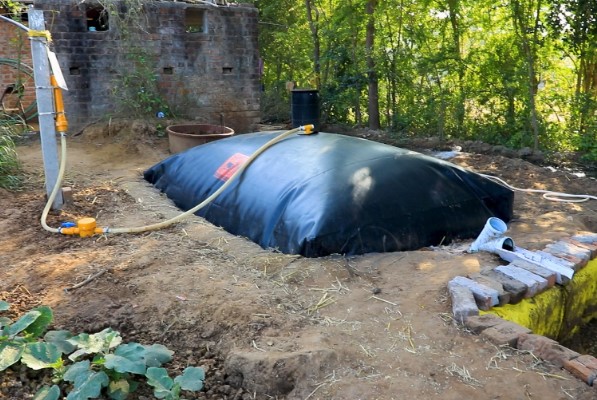
How It Works
1. Feedstock Input: Organic waste such as cow dung, kitchen waste, or agricultural residues is mixed with water to form a slurry.
2. Anaerobic Digestion: The slurry is fed into the airtight digester, where microorganisms break down the organic matter, releasing biogas in the process.
3. Gas Collection: The biogas rises to the top of the digester and is stored in a dome or tank until it is ready for use.
4. Slurry Output: The remaining slurry is expelled as a by-product and can be utilized as an organic fertilizer for crops.
Advantages of Gobar Gas Systems
- Renewable Energy Source: The system provides a consistent supply of biogas, which can be used for cooking, heating, or electricity generation.
- Waste Management: By utilizing animal and organic waste, it reduces environmental pollution and mitigates methane emissions from decomposing manure.
- Cost-Effective: Especially in rural areas, the system significantly reduces dependency on expensive and non-renewable energy sources like LPG or kerosene.
- Improved Sanitation: Proper waste disposal reduces the risk of diseases caused by unmanaged manure and organic waste.
- Soil Enrichment: The slurry by-product serves as a high-quality organic fertilizer, improving soil fertility and crop yields.
Applications
- Households: Gobar gas is commonly used for cooking and heating in rural homes, providing a smokeless and convenient alternative to firewood.
- Agriculture: Farmers use biogas to power irrigation pumps and tractors, while the slurry enhances soil health.
- Small Industries: The biogas produced can fuel small-scale industries, such as pottery, food processing, and brick-making.
Innovations in Gobar Gas Systems
Modern Gobar Gas Systems have evolved with the integration of advanced technologies. Portable and prefabricated digesters, for instance, allow for easy installation and scalability. Additionally, biogas analyzers now enable users to monitor gas quality and optimize production efficiency. For example, the OLGA2000 biogas online monitoring system uses advanced photoelectric sensing principles to detect and analyze methane (CH4), oxygen (O2), carbon dioxide (CO2), hydrogen sulfide (H2S) and other gases.

biogas online monitoring system OLGA2000
In some regions, governments and NGOs are supporting community-level digesters, providing shared access to biogas for multiple households. Hybrid systems, combining solar and biogas energy, are also gaining traction as reliable and sustainable power sources.
Conclusion
The Gobar Gas System is more than a waste management tool; it is a lifeline for rural communities and a beacon of sustainable development. By harnessing the power of organic waste, this technology exemplifies how traditional practices can merge with modern innovations to create a cleaner, greener world. As adoption increases, the Gobar Gas System is poised to play a vital role in achieving global renewable energy goals.
 Manufacturer of biogas analyzer, landfill gas analyzer and extraction monitor, anaerobic digester gas analyzer