
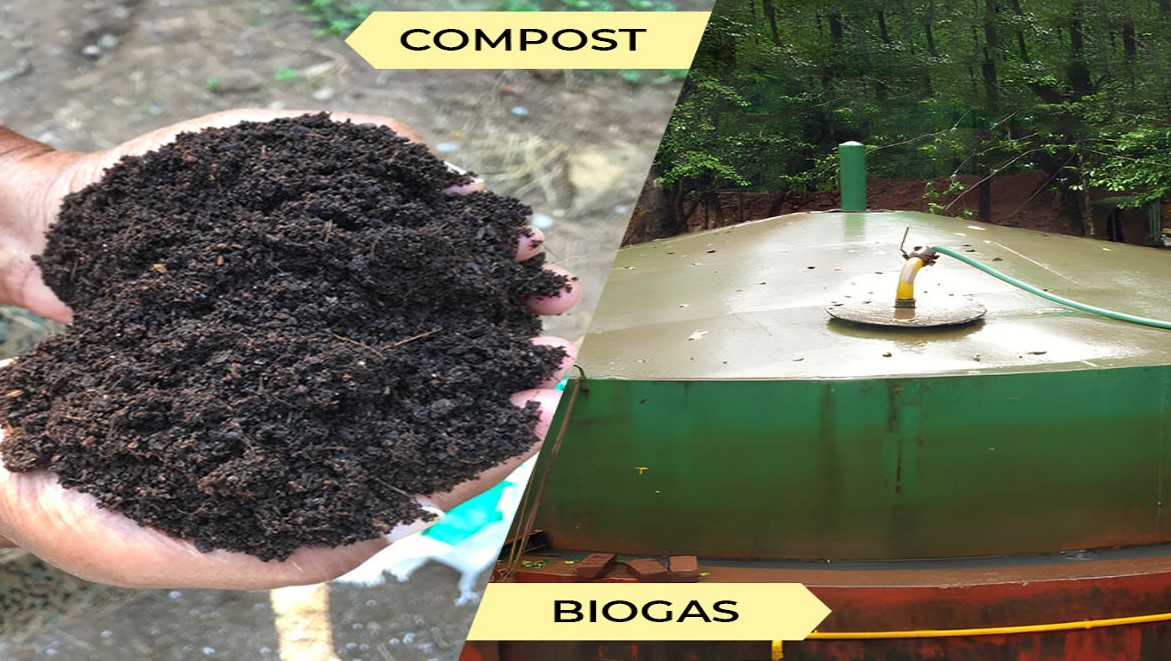
In the pursuit of sustainability, effective management of organic waste poses a significant challenge. Conventional disposal methods, such as landfilling and incineration, not only contribute to environmental pollution but also squander valuable resources. Biogas composting presents a sustainable alternative, offering a solution that not only diverts organic waste from landfills but also generates valuable compost and biogas. In this article, we explore the process, benefits, and applications of biogas composting as a holistic approach to organic waste management.
The Process of Biogas Composting:
Biogas composting is a natural biological process that harnesses the power of microorganisms to break down organic waste into compost and biogas. The process typically involves the following steps:
- 1. Collection and Segregation: Organic waste, including food scraps, yard trimmings, and agricultural residues, is collected and segregated from other waste streams to ensure purity.
- 2. Anaerobic Digestion: The segregated organic waste is then transferred to anaerobic digesters, where it undergoes decomposition in the absence of oxygen. During anaerobic digestion, microorganisms break down complex organic compounds, releasing biogas as a byproduct.
- 3. Biogas Capture: The biogas produced during anaerobic digestion, primarily consisting of methane and carbon dioxide, is captured and collected for further processing or utilization.
- 4. Compost Formation: The remaining organic matter, known as digestate or effluent, undergoes further decomposition to produce compost. This nutrient-rich compost can be used as a soil amendment in agriculture and landscaping.
- 5. Biogas Utilization: The captured biogas can be utilized as a renewable energy source for various applications, including electricity generation, heating, cooking, and transportation fuel.
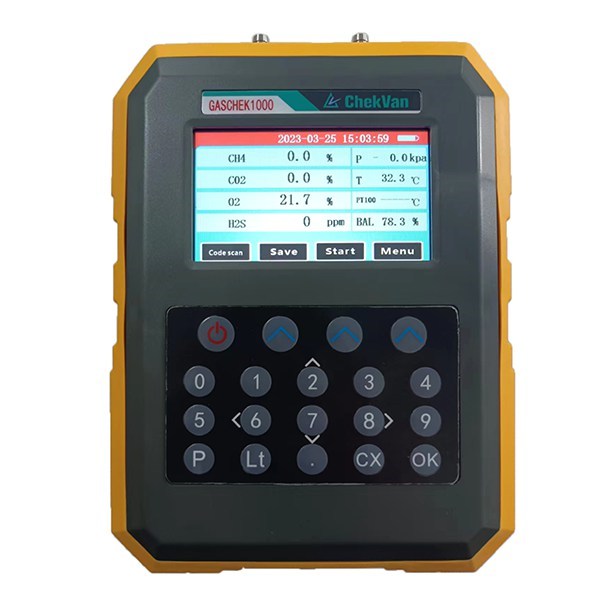
- 6. Gas monitoring::Biogas analyzers, such as the GASCHEK1000 portable biogas analyzer, use advanced photoelectric sensing principles to detect and analyze methane (CH4), oxygen (O2), carbon dioxide (CO2), hydrogen sulfide (H2S) and other gases, and accurately report , while effectively checking the digestive process.
Benefits of Biogas Composting:
- 1. Waste Diversion: Biogas composting helps divert organic waste from landfills, reducing the burden on waste management infrastructure and mitigating methane emissions, a potent greenhouse gas.
- 2. Resource Recovery: The compost produced through biogas composting serves as a valuable resource, enriching soil fertility, improving water retention, and promoting plant growth in agricultural and landscaping applications.
- 3. Renewable Energy Generation: The biogas captured during the composting process can be utilized as a renewable energy source, displacing fossil fuels and reducing greenhouse gas emissions.
- 4. Odor Control: Anaerobic digestion effectively eliminates odors associated with decomposing organic waste, improving air quality and reducing nuisances for surrounding communities.
- 5. Closed-Loop Systems: Biogas composting fosters closed-loop systems, where organic waste is recycled and repurposed within local communities, promoting circular economy principles and reducing reliance on external inputs.
Applications of Biogas Composting:
- 1. Municipal Waste Management: Biogas composting offers municipalities an environmentally sustainable solution for managing organic waste generated from households, businesses, and institutions.
- 2. Agricultural and Horticultural Practices: The compost produced through biogas composting can be used as a soil amendment in agricultural fields, orchards, vineyards, and gardens, enhancing soil health and productivity.
- 3. Land Reclamation and Erosion Control: Compost derived from biogas composting can be applied to degraded lands for soil remediation, erosion control, and habitat restoration, contributing to environmental conservation efforts.
Conclusion:
Biogas composting presents a multifaceted solution to the pressing challenges of organic waste management, resource depletion, and climate change. By harnessing the synergistic benefits of compost and biogas production, biogas composting offers a sustainable pathway towards a circular economy, where waste is viewed as a valuable resource rather than a burden.
 Manufacturer of biogas analyzer, landfill gas analyzer and extraction monitor, anaerobic digester gas analyzer