

In the ever-evolving landscape of renewable energy, one innovation stands out for its versatility and environmental benefits: liquefied biogas (LBG). Often referred to as “liquid gold,” LBG is a potent form of renewable energy derived from the anaerobic digestion of organic materials. This article delves into the transformative power of liquefied biogas, exploring its production process, applications, and the positive impact it holds for a sustainable energy future.
1. The Journey from Biogas to Liquefied Biogas:
– Biogas, a mixture of methane and carbon dioxide produced through anaerobic digestion, undergoes a liquefaction process to become LBG. The liquefaction reduces the temperature of biogas, converting it into a liquid form that is denser and more energy-dense than its gaseous counterpart.
2. Production Process:
- – The production of liquefied biogas involves several key steps:
- – Biogas Production: Organic materials, such as agricultural residues, food waste, or sewage, undergo anaerobic digestion to produce raw biogas.
- – Gas Upgrading: The raw biogas undergoes upgrading processes to remove impurities, such as carbon dioxide and hydrogen sulfide, resulting in high-purity biomethane.
- – Liquefaction: The biomethane is then cooled to very low temperatures, typically below -160°C (-256°F), turning it into a liquid.
3. Energy Density and Storage:
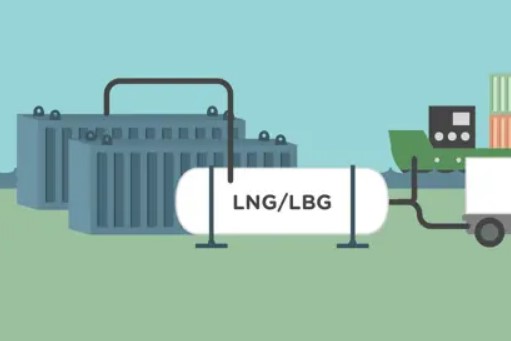
– Liquefied biogas is significantly denser in energy compared to biogas in its gaseous state. This increased energy density allows for easier storage and transportation. LBG can be stored in specialized cryogenic tanks, making it feasible for long-distance transport and storage without the need for high-pressure vessels.
4. Applications of Liquefied Biogas:
– LBG finds diverse applications across various sectors:
– Transportation: LBG is used as a fuel for vehicles, especially in heavy-duty transportation such as trucks and buses. It can be a direct replacement for traditional fossil fuels like diesel.
– Industrial Processes: LBG can serve as a cleaner alternative for industrial processes requiring high-temperature heat.
– Power Generation: Liquefied biogas can be used in combined heat and power (CHP) systems or directly in gas turbines for electricity generation.
– Injection into Gas Grids: High-purity LBG can be injected into natural gas grids, contributing to the decarbonization of the gas supply.
5. Environmental Impact:
– The use of liquefied biogas aligns with sustainability goals and environmental conservation:
– Reduced Greenhouse Gas Emissions: LBG is a renewable and low-carbon fuel, significantly reducing greenhouse gas emissions compared to traditional fossil fuels.
– Waste Valorization: By utilizing organic waste for biogas production, LBG promotes the circular economy by transforming waste into a valuable energy resource.
Liquefied biogas represents a crucial component in the transition to a more sustainable and low-carbon energy landscape. Often hailed as “liquid gold,” LBG’s transformative power lies not only in its diverse applications but in its ability to turn organic waste into a valuable resource. As technologies advance and the demand for cleaner energy intensifies, liquefied biogas is set to play a pivotal role in shaping a more sustainable and resilient future. It stands as a testament to the innovative strides being made in the pursuit of liquid gold, a renewable energy source that holds the key to a greener tomorrow.
 Manufacturer of biogas analyzer, landfill gas analyzer and extraction monitor, anaerobic digester gas analyzer