
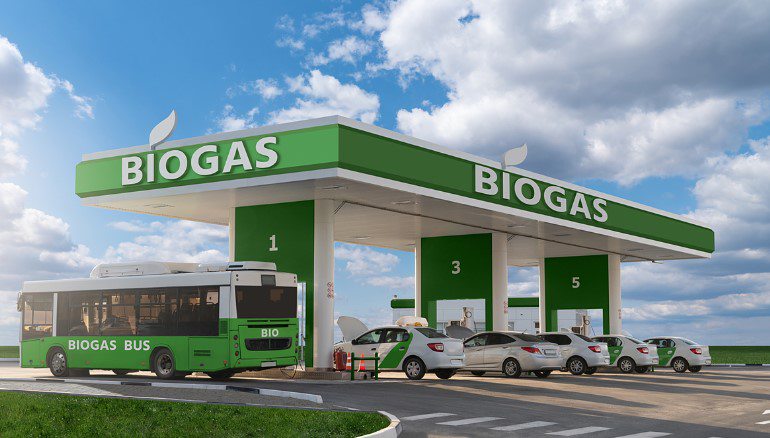
Biogas, a versatile and renewable energy source, has gained significant attention for its potential to address both environmental and energy challenges. Derived from the anaerobic digestion of organic matter, biogas offers a wide range of applications beyond its role as a cleaner alternative to traditional fuels. This comprehensive guide explores the diverse uses of biogas, showcasing its versatility and impact across various sectors.
1. Power Generation:
– Electricity Production: Biogas can be used to generate electricity through the combustion process, providing a reliable source of power for both grid-connected and off-grid applications.
2. Cooking and Heating:
– Domestic Cooking: In many households, biogas serves as a clean-burning fuel for cooking, replacing traditional sources like wood or charcoal.
– Space Heating: Biogas can be utilized for heating spaces in residential and industrial settings, offering an eco-friendly alternative.
3. Vehicle Fuel:
– Transportation: Biogas can be compressed and used as a vehicle fuel, known as compressed natural gas (CNG). This application reduces greenhouse gas emissions and promotes cleaner transport.
4. Cogeneration:
– Combined Heat and Power (CHP): Biogas-powered cogeneration systems produce both electricity and useful heat simultaneously, enhancing overall energy efficiency.
5. Industrial Processes:
– Steam Generation: Biogas can be employed in industrial settings to generate steam for various processes, such as in manufacturing or food production.
6. Agricultural Applications:
– Greenhouse Heating: Biogas provides an eco-friendly solution for heating greenhouses, creating an optimal environment for plant growth.
– Crop Drying: Biogas-powered systems can be used for drying crops, offering a sustainable alternative to conventional drying methods.
7. Waste Treatment:
– Wastewater Treatment: Biogas is produced during the anaerobic digestion of organic waste in wastewater treatment plants, contributing to the energy needs of the facility.
– Solid Waste Digestion: Biogas can be generated from the anaerobic digestion of organic components in municipal solid waste, offering a sustainable waste management solution.
8. Microgrid Systems:
– Off-Grid Energy Access: Biogas is a valuable resource for off-grid communities, providing a decentralized and sustainable energy source for lighting and cooking.
9. Greenhouse Gas Mitigation:
– Methane Emission Reduction: Anaerobic digestion of organic waste prevents the release of methane, a potent greenhouse gas, into the atmosphere, contributing to climate change mitigation.
10. Fertilizer Production:
– Digestate Utilization: The nutrient-rich digestate, a byproduct of biogas production, can be used as an organic fertilizer, promoting sustainable agriculture.
Exploring the diverse uses of biogas reveals its potential to revolutionize energy systems and contribute to sustainable development. From household applications to industrial processes, biogas emerges as a versatile and eco-friendly solution. As technology advances and awareness grows, the comprehensive integration of biogas into various sectors holds the promise of a cleaner, more resilient energy future.
 Manufacturer of biogas analyzer, landfill gas analyzer and extraction monitor, anaerobic digester gas analyzer