
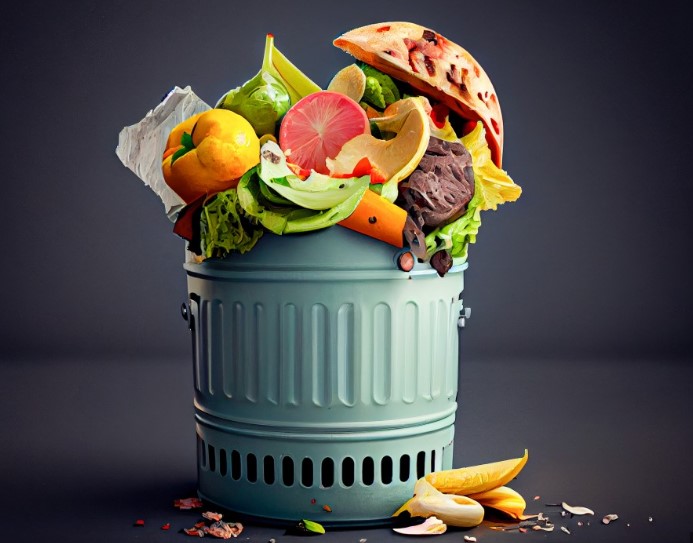
In the pursuit of sustainable and renewable energy sources, innovative solutions are emerging to harness the power within organic waste. One such promising avenue is biogas production from food waste, a process that not only addresses the growing concern of food waste but also contributes to the generation of clean and renewable energy. This article explores the intricate process of converting food waste into biogas, highlighting its environmental benefits and potential to revolutionize the energy landscape.
The Journey from Plate to Power:
1. Food Waste Collection:
The process begins with the collection of food waste from various sources, including households, restaurants, and food processing units. This waste comprises organic materials like vegetable peels, leftovers, and expired food.
2. Anaerobic Digestion:
The collected food waste is then introduced into anaerobic digesters. These sealed environments create the perfect conditions for microorganisms to break down the organic matter in the absence of oxygen. This microbial activity results in the production of biogas.
3. Biogas Composition:
The biogas generated is primarily composed of methane (CH4) and carbon dioxide (CO2), along with trace amounts of other gases. Methane is a potent greenhouse gas, and capturing it for energy production helps mitigate its environmental impact.
4. Gas Capture and Storage:
The produced biogas is captured and stored for later use. Storage systems, such as gas holders or tanks, ensure a steady supply of biogas.
5. Gas Utilization:
- – Cooking: Biogas can replace traditional cooking fuels like LPG.
- – Heating: It can be used for space heating or water heating.
- – Electricity Generation: In larger-scale biogas plants, it can be used to generate electricity.
- – Vehicle Fuel: After purification, biogas can be used as a clean fuel for vehicles.
Environmental and Energy Benefits:
1. Waste Reduction:
Biogas production from food waste significantly reduces the volume of organic waste entering landfills, minimizing environmental pollution and methane emissions.
2. Renewable Energy Source:
As a byproduct of organic decomposition, biogas is a renewable energy source. Its use contributes to a reduction in dependence on finite fossil fuels.
3. Climate Change Mitigation:
Capturing methane from food waste for energy production mitigates its impact on climate change. Methane is a more potent greenhouse gas than carbon dioxide, and using it as a fuel helps break its harmful cycle.
Biogas production from food waste represents a harmonious synergy between waste management and energy generation. It not only addresses the environmental challenges posed by food waste but also offers a practical and sustainable solution to our increasing energy needs. As technology advances and awareness grows, the journey from plate to power through biogas production holds the promise of a cleaner, greener, and more sustainable future.
 Manufacturer of biogas analyzer, landfill gas analyzer and extraction monitor, anaerobic digester gas analyzer