
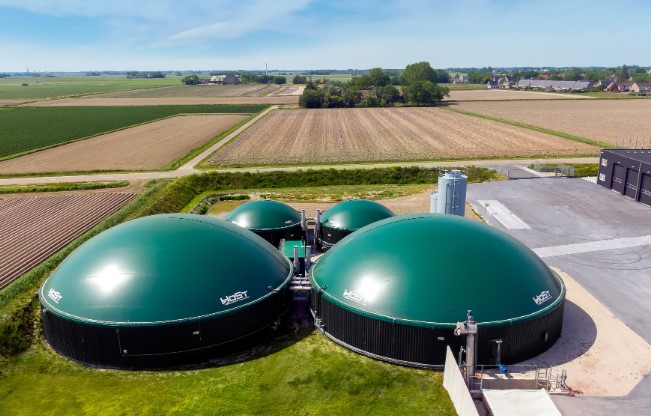
In the dynamic landscape of renewable energy, biogas stands out as a versatile and ecofriendly solution. Produced through the anaerobic digestion of organic materials, biogas has the potential to transform waste into a valuable energy source. One critical aspect in harnessing this potential is understanding the conversion from biogas volume, typically measured in cubic meters (m³), to kilowatthours (kWh). In this article, we will unravel the complexities of the 1 m³ biogas to kWh conversion, shedding light on the energy unlocked through this process.
The Basics: Biogas Composition
Biogas is primarily composed of methane (CH₄) and carbon dioxide (CO₂), with trace amounts of other gases. Methane is the key component responsible for the energy content of biogas. When biogas is burned, it releases energy in the form of heat, which can be converted into electricity.
The Conversion Factor: Heating Value
The conversion from biogas volume to energy is facilitated by the heating value, often expressed in megajoules per cubic meter (MJ/m³) or kilowatthours per cubic meter (kWh/m³). The heating value represents the amount of heat energy released when a specific volume of biogas is burned.
The typical heating value for biogas ranges from approximately 20 to 30 megajoules per cubic meter (MJ/m³). To convert this into kilowatthours, we can use the following conversion factor: \[1 \text{ MJ} = 0.2778 \text{ kWh}\]
This conversion factor accounts for the fact that 1 megajoule is approximately equal to 0.2778 kilowatthours.
Calculating Energy from Biogas Volume
The formula for converting biogas volume to energy in kilowatthours is straightforward:
\[ \text{Energy (kWh)} = \text{Biogas Volume (m³)} \times \text{Heating Value (kWh/m³)} \]
Let’s consider an example:
If you have 1 m³ of biogas with a heating value of 25 MJ/m³, the energy produced would be:
\[ \text{Energy (kWh)} = 1 \text{ m³} \times (25 \text{ MJ/m³} \times 0.2778 \text{ kWh/MJ}) \]
\[ \text{Energy (kWh)} = 6.945 \text{ kWh} \]
This means that burning 1 m³ of biogas with a heating value of 25 MJ/m³ can produce approximately 6.945 kilowatthours of energy.
Factors Influencing the Conversion
- 1. Biogas Composition: The percentage of methane in the biogas significantly affects its heating value. Biogas with higher methane content will have a higher heating value and, consequently, more energy per cubic meter.
- 2. Temperature and Pressure: The heating value can be influenced by the temperature and pressure conditions during biogas production. Higher temperatures and pressures may enhance the efficiency of the anaerobic digestion process.
- 3. Gas Cleaning and Upgrading: The presence of impurities in biogas, such as hydrogen sulfide, moisture, and other contaminants, can affect its combustion efficiency and heating value.
Applications of the Conversion
- 1. Electricity Generation: Many biogas plants utilize the produced biogas to generate electricity through combined heat and power (CHP) systems or generators.
- 2. Heating: Biogas can be used directly for heating applications, providing a renewable and sustainable alternative to traditional heating fuels.
- 3. Cooking: In households and communities, biogas can replace traditional cooking fuels, contributing to clean and efficient cooking practices.
By understanding and optimizing this conversion process, we can harness the power of biogas to contribute to a more sustainable and environmentally friendly energy landscape.
 Manufacturer of biogas analyzer, landfill gas analyzer and extraction monitor, anaerobic digester gas analyzer