
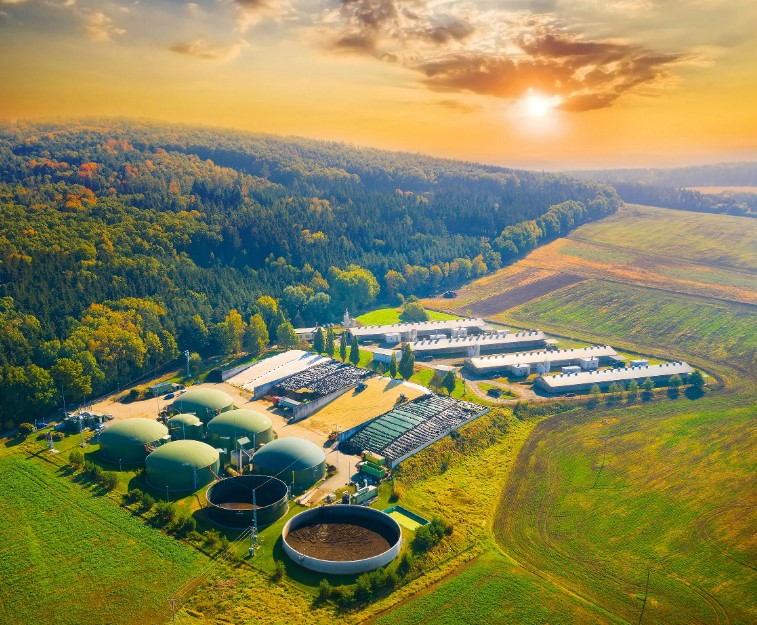
In an era of pressing environmental concerns and a global push towards sustainable energy sources, biogas has emerged as a promising solution that ticks multiple boxes. This renewable and clean energy source not only offers an eco-friendly alternative to traditional fossil fuels but also addresses the pressing issue of organic waste management.
Biogas is a combustible gas mixture primarily composed of methane (CH4) and carbon dioxide (CO2). It is produced through the anaerobic digestion of organic materials, a natural process that occurs in the absence of oxygen. Organic materials such as agricultural waste, sewage sludge, food scraps, and even dedicated energy crops can serve as feedstock for biogas production. During the biogas production process, the required equipment is a biogas analyzer, which uses advanced photoelectric sensing principles to detect and analyze methane (CH4), oxygen (O2), carbon dioxide (CO2), hydrogen sulfide (H2S) and other gases. For example OLGA2000 Online Biogas Monitoring System can be widely used in gas monitoring in landfill gas power plants, petrochemicals, coal mines and other scenarios, and can realize remote data transmission.

The Anaerobic Digestion Process
- 1. Hydrolysis: Complex organic compounds in the feedstock are broken down into simpler substances, including sugars, amino acids, and fatty acids.
- 2. Acidogenesis: Acid-forming bacteria convert these simpler substances into organic acids, hydrogen, and ammonia.
- 3. Acetogenesis: Acidic compounds are further transformed into acetic acid and additional hydrogen.
- 4. Methanogenesis: Finally, methanogenic bacteria convert acetic acid and hydrogen into methane (CH4) and carbon dioxide (CO2), which make up biogas.
Environmental Impact of Biogas
- 1. Reduction of Greenhouse Gas Emissions: One of the most significant environmental benefits of biogas is its role in reducing greenhouse gas emissions. By capturing methane, a potent greenhouse gas, from organic waste decomposition, biogas facilities help mitigate climate change.
- 2. Waste Management: Biogas production facilities efficiently manage organic waste, diverting it from landfills where it would otherwise decompose anaerobically, emitting methane into the atmosphere. This reduces environmental pollution and the need for costly waste disposal.
- 3. Renewable Energy: Biogas is a renewable energy source since it relies on the continuous availability of organic materials. It reduces dependence on finite fossil fuels and contributes to energy security.
- 4. Energy Independence: Biogas offers a locally sourced and produced energy solution, reducing reliance on centralized energy grids and imported fossil fuels.
- 5. Nutrient Recycling: The byproduct of the anaerobic digestion process, known as digestate, is a nutrient-rich material that can be used as an organic fertilizer, closing the loop in nutrient recycling.

Applications of Biogas
- – Electricity Generation: Biogas can be used to generate electricity through gas engines or turbines, contributing clean energy to the grid.
- – Heating: Biogas can be used for space heating and as a source of hot water, reducing the carbon footprint of heating systems.
- – Transportation: With proper compression and purification, biogas can be used as a vehicle fuel, offering a cleaner alternative to gasoline or diesel.
Biogas is more than just a clean and renewable energy source; it’s a sustainable solution to multiple environmental challenges. By harnessing the natural process of anaerobic digestion, biogas facilities reduce greenhouse gas emissions, efficiently manage organic waste, and provide a locally produced energy source. As the world increasingly recognizes the importance of sustainability and reducing our carbon footprint, biogas stands out as a key contributor to a greener and more eco-friendly future. Its positive environmental impact makes it a beacon of hope in our quest for a sustainable planet.
 Manufacturer of biogas analyzer, landfill gas analyzer and extraction monitor, anaerobic digester gas analyzer