
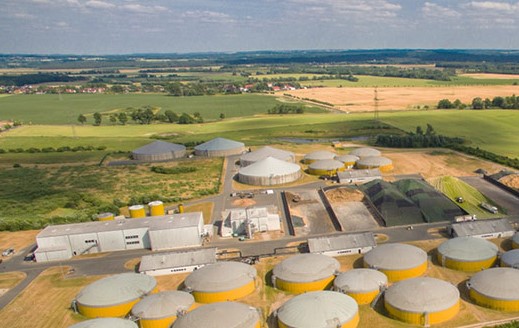
In the relentless pursuit of renewable and sustainable energy sources, biogas has emerged as a promising solution. Derived from the decomposition of organic matter, this clean and versatile energy source offers a path towards reducing greenhouse gas emissions and mitigating waste management challenges.
1. Biomass Feedstock Selection
The journey to producing biogas begins with the selection of the appropriate biomass feedstock. This can encompass a wide range of organic materials, including:
– Agricultural Residues: Crop residues like straw and corn stover.
– Municipal Solid Waste (MSW): Organic components of household waste.
– Sewage Sludge: The organic matter extracted during wastewater treatment.
– Animal Manure: A rich source of organic material from livestock farming.
– Dedicated Energy Crops: Plants specifically grown for biogas production, such as maize or switchgrass.
The choice of feedstock depends on factors like availability, local regulations, and the desired biogas output.
2. Anaerobic Digestion
The heart of biogas production is anaerobic digestion. This natural biological process takes place in an oxygen-free environment and involves the following stages:
– Hydrolysis: Complex organic compounds in the feedstock are broken down into simpler substances, including sugars, amino acids, and fatty acids.
– Acidogenesis: Acid-forming bacteria convert these simpler substances into organic acids, hydrogen, and ammonia.
– Acetogenesis: Acidic compounds are transformed into acetic acid and hydrogen.
– Methanogenesis: Methane-forming bacteria convert acetic acid and hydrogen into methane (CH4) and carbon dioxide (CO2), which constitute biogas.
3. Digester Systems
There are several types of anaerobic digesters used in biogas production:
– Batch Digesters: Loaded with feedstock all at once, they operate in cycles.
– Continuous Stirred-Tank Reactors (CSTRs): A constant supply of feedstock is maintained, allowing for a continuous production process.
– Plug Flow Digesters: Feedstock moves through the digester in a plug-like fashion, which is well-suited for fibrous materials like straw.
– Anaerobic Lagoons: Large, shallow ponds where feedstock is left to digest over time.
The choice of digester system depends on factors like feedstock characteristics, desired biogas output, and available resources.
4. Biogas Collection and Purification
As biogas is produced within the digester, it needs to be collected and purified. This involves:
– Gas Collection: Biogas is collected in a gas holder or tank. The gas holder rises as biogas is produced and falls as it’s used, maintaining pressure.
– Gas Purification: Biogas contains impurities like sulfur compounds and moisture that must be removed. Gas purification can involve processes like scrubbing and desulfurization.
5. Biogas Utilization
Biogas can be utilized in various ways:
– Electricity Generation: It can be used to generate electricity through gas engines or turbines, contributing to the grid.
– Heating: Biogas can be used for space heating or as a source of hot water.
– Transportation Fuel: With proper compression and purification, biogas can be used as a vehicle fuel.
6. Digestate Management
After the digestion process, what remains is known as digestate. This nutrient-rich material can be used as a fertilizer or soil conditioner, completing the cycle of resource utilization.
The production process of biogas, from biomass to energy, is a sustainable and efficient journey that addresses waste management challenges while providing clean energy. As technology advances and awareness of environmental issues grows, biogas production is poised to play a pivotal role in our transition to a more sustainable and eco-friendly future. Understanding this process is key to harnessing the full potential of biogas as a renewable energy source and waste management solution.
 Manufacturer of biogas analyzer, landfill gas analyzer and extraction monitor, anaerobic digester gas analyzer