
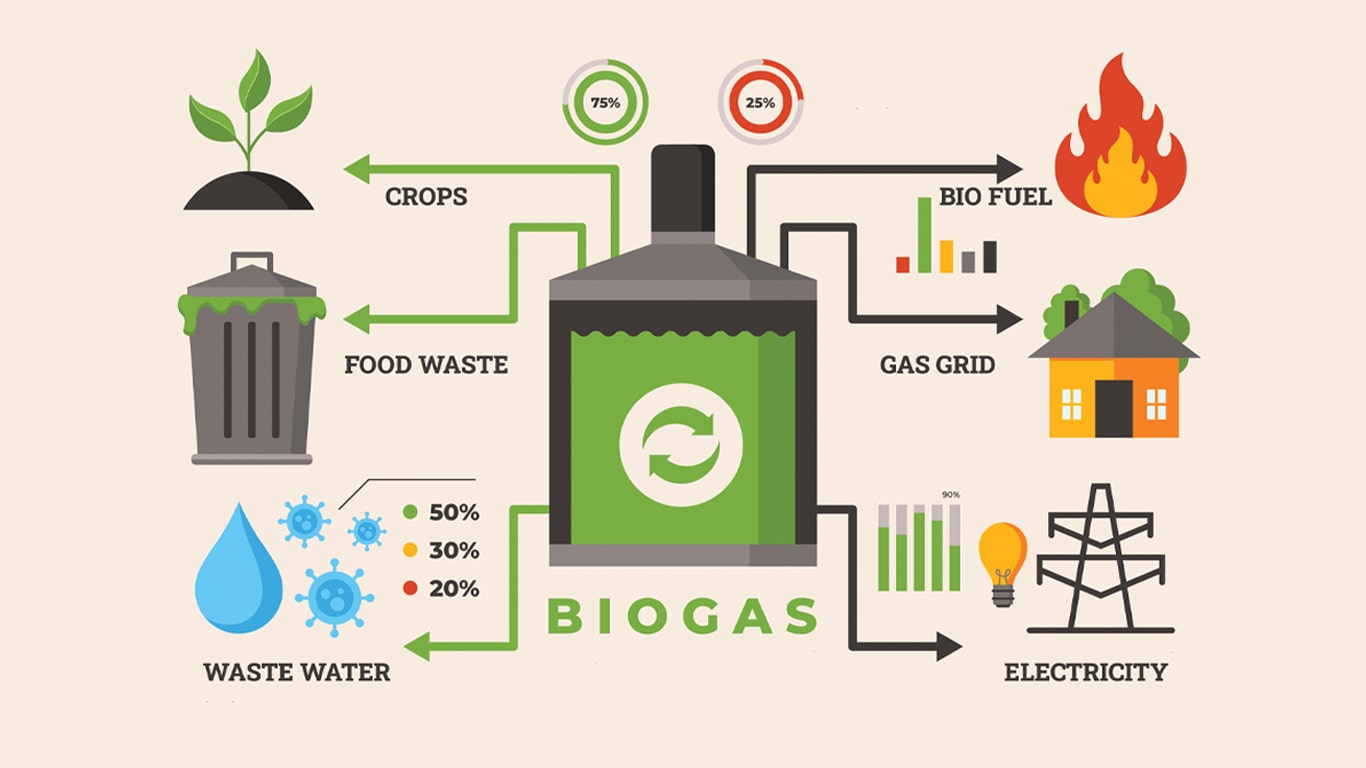
As the world grapples with the challenges of climate change and air pollution, the transportation sector emerges as a major contributor to these issues. In the pursuit of sustainable solutions, compressed biogas (CBG) has emerged as a revolutionary clean transportation fuel, offering a pathway to greener mobility.
The Promise of Compressed Biogas
Compressed biogas, often referred to as bio-CNG (compressed natural gas), is a fuel derived from organic waste materials through a process known as anaerobic digestion. It shares similarities with conventional natural gas (CNG) but carries a significant advantage—its origin from renewable and organic sources.
The Production Journey
Feedstock Collection: Organic waste materials, such as agricultural residues, food waste, and animal manure, are collected and transported to biogas plants.
Anaerobic Digestion: In controlled anaerobic digesters, microorganisms break down the organic materials, producing biogas composed mainly of methane and carbon dioxide.
Gas Purification: The produced biogas undergoes purification processes to remove impurities, moisture, and carbon dioxide, resulting in high-quality CBG.
Compression: The purified biogas is compressed to high pressures, similar to conventional natural gas, making it suitable for vehicle fuel applications.
Environmental Benefits
Reduced Emissions: CBG combustion produces significantly lower emissions of greenhouse gases and air pollutants compared to conventional fossil fuels.
Waste Diversion: CBG production diverts organic waste from landfills, reducing methane emissions and promoting responsible waste management.
Renewable Source: As a renewable and carbon-neutral fuel, CBG contributes to reducing the carbon footprint of the transportation sector.
Driving the Sustainable Transportation Transition
Cleaner Urban Air: CBG-powered vehicles emit fewer pollutants, improving air quality in urban areas and mitigating health risks associated with poor air quality.
Decentralized Energy: CBG production supports decentralized energy systems, enabling local energy generation and reduced reliance on centralized energy grids.
Waste Valorization: CBG serves as a catalyst for turning organic waste into a valuable resource, aligning with circular economy principles.
Compressed biogas stands at the forefront of the clean transportation revolution, offering a sustainable solution to the environmental and energy challenges posed by traditional fossil fuels. As governments, industries, and individuals seek ways to transition to a greener future, the rise of compressed biogas as a clean transportation fuel is a testament to human innovation’s ability to address pressing global issues. By choosing CBG as a vehicle fuel, we embark on a journey towards sustainable mobility, reduced emissions, and a cleaner planet.
 Manufacturer of biogas analyzer, landfill gas analyzer and extraction monitor, anaerobic digester gas analyzer