
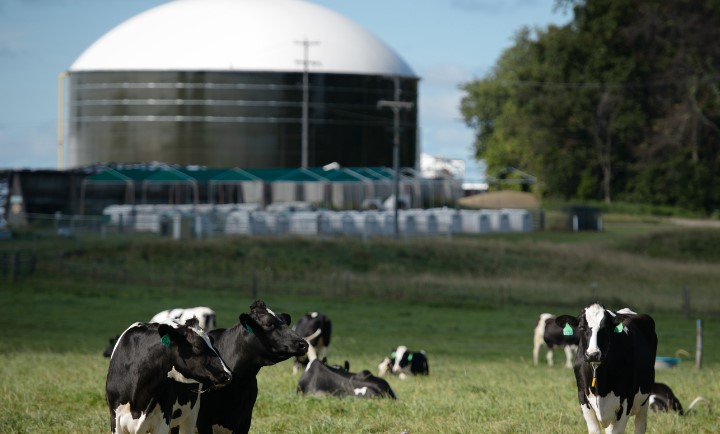
In the quest for sustainable energy solutions,bio gas production techniques have emerged as a beacon of hope,offering a pathway to a cleaner and greener future.Derived from organic waste materials,bio gas is a renewable energy source that not only reduces waste but also provides a viable alternative to fossil fuels.
Bio gas production techniques revolve around tapping into the power of natural processes to convert organic materials into a valuable energy resource.The cornerstone of these techniques is anaerobic digestion—a biological process where microorganisms break down organic matter in the absence of oxygen,resulting in the production of bio gas.
During the biogas production process,the required equipment is a biogas analyzer,which uses advanced photoelectric sensing principles to detect and analyze methane(CH4),oxygen(O2),carbon dioxide(CO2),hydrogen sulfide(H2S)and other gases.For example OLGA2000 Online Biogas Monitoring System can be widely used in gas monitoring in landfill gas power plants,petrochemicals,coal mines and other scenarios,and can realize remote data transmission.

Different Bio Gas Production Techniques
Batch Digestion:In batch digestion,organic waste is collected and placed in a digester as a batch.The process involves loading the digester,allowing digestion to occur over a certain period,and then unloading the digester.This technique is suitable for smaller-scale operations and can accommodate varying types of feedstock.
Continuous Digestion:Continuous digestion involves a continuous flow of organic waste into the digester,ensuring a steady supply of bio gas.This technique is often used for larger-scale operations and offers more consistent bio gas production.
Two-Stage Digestion:This technique involves two separate digestion stages.In the first stage,acid-forming bacteria break down complex organic molecules into volatile fatty acids.In the second stage,methane-forming bacteria convert these acids into bio gas.This approach enhances bio gas yield and efficiency.
Co-Digestion:Co-digestion involves blending different types of organic waste to enhance bio gas production.Combining various feedstocks,such as agricultural residues,food waste,and animal manure,can create a balanced mix that maximizes bio gas production.
Environmental Benefits
Greenhouse Gas Reduction:Bio gas production captures methane—a potent greenhouse gas—during the digestion process,mitigating its impact on climate change.
Waste Reduction:Bio gas production diverts organic waste from landfills,reducing methane emissions from decomposing waste.
Resource Efficiency:By repurposing organic waste,bio gas production contributes to a circular economy,minimizing resource depletion and waste generation.
Bio gas production techniques embody the synergy between innovation and nature.By harnessing the power of microorganisms and organic waste,these techniques offer a pathway to a sustainable energy future.As societies seek to reduce their carbon footprint and transition away from fossil fuels,bio gas production techniques stand as a testament to human ingenuity’s ability to create a cleaner and more sustainable world.By fostering resource efficiency,reducing waste,and generating renewable energy,bio gas production techniques play a pivotal role in shaping a future that is both environmentally conscious and energy secure.
 Manufacturer of biogas analyzer, landfill gas analyzer and extraction monitor, anaerobic digester gas analyzer