
In the journey towards sustainable and renewable energy sources,biogas has emerged as a shining star.Derived from organic materials that would otherwise end up as waste,biogas holds the potential to transform our energy landscape.
The Magic of Anaerobic Digestion
At the heart of biogas production lies a remarkable natural process known as anaerobic digestion.Anaerobic digestion occurs in an environment devoid of oxygen and involves a consortium of microorganisms that work in harmony to break down organic materials.This process is akin to nature’s recycling mechanism,where waste is transformed into valuable resources.
During the biogas production process,the required equipment is a biogas analyzer,which uses advanced photoelectric sensing principles to detect and analyze methane(CH4),oxygen(O2),carbon dioxide(CO2),hydrogen sulfide(H2S)and other gases.For example OLGA2000 Online Biogas Monitoring System can be widely used in gas monitoring in landfill gas power plants,petrochemicals,coal mines and other scenarios,and can realize remote data transmission.

Feedstock Variety
The sources of feedstock for biogas production are diverse:
Agricultural Residues:Crop residues,such as corn stalks and rice husks,are excellent candidates for biogas production.
Food Waste:Leftover food from households,restaurants,and food processing units can be harnessed to generate biogas.
Animal Manure:Livestock waste,rich in organic matter,is a potent source of biogas production.
Sewage Sludge:Waste from wastewater treatment plants can be utilized for biogas generation.
The Digestion Process
Hydrolysis:Complex organic molecules are broken down into simpler compounds by enzymes secreted by microorganisms.
Acidogenesis:The products of hydrolysis are further broken down into volatile fatty acids and alcohols.
Acetogenesis:The volatile fatty acids are converted into acetate,hydrogen,and carbon dioxide by specific microorganisms.
Methanogenesis:Methanogenic microorganisms convert acetate,hydrogen,and carbon dioxide into methane(CH4),the primary component of biogas.
Environmental Benefits
Greenhouse Gas Reduction:By capturing methane—a potent greenhouse gas—during the digestion process,biogas production helps mitigate climate change.
Waste Diversion:Biogas plants divert organic waste from landfills,reducing the generation of methane from decomposing waste.
Energy Generation:The production of biogas contributes to renewable energy generation,reducing dependence on fossil fuels.
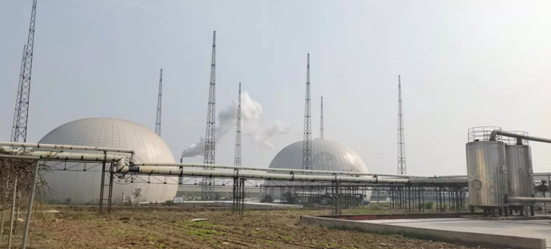
Biogas production from organic sources exemplifies the symbiotic relationship between technology and nature.From trash to treasure,the journey of biogas production not only offers cleaner energy but also serves as a blueprint for responsible waste management and a more sustainable future.
 Manufacturer of biogas analyzer, landfill gas analyzer and extraction monitor, anaerobic digester gas analyzer