
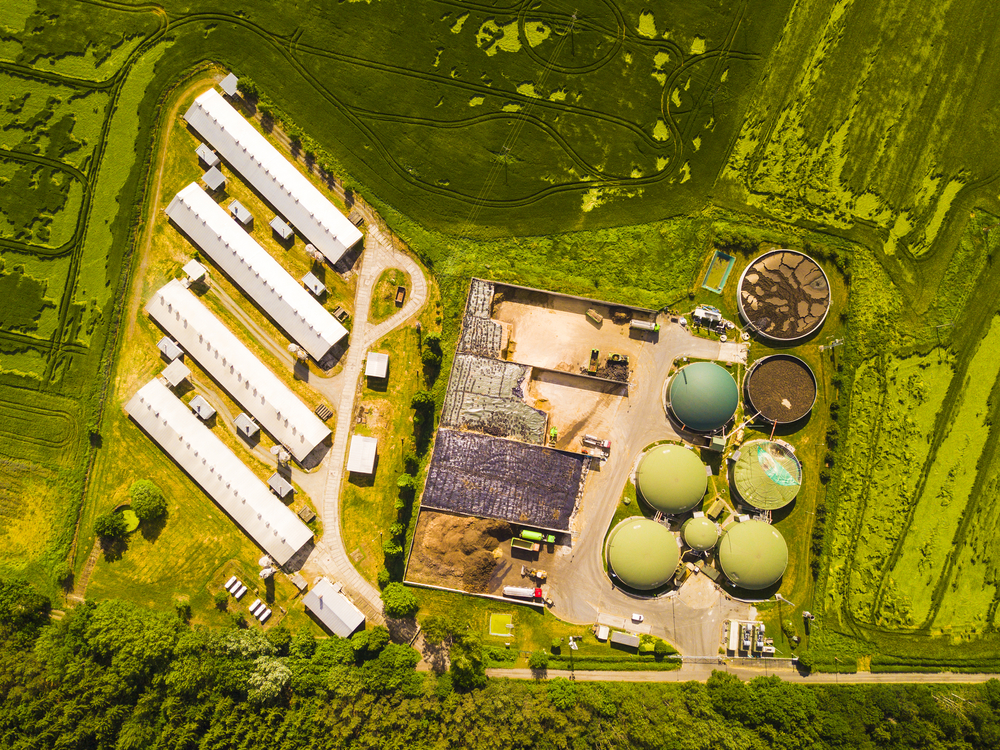
In the journey toward a more sustainable and environmentally conscious future,biogas systems have emerged as a crucial player in reshaping the way we generate energy,manage waste,and promote sustainable development.These innovative systems harness the power of natural processes to convert organic waste into a valuable source of clean and renewable energy.
At the heart of biogas systems lies a blueprint for sustainability that aligns with the principles of circular economy and responsible resource management.Biogas systems transform organic waste—ranging from agricultural residues to food scraps and sewage sludge—into biogas through a process known as anaerobic digestion.
The production of biogas requires real-time monitoring of gas content,and the OLGA2000 online biogas monitoring system is based on the principle of laser sensing.It can realize online monitoring of methane gas,which is fast,accurate and stable.OLGA2000 biogas online monitoring system can be widely used in gas monitoring in landfill biogas power plants,petrochemical,coal mines and other scenarios,and can realize remote data transmission.

Environmental Benefits
Reduced Methane Emissions:Organic waste left untreated in landfills emits methane,a potent greenhouse gas.Biogas systems capture methane during anaerobic digestion,preventing its release into the atmosphere and mitigating its impact on climate change.
Waste Diversion:By converting organic waste into biogas,these systems divert waste from landfills,reducing pressure on waste management infrastructure and minimizing the release of harmful pollutants into the environment.
Renewable Energy Generation:Biogas systems produce renewable energy in the form of biogas,which can replace fossil fuels for electricity generation,heating,and cooking.This contributes to a reduction in greenhouse gas emissions and dependence on non-renewable energy sources.
Economic Contributions
The economic contributions of biogas systems further underscore their role in sustainable development:
Energy Independence:Biogas systems offer a decentralized energy solution,empowering communities to produce their own clean energy locally and reducing reliance on centralized power grids.
Job Creation:The establishment and operation of biogas systems create employment opportunities in various stages,from system installation and maintenance to waste collection and energy distribution.
Resource Recovery:Beyond energy,biogas systems generate nutrient-rich digestate—a byproduct that can be used as organic fertilizer.This supports agricultural productivity,reduces the need for synthetic fertilizers,and enhances soil health.
Community Empowerment
Biogas systems have a transformative impact on communities,especially in rural and underserved areas:
Improved Energy Access:In regions with limited access to electricity,biogas systems provide a reliable and clean source of energy,enhancing the quality of life and enabling access to modern amenities.
Waste Management Solutions:Biogas systems offer an efficient way to manage organic waste,improving sanitation,reducing pollution,and minimizing health risks associated with improper waste disposal.
The role of biogas systems in sustainable development is nothing short of transformative.By integrating waste management,renewable energy generation,and economic prosperity,these systems offer a blueprint for a greener future.As societies worldwide strive to address environmental challenges and create more resilient communities,biogas systems stand as a shining example of how innovation,science,and responsible resource management can pave the way for a world that is cleaner,more self-sufficient,and better equipped to meet the needs of both present and future generations.
 Manufacturer of biogas analyzer, landfill gas analyzer and extraction monitor, anaerobic digester gas analyzer