
In pursuit of a sustainable and low-carbon future,the world is undergoing an energy revolution.One of the emerging stars of this revolution is biogas energy,an innovative and environmentally friendly solution that is redefining the way we generate electricity.Biogas produced by anaerobic digestion of organic matter offers a unique opportunity to generate renewable energy while addressing waste management challenges and reducing greenhouse gas emissions.
Biogas energy is gaining popularity as countries strive to reduce their reliance on fossil fuels and embrace renewable energy.The biogas production process begins with the collection of organic waste such as agricultural residues,food waste and animal manure,which is then placed in an anaerobic digester.These digesters create an oxygen-free environment that enables microbes to break down organic matter,releasing biogas.Biogas consists primarily of methane(CH4)and carbon dioxide(CO2),with small amounts of other gases such as hydrogen sulfide(H2S)and water vapour.The high methane content makes biogas a valuable renewable energy source.When the biogas is burned,it releases heat energy,which can be converted into electricity and heat energy to meet various energy needs.
At present,biogas analyzers are necessary tools for biogas plants.For example,the OLGA2000 online biogas monitoring system is based on the principle of laser sensing.It can realize online monitoring of methane gas,which is fast,accurate and stable.OLGA2000 biogas online monitoring system can be widely used in gas monitoring in landfill biogas power plants,petrochemical,coal mines and other scenarios,and can realize remote data transmission.

Advantages of biogas energy revolution
Renewable and sustainable:Biogas energy is a renewable and sustainable energy source because it is derived from the organic waste that is continuously produced by human activities and agriculture.
Waste management solutions:Biogas production offers an efficient and environmentally friendly solution for waste management.The process reduces methane emissions by diverting organic waste from landfill and converting it to biogas.
Energy independence:Biogas energy promotes energy independence by providing local and decentralized energy.It reduces dependence on imported fossil fuels and enhances community and national energy security.
Circular economy approach:biogas energy follows the principle of circular economy,and waste is regarded as a valuable resource.Biogas residue remaining after biogas production can be used as a nutrient-rich organic fertilizer,improving resource efficiency and sustainability.
Changing the power generation pattern
Energy diversification:biogas energy increases energy diversity,reduces dependence on fossil fuels,promotes the balance of energy structure,and is more resilient to supply fluctuations and price fluctuations.
Supporting sustainable development:Biogas energy contributes to sustainable development by promoting rural development and creating jobs in the renewable energy sector.
Mitigation of climate change:The reduction of greenhouse gas emissions by biogas energy plays an important role in mitigating climate change and helps countries achieve emission reduction targets.
Technological progress:The biogas energy revolution has promoted technological progress,made biogas production more efficient and economical,and further promoted the large-scale application of biogas.
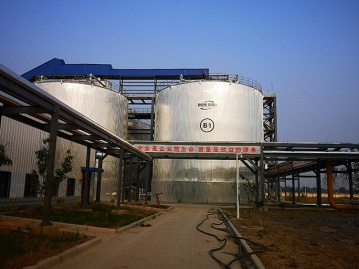
The biogas energy revolution represents an important step towards a more sustainable and clean energy future.As the biogas energy revolution continues to gain momentum,it is poised to play an increasingly critical role in the global energy transition,paving the way for a future powered by renewable and environmentally responsible energy sources.
 Manufacturer of biogas analyzer, landfill gas analyzer and extraction monitor, anaerobic digester gas analyzer