
While methane concentrations are well observed, emissions have to be inferred based on a variety of factors. NASA scientists use a variety of methods to track methane emissions. To get the most accurate estimates possible, they use emissions inventories from countries around the world, simulate wetland methane emissions, and combine this with ground-based, airborne, and satellite data using atmospheric models.
In California (and some other regions), researchers fly aircraft equipped with NASA’s Airborne Visible Infrared Imaging Spectrometer—Next Generation, or AVIRIS—NG, and collect highly calibrated data. This data is used in the California Methane Survey, a project jointly funded by NASA, the California Air Resources Board and the California Energy Commission to rapidly identify and report methane leaks.
In Alaska and Northwestern Canada, NASA researchers use satellites, aircraft, and field research to better understand methane emissions from thawing permafrost as part of the Arctic Boreal and Vulnerability Experiment, or ABoVE. Researchers have discovered that carbon-rich permafrost is thawing at increasingly high rates, likely as a result of human-induced climate change, making the Arctic an important potential source of methane emissions. According to scientific estimates, this region’s soils store five times more carbon than has been emitted by all human activities in the last 200 years.
NASA researchers combine the data from missions like ABoVE and the California Methane Survey with their knowledge of how methane behaves in the atmosphere to create methane computer models. These models can help scientists and policy makers understand past, current, and future atmospheric methane patterns.
Paths toward reduced methane emissions
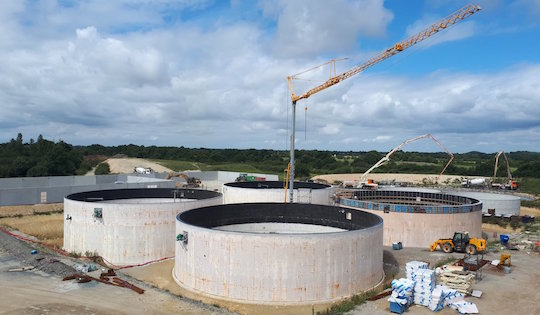
Researchers in a variety of fields have looked into potential solutions to decrease global methane emissions. For example, biogas systems reduce methane emissions by transforming waste from livestock, crops, water, and food into energy. Biogas is produced through the same natural process that occurs in landfills to break down organic waste. However, biogas systems harness the gas that is produced and use it as a clean, renewable, and reliable energy source rather than let it release into the atmosphere as a greenhouse gas.
A study led by professor Ermias Kebreab from the University of California-Davis discovered that introducing a few ounces of seaweed into beef cattle diets could reduce their methane emissions by over 82 percent.
These types of technological—and biological—innovations may provide decision-makers, ranchers and others with more options for managing our future methane.
– This is excerpted from press release was originally published on the NASA website
 Manufacturer of biogas analyzer, landfill gas analyzer and extraction monitor, anaerobic digester gas analyzer