
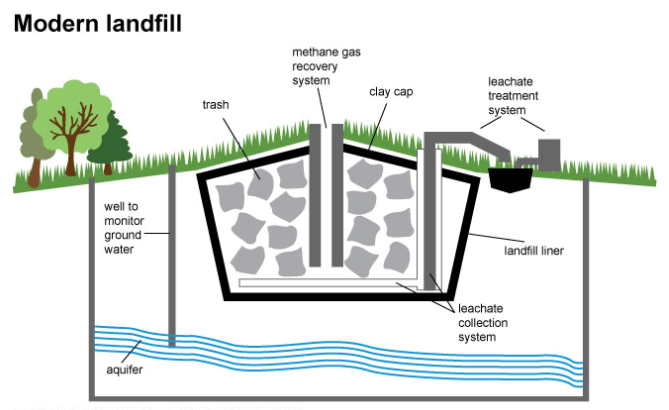
Landfills for municipal solid waste are a source of biogas. Biogas is produced naturally by anaerobic bacteria in municipal solid waste landfills and is called landfill gas. Landfill gas with a high methane content can be dangerous to people and the environment because methane is flammable. Methane is also a strong greenhouse gas. Biogas contains small amounts of hydrogen sulfide, a noxious and potentially toxic compound when in high concentrations.
Biogas from sewage and industrial wastewater treatment
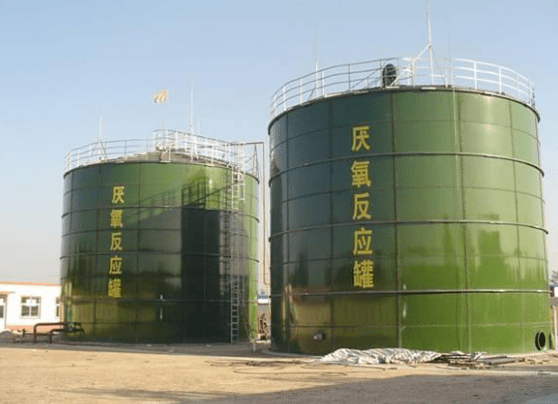
Many municipal sewage treatment plants and manufacturers such as paper mills and food processors use anaerobic digesters as part of their waste treatment processes. Some sewage treatment and industrial facilities collect and use the biogas produced in anaerobic digesters to heat the digesters, which enhances the anaerobic digestion process and destroys pathogens, and some use it to generate electricity to use at the facility or to sell.
Using biogas from animal waste
Some dairy farms and livestock operations use anaerobic digesters to produce biogas from manure and used bedding material from their barns. Some livestock farmers cover their manure holding ponds (also called manure lagoons) to capture biogas that forms in the lagoons. The methane in the biogas can be burned to heat water and buildings and as fuel in diesel-engine generators to generate electricity for the farm.
 Manufacturer of biogas analyzer, landfill gas analyzer and extraction monitor, anaerobic digester gas analyzer