Instead of escaping into the air, LFG can be captured, converted, and used as a renewable energy resource. Using LFG helps to reduce odors and other hazards associated with LFG emissions, and prevents methane from migrating into the atmosphere and contributing to local smog and global climate change. In addition, LFG energy projects generate revenue and create jobs in the community and beyond.
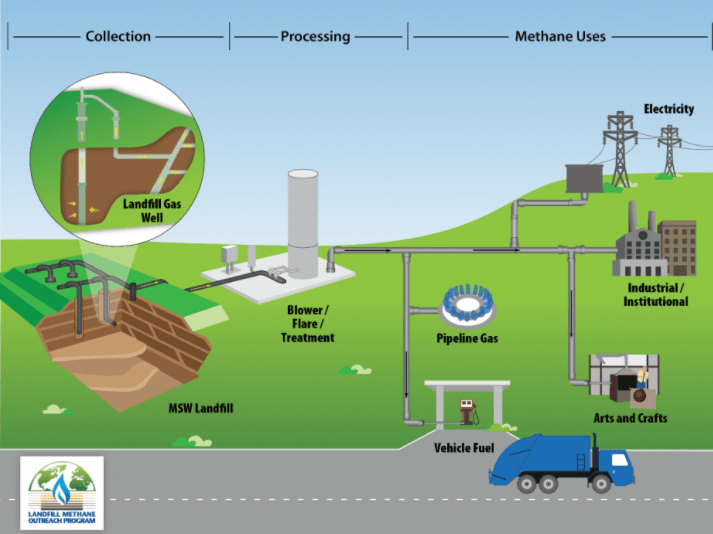
The graphic illustrates the collection and processing of LFG to produce methane for multiple uses. First, LFG is collected through vertical and horizontal piping buried in an MSW landfill. The LFG is then processed and treated for use. The graphic shows potential end uses of LFG including industrial/institutional uses, arts and crafts, pipeline gas, and vehicle fuel.
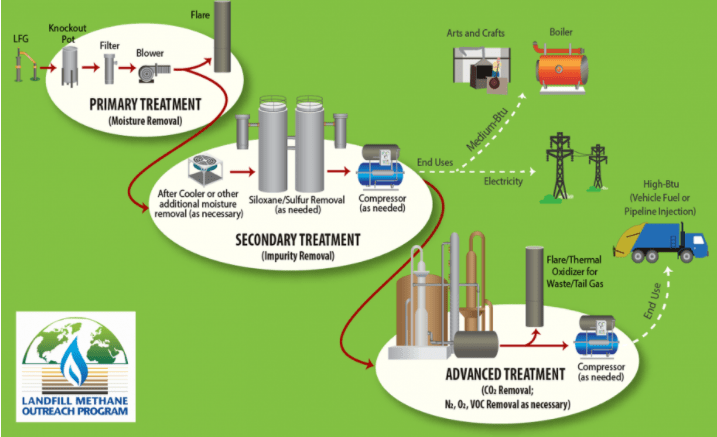
This graphic shows three stages of LFG treatment. Primary Treatment removes moisture as the gas passes through a knockout pot, filter, and blower. Secondary Treatment involves the use of an after cooler or other additional moisture removal (as necessary), followed by siloxane/sulfur removal and compression (as needed). After the impurities are removed in the Secondary Treatment stage, the LFG can be used to generate electricity or as a medium-Btu fuel for arts and crafts or boilers. Advanced Treatment removes additional impurities (CO2, N2, O2, and VOCs) and compresses the LFG into a high-Btu gas that can be used for vehicle fuel or injected into a gas pipeline. Waste/tail gas is sent to a flare or thermal oxidizer.
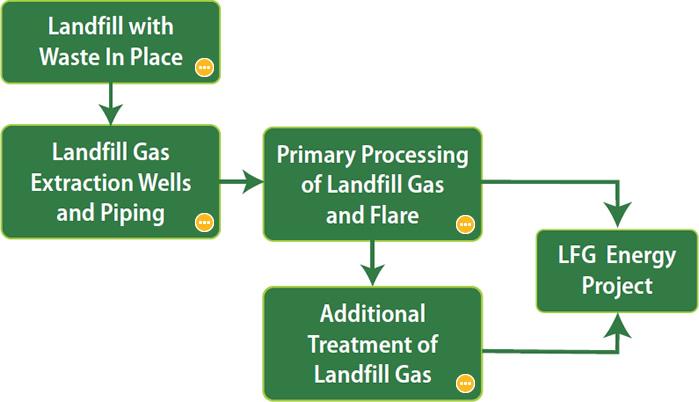
Flowchart of a Basic LFG Collection and Processing System
LFG is extracted from landfills using a series of wells and a blower/flare (or vacuum) system. This system directs the collected gas to a central point where it can be processed and treated depending upon the ultimate use for the gas. From this point, the gas can be flared or beneficially used in an LFG energy project. Click on the flowchart to view more details, including photographs of LFG collection and processing systems.

 Manufacturer of biogas analyzer, landfill gas analyzer and extraction monitor, anaerobic digester gas analyzer